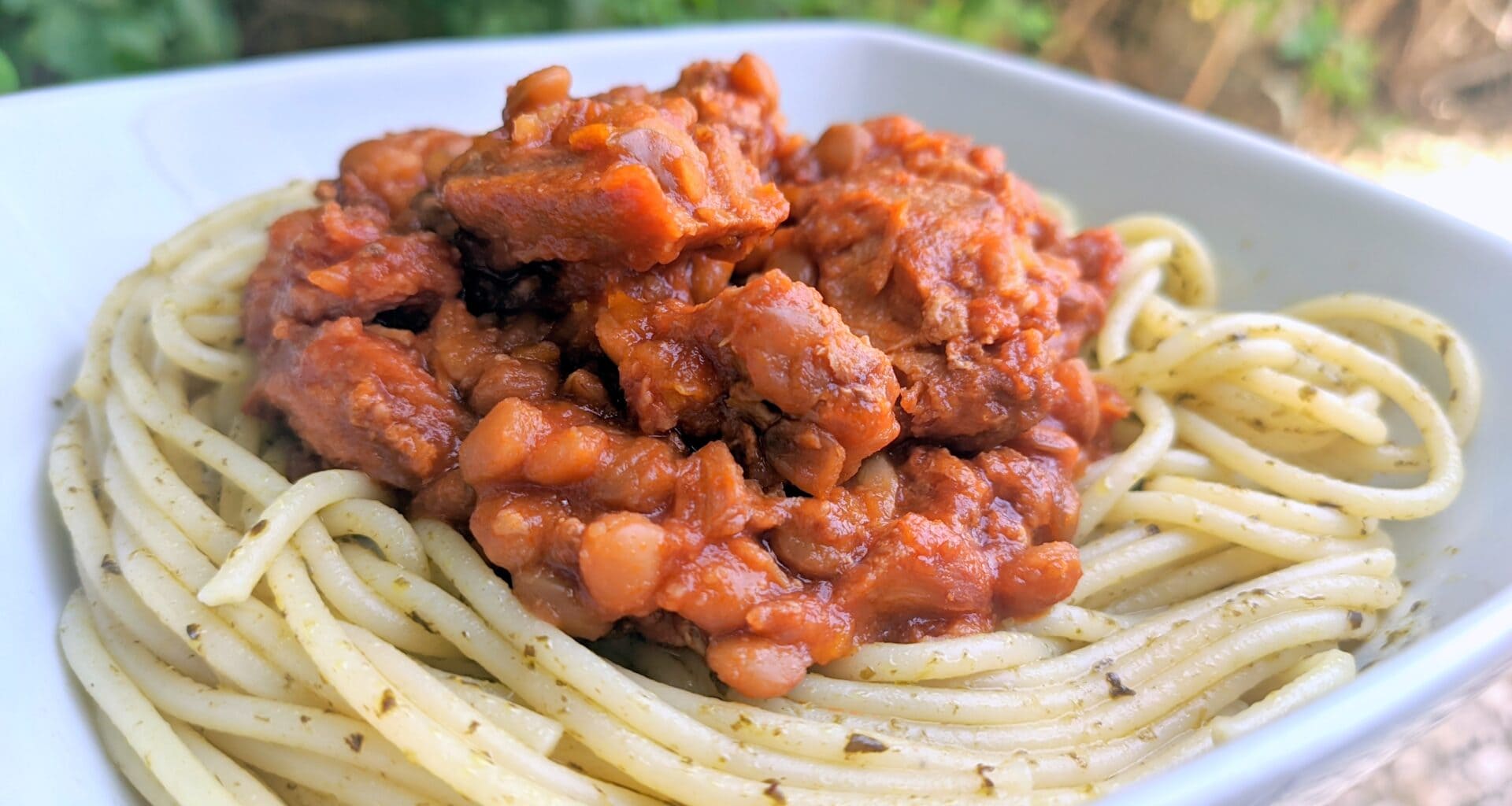

Oh well if you don’t know a Neapolitan ragù yet, this is a typical meat with tomato sauce recipe from the Naples region, and basically, traditionally, it’s a way to make the most of the less noble cuts of meat, and as we all know, those are often the tastiest dishes of all. It was presumably created around the 13th century, and it was popularly served on Sundays or on special occasions.
The dish itself is simple, it’s beef or pork slowly cooked in a tomato sauce with a base of onion and garlic, and it’s usually served in two parts. Very common for a long lunch, you start with a lighter first course, often pasta, rice or soup, followed by the main course. In the case of the ragù, you use the tomato sauce that the meat was cooked in with a pasta like spaghetti, pappardelle or tagliatelle, and then the meat is served on its own with polenta, bread, toast or a salad, which you can easily do with this recipe!
In this case I stepped out of the ordinary a little and made a recipe very similar, but I used pork, because it was what I had on hand. Keep in mind that many Neapolitan ragù recipes use only different cuts of beef, in fact that’s what you want for more flavor and texture, but some ragù recipes also use a bit of pork, even if it’s just bacon or pancetta. I also had some leftover lentils already cooked from another dish, so in they went. It’s a less common ingredient, but some ragùs do include chickpeas and beans, so ill say this is a heavily inspired Neopolitan dish, but not a traditional one, so let’s get to the recipe!
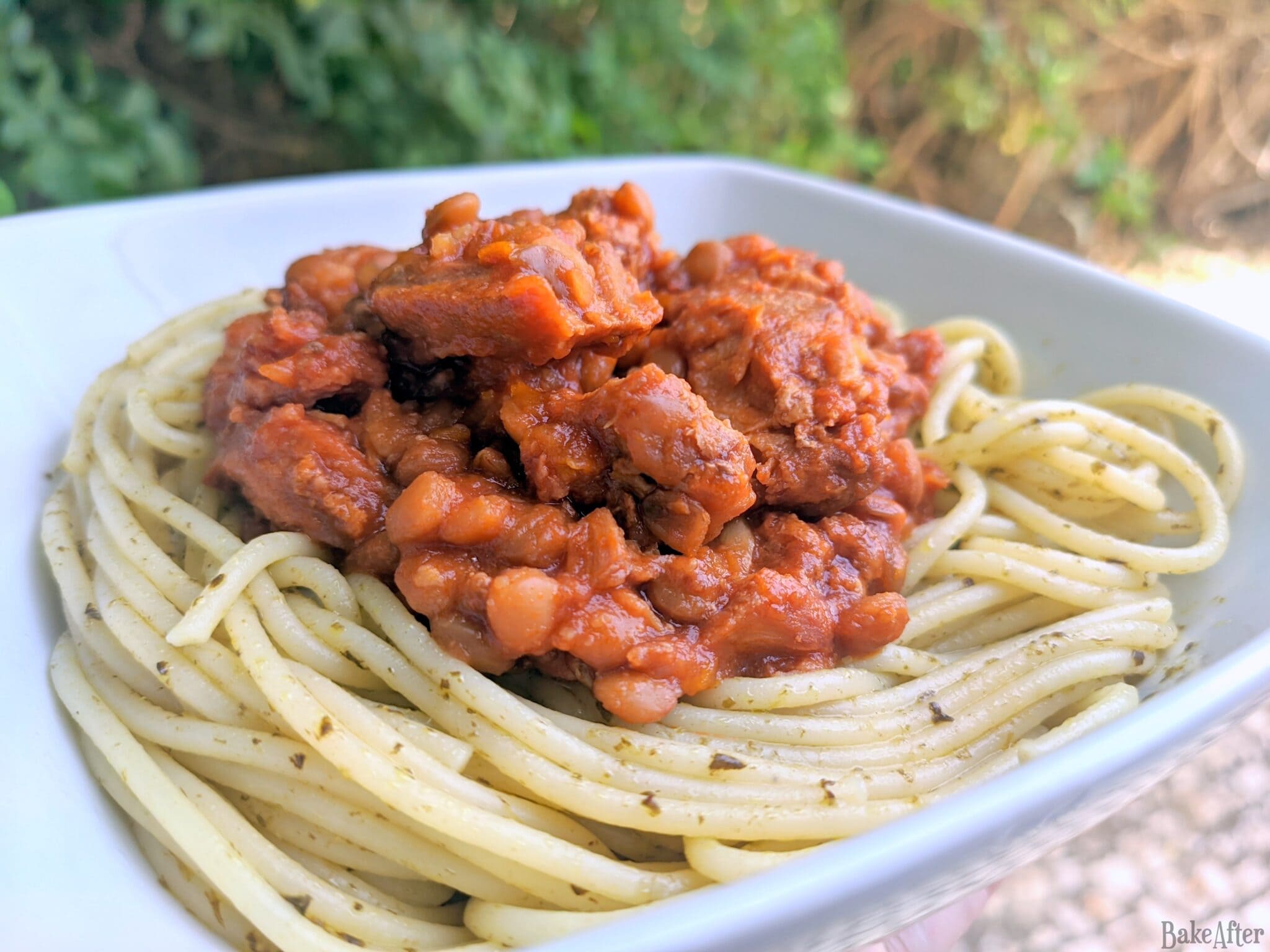
Slow-Cooked Neapolitan Pork Ragù with Pesto Spaghetti
Ohhh you don’t need to be Neapolitan to make this, you just need to be hungry, a little patient, and willing to share some of your wine with the pot. 😉
Ingredients
- Spaghetti – 600g
- Pork – 700g
- Pork Spare Ribs – 200g
- Pancetta – 100g (or Bacon)
- Red Wine – 150ml
- Lentils – 150g (Cooked, Optional)
- Tomato Paste – 100g
- Tomatoes – 1 Large Tin (750g)
- Pesto Sauce – 2 Tablespoons
- Onion – 300g (2 large)
- Carrot – 100g (1)
- Celery – 100g (approx. 1 stalk)
- Garlic – 2 cloves
- Pecorino Cheese – 50g
- Lard – 50g
- Olive Oil – To Taste
- Thyme – 1 Sprig
- Cayenne Pepper – A Pinch (Or Chili Flakes)
- Dried Oregano – 1 Teaspoon
- Black Pepper – A Pinch
- Salt – A Pinch
Directions
- Cut the pork and ribs into cubes and season with a little salt and pepper (this ensures the meat cooks evenly).
- In a frying pan over medium-high heat, fry the pork and ribs for a few minutes on each side just to brown the meat with some olive oil.
- Once the meat is browned (but not fully cooked), transfer it to a large pot.
- In the same frying pan used for the meat, add the lard followed by the onion, carrot, celery, and minced garlic, finally, add the chopped pancetta. Cook for about 3 or 4 minutes just to lightly brown the vegetables and pancetta.
- Add a splash of red wine to the pan and scrape the bottom with a wooden spoon to loosen any browned bits stuck to the pan.
- Transfer everything to the pot containing the meat, then add the thyme, tomato paste, and crushed canned peeled tomatoes. Season with another pinch of salt, cayenne pepper, and dried oregano, and bring the mixture to a boil over medium-high heat.
- Once boiling, reduce the heat to low or medium-low, cover, and simmer for about 2 hours until everything is tender.
- When the meat is ready, lower the heat and prepare the spaghetti, cook it in a pot over medium-high heat with plenty of hot water and a pinch of salt until tender, then drain. I used some leftover pesto, but traditionally, you would take a few spoonfuls of the ragù’s tomato sauce and put them in a frying pan, then transfer the drained spaghetti, while it is still slightly undercooked, into the pan to finish cooking in the tomato meat sauce.
- Finally, add the lentils and mix (since they are already cooked), taste and adjust the salt and pepper, and it’s ready to serve on top of the spaghetti, sprinkle with a good hard Italian cheese like pecorino. Bon appétit!
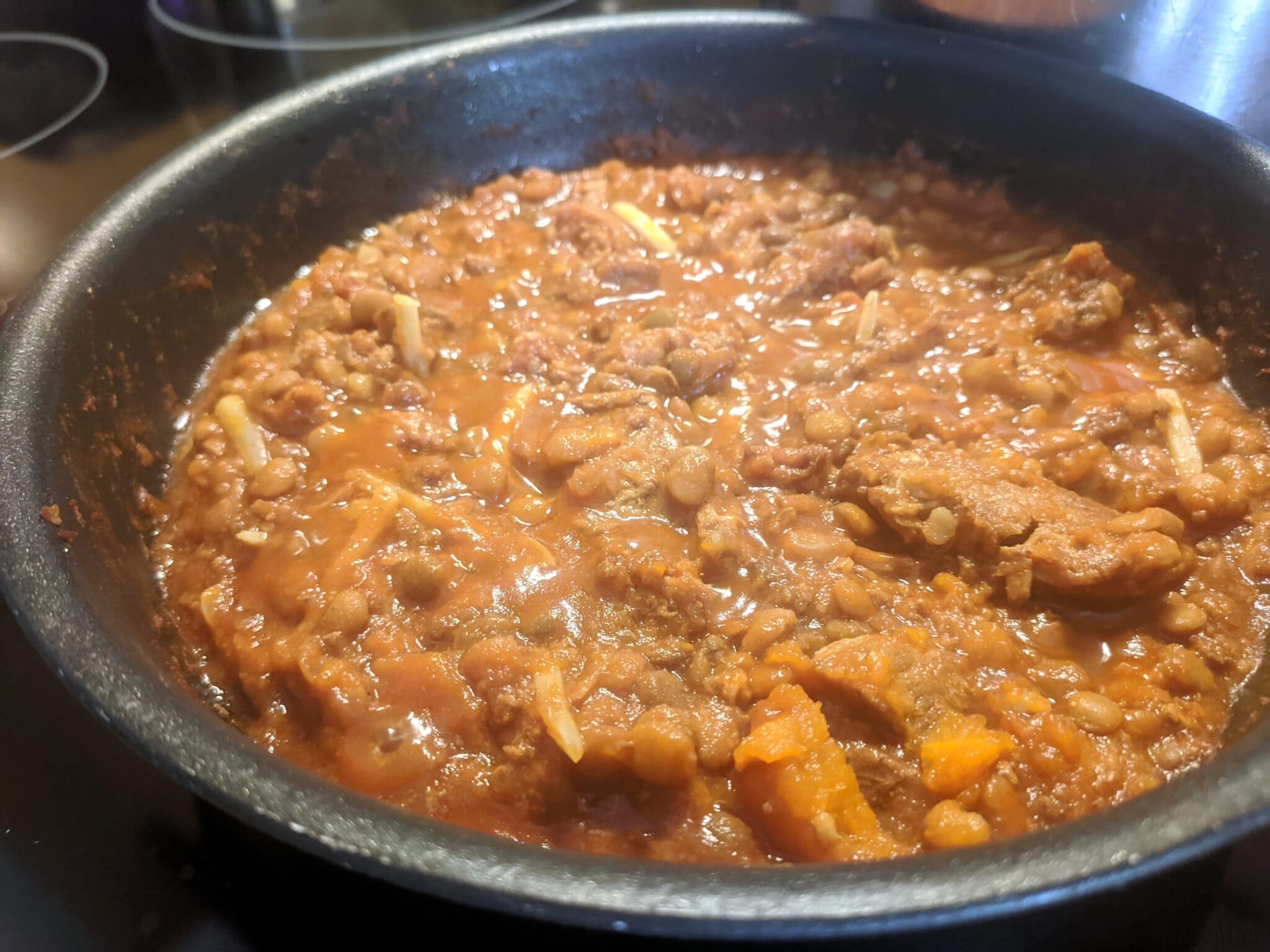
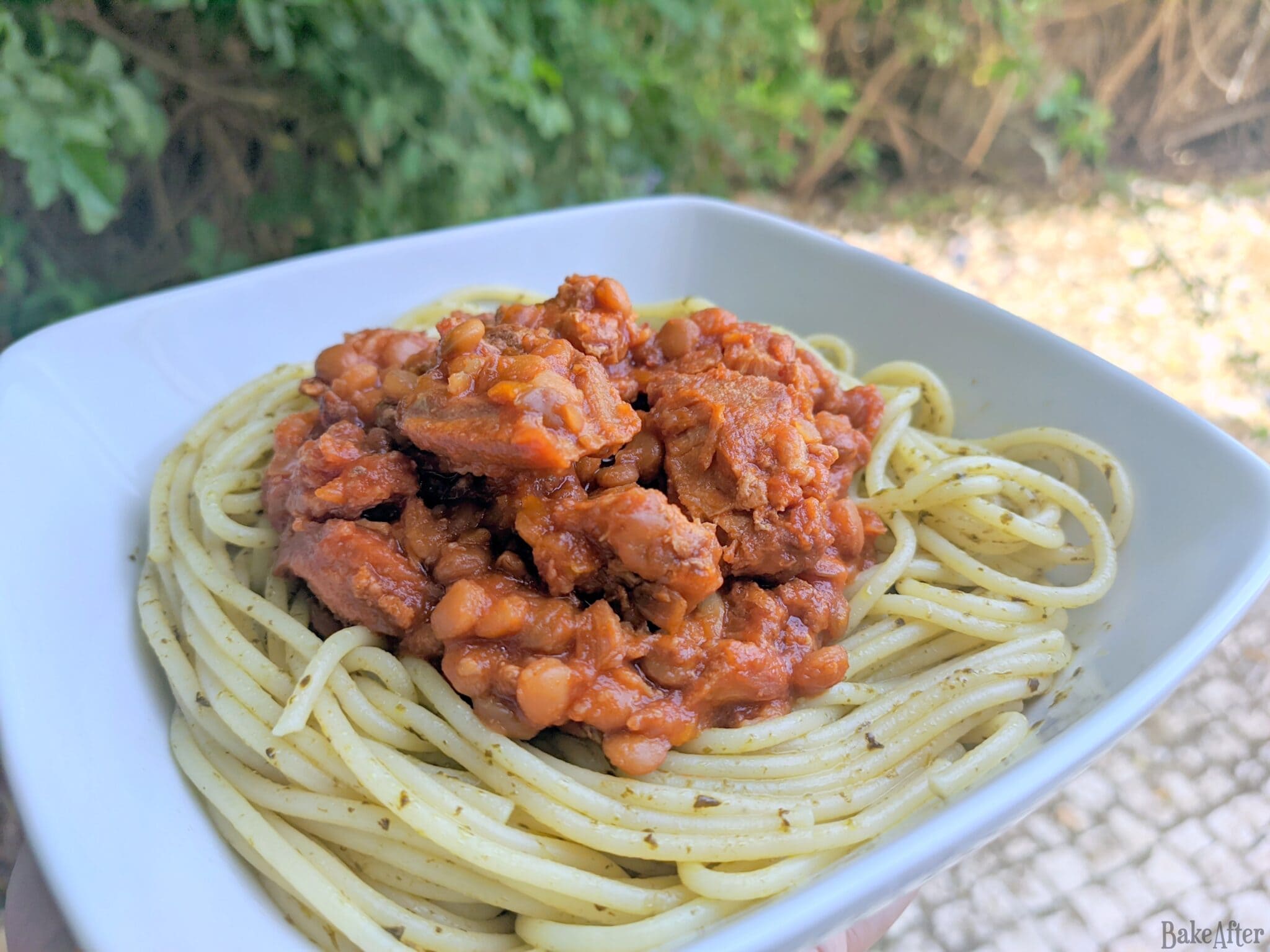
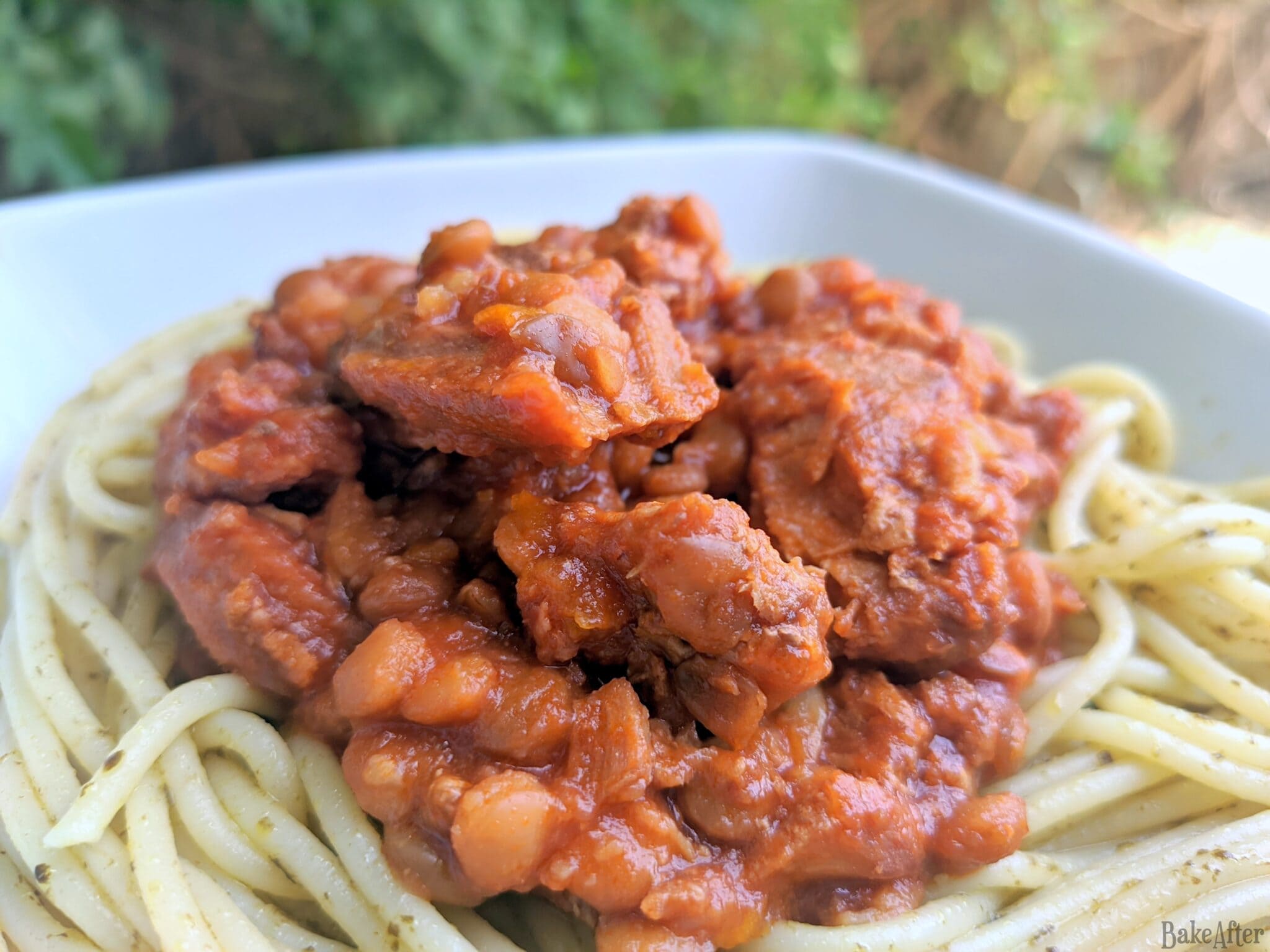
A traditional ragù tends to use double the amount of meat and tends to cook for about 3 to 4 hours, but in a traditional ragù the meat tends to be in big whole chunks, so it needs a lot more time to cook until it’s really tender.
You can also serve the ragù with other cheeses like Parmesan, Romano, some chopped basil leaves or some chopped cilantro leaves.
Don’t crowd the pan when browning the meat. Do it in batches, because crowded meat steams instead of browning, and that browning is where a lot of the flavor comes from.
Pork shoulder is a great choice for the 700g of pork, it stays tender and juicy through the long simmer.
Stir the pot every 30 minutes or so and check that the sauce isn’t sticking to the bottom. If it gets too thick, add a splash of hot water.
Save a cup of the pasta cooking water before draining. A splash of it helps the sauce cling to the spaghetti and makes everything silkier.
This ragù is even better the next day, so it’s a great one to make ahead. It keeps well in the fridge for 3 to 4 days and freezes nicely for a few months.
This recipe for Slow-Cooked Neapolitan Pork Ragù with Pesto Spaghetti was originally created on BakeAfter. Esta receita de Ragú de Porco Napolitano foi publicada em português no Iguaria.
Nutrition
Per Serving: 1072 calories; 56 g fat; 94.3 g carbohydrates; 45.4 g protein.Did you try this recipe?
Let me know how it turned out for you! You can leave a comment below ;D
Discover more from BakeAfter
Subscribe to get the latest posts sent to your email.