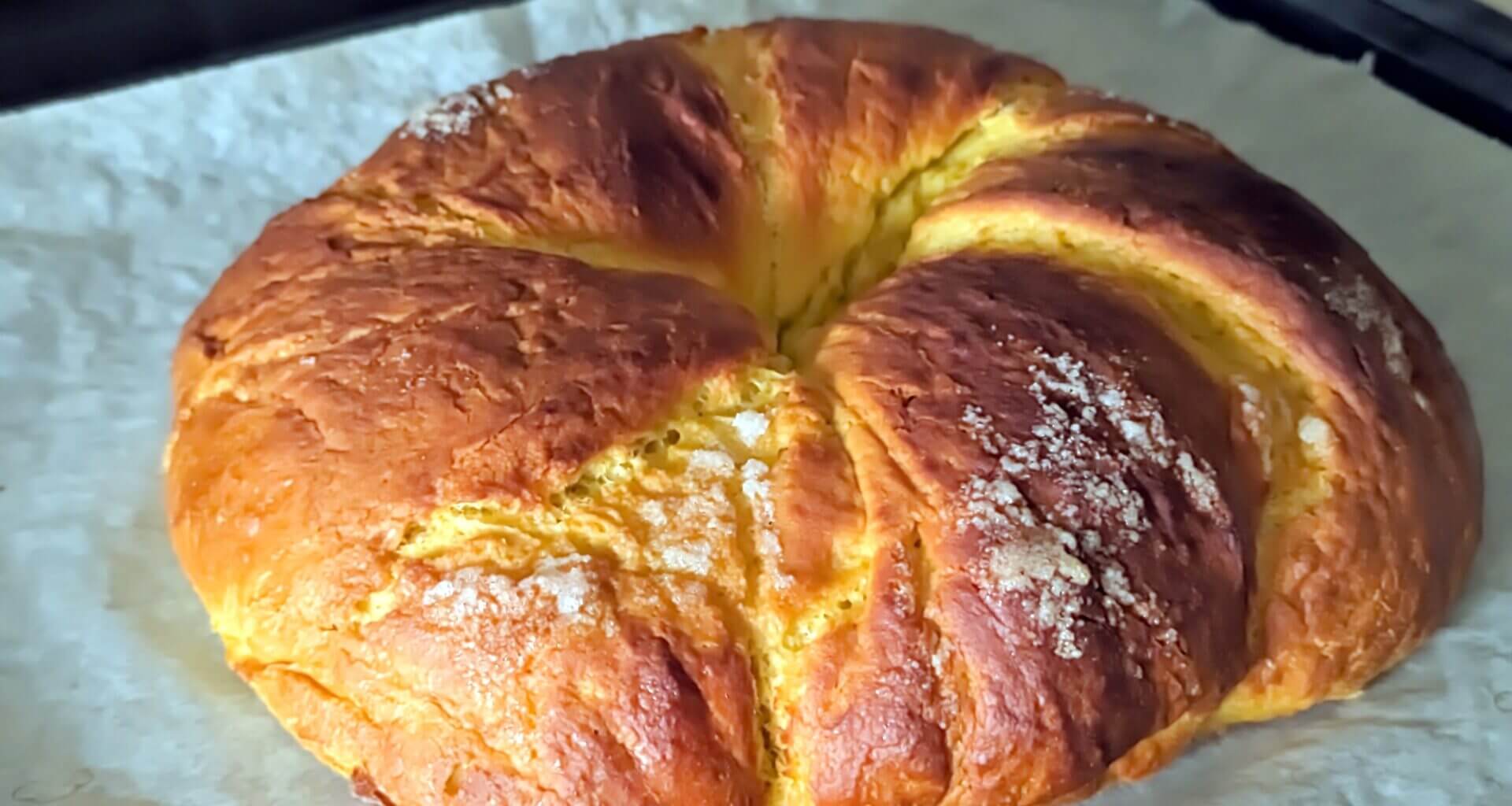

How about a Portuguese Braided Sweet Bread, or Regueifa Doce, this is one of those lovely Portuguese traditions, a fluffy, lightly sweetened bread, somewhat like milk bread or brioche, delicious on its own but also wonderful with jam, sweets, or butter. It shares its name with the traditional regueifa, a beautiful bread that’s very common in the north of Portugal, shaped like a braided crown with a crisp crust and a fluffy interior, but this sweet version stands apart with its soft texture and more indulgent character. Honestly, for me I’d say it’s more cake than enriched bread.
The origin of this recipe goes back to festive Easter offerings in Portugal, when godparents would gift their godchildren with bread, usually folares or pão-de-ló. Of course, over time, sweeter variations came along, enriched with eggs, milk, and butter, giving rise to a whole series of, well, Easter treats, ehhehehe ;D
In this case, as I said above, the Regueifa Doce is a bit like brioche or milk bread, you can eat it plain, but since it isn’t super sweet, it’s also great filled with jams, chocolate, cheese and ham, butter, really whatever you like. Let’s get to the recipe!
Portuguese Easter Braided Sweet Bread • Regueifa Doce
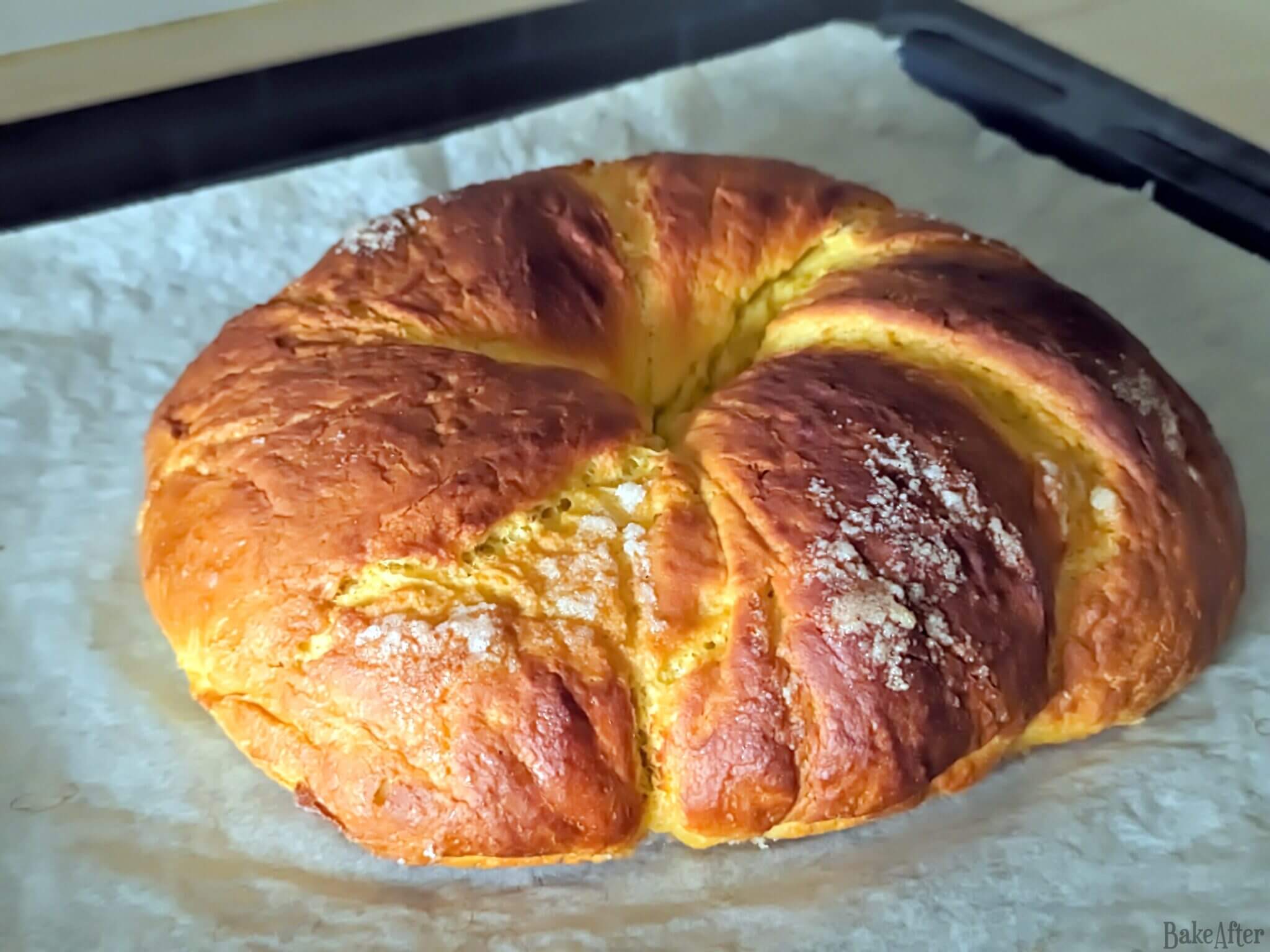
How about a delicious portuguese braided rolled sweet bread, do I really need to say anything else? ;D
Ingredients
- Baker’s Yeast – 7g (1 packet)
- AP Flour – 1 tablespoon
- Water – 20ml (Warm)
- AP Flour – 500g (T65)
- AP Flour – For Dusting
- Sugar – 150g
- Icing Sugar – For Dusting
- Cinnamon – 1 teaspoon (Ground)
- Salt – 1 pinch
- Butter – 50g
- Olive Oil – 1 tablespoon
- Eggs – 5 (L)
- Lemon – 1 (Zest)
- Cinnamon Stick – 1
- Water – 30ml
- Sugar – 30g
- Water – 30ml
Directions
- Start by dissolving the yeast in 20 ml of warm water and add 1 tablespoon of flour.
- Mix well, cover with plastic wrap and let it rest in a warm place for 1 hour.
- While the yeast is activating, boil 30 ml of water with the lemon peel and cinnamon stick. When it boils, remove from heat and let it cool completely.
- In a bowl (or in a stand mixer with a dough hook), mix 500g of flour, the sugar, the ground cinnamon and a pinch of salt.
- Separate the yolks from the whites of 4 eggs. Whisk the egg whites until stiff peaks form, set aside.
- Make a well in the center of the flour mixture and add the activated yeast. Then add the butter, olive oil, egg yolks and the water infused with lemon and cinnamon (remove the lemon peel and cinnamon stick and don’t add all the water, add a little, knead and adjust). Finally, fold in the whisked stiff egg whites.
- Pour all the ingredients into a bowl and knead (using the dough hook) for at least 20 minutes, until the dough is elastic, forms a cohesive ball, and pulls away from the sides of the bowl. When pressed with your finger, it should spring back. You can also do this by hand, but in that case, you will need more time kneading.
- Transfer the dough to a well-floured work surface. Form a ball with your hands and lightly brush the dough with olive oil.
- Place the dough in a bowl also greased with olive oil. Cover with plastic wrap and let it rise in a warm place for 2 to 3 hours, or until doubled in size.
- Once the dough has doubled in volume, you can make one long log and connect into a circle, or divide it into two equal parts and shape them into two rolls about 60 cm long.
- Then begin to intertwine the rolls and join the ends to form a crown (Do this right on top of the parchment paper so it’s much easier to transfer to a baking sheet later).
- Place the crown on a baking sheet lined with non-stick paper and brush with a whisked egg.
- Let it rest for 1 hour to rise again.
- Preheat the oven to 180°C (350°F with the fan on). Bake the sweet bread for about 35 to 40 minutes. In the last 15 minutes, if the top starts to get too dark, you can cover it with aluminum foil to protect.
- As always, when you think it’s ready, check with a toothpick inserted in the center, if it comes out dry, then it’s ready. Remove from the oven to a wire rack to cool.
- You can do this part while the cake is baking, prepare a simple syrup. In a small saucepan, add 30ml of water and 30g of sugar over medium heat. Do not let it boil. When it starts to bubble at the edges, it’s ready. Remove the syrup from the heat.
- Use this syrup to brush the sweet bread after it comes out of the oven while it’s still warm, and finally sprinkle with a pinch of powdered sugar and you’re done! Let it cool completely. Enjoy!
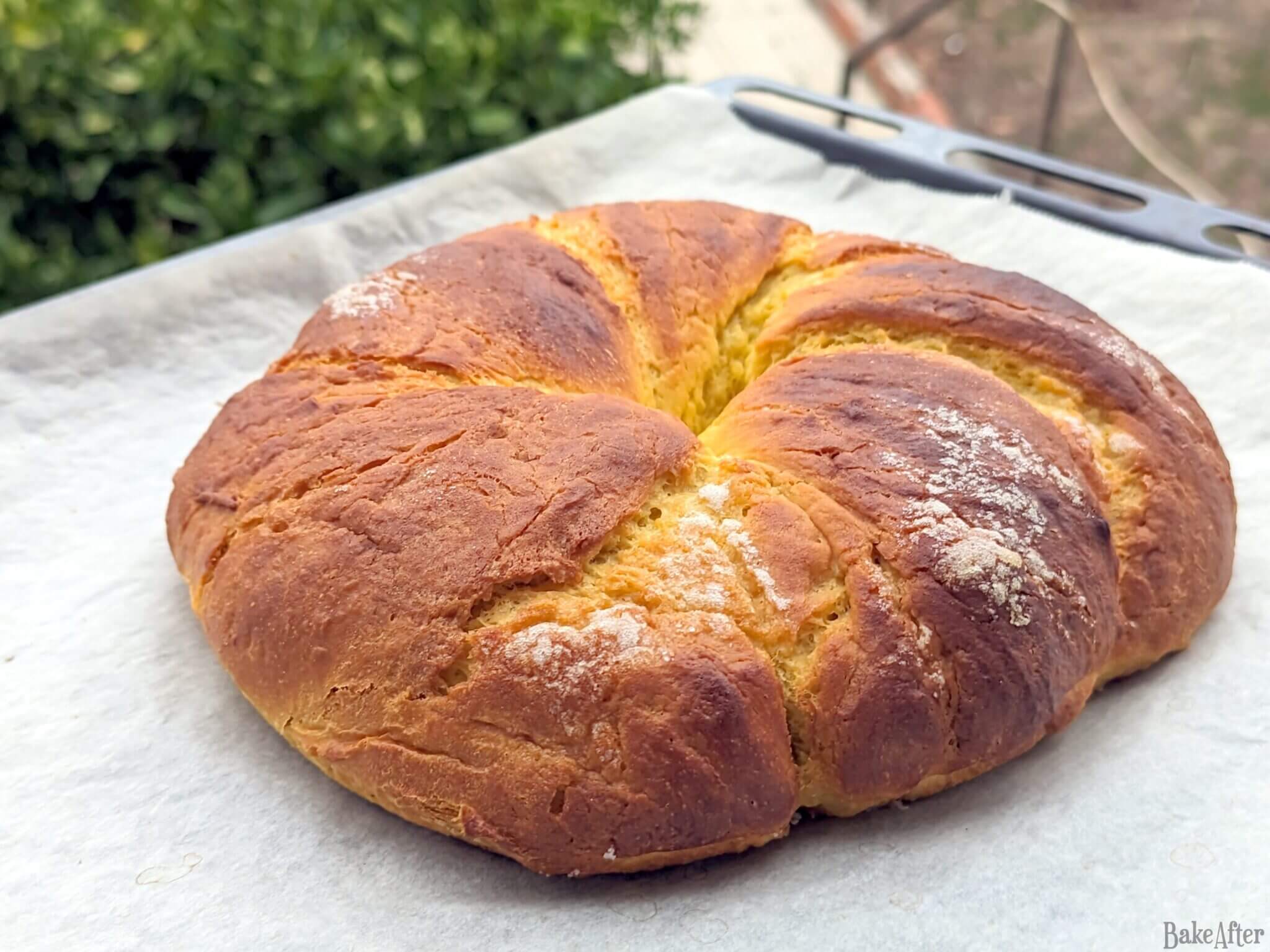
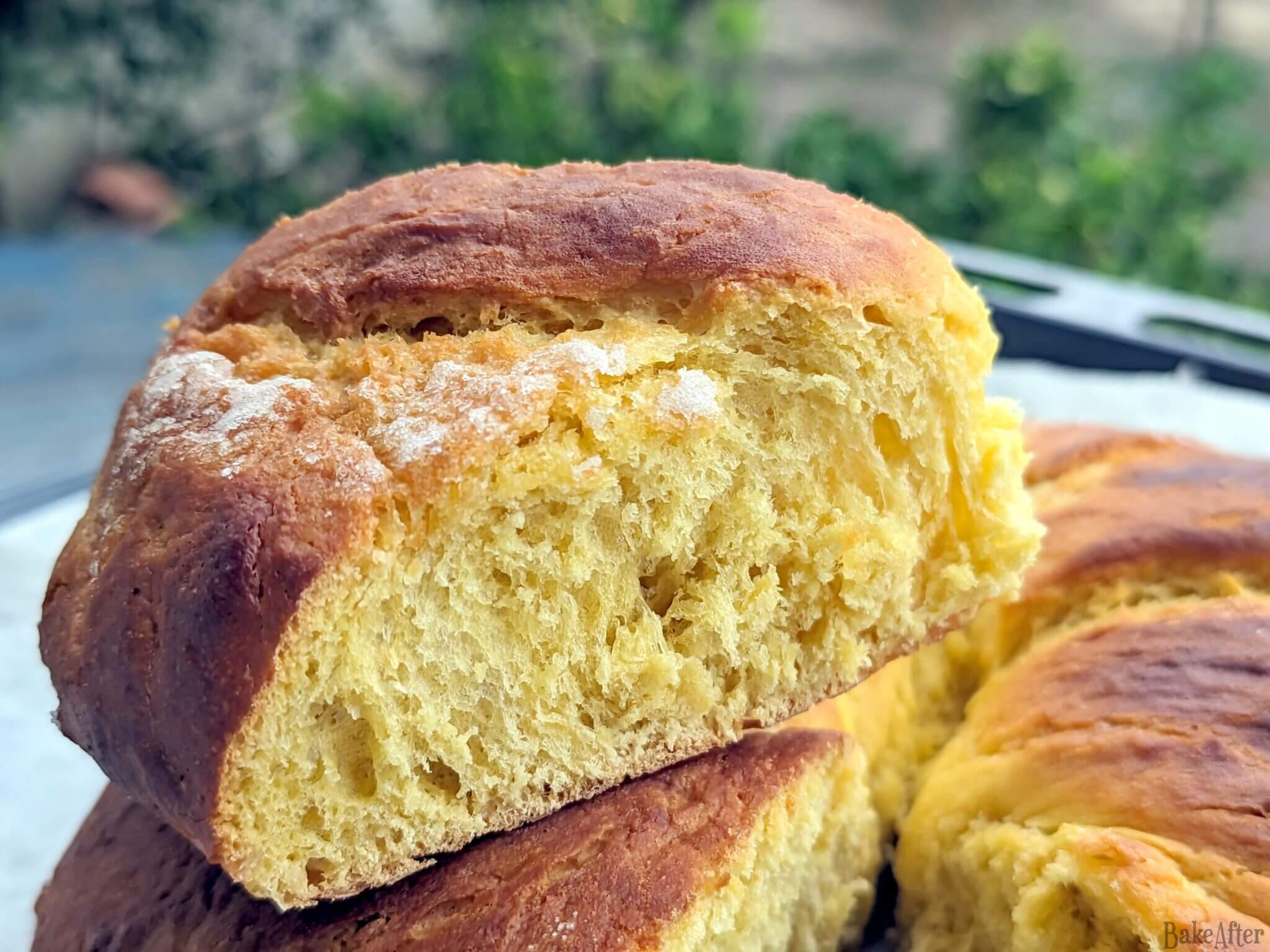
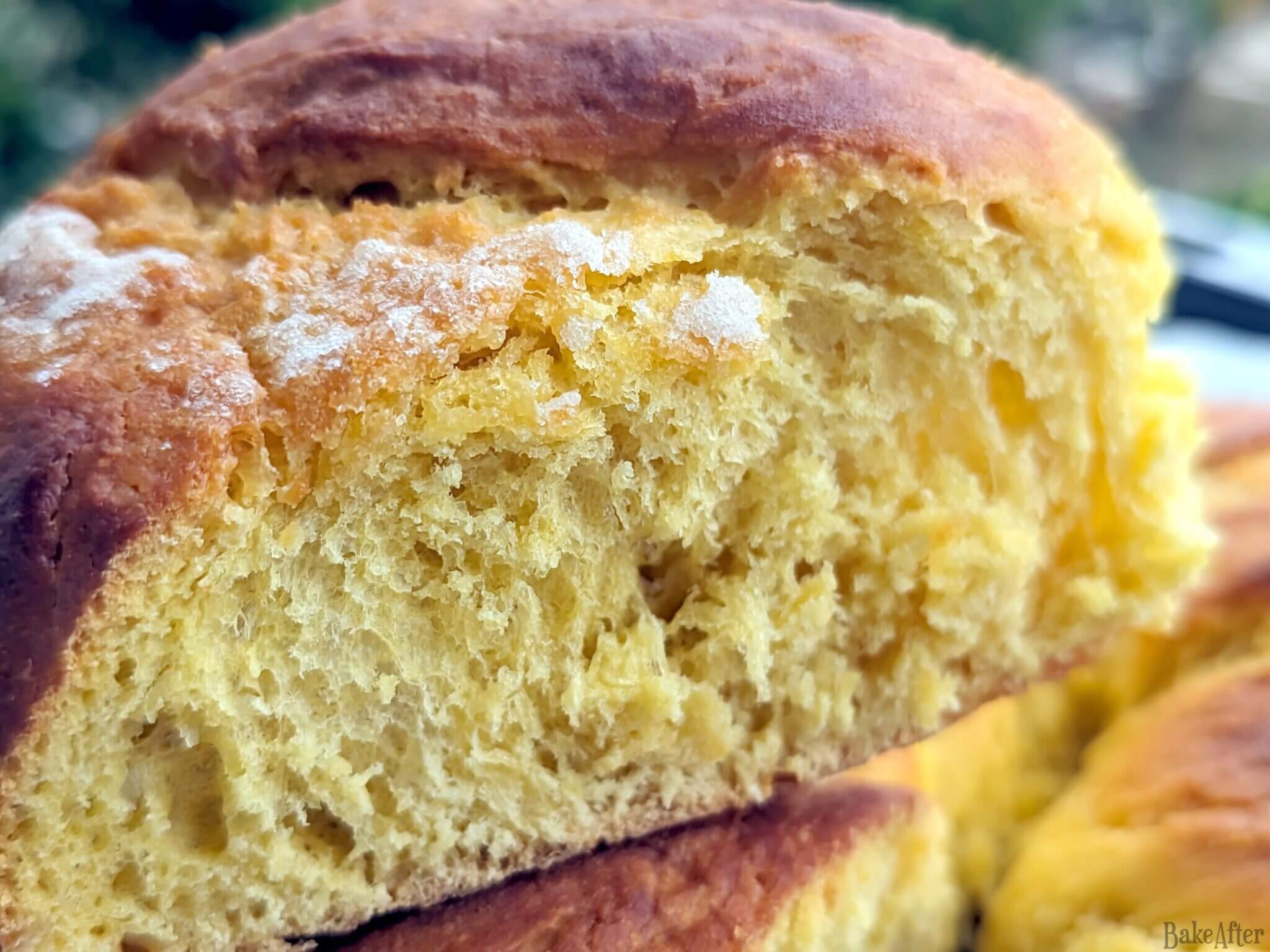
This is also very common sweet treat for Easter, but you can find it all year round and you can of coarse bake it anytime of the year! ;D
You can skip the final syrup and the powdered sugar. I only did that part because it gives the regueifa a shinier, more golden look, it isn’t an essential step. That said, I did it because if you want, say, a more fruity aroma, you can add some lemon or orange peel to the syrup and create a variation with a citrus twist 😀 As an alternative, if you want the shine without making a syrup, use a very liquid, clear jelly, like apricot or orange jelly, or even honey 😀 Why not 😉
The regueifa can be frozen after baking. For best results, use it within 3 months of freezing. If you cut it before freezing you can like toast slices directly from the freezer.
Make sure your yeast is properly activated before mixing it in, a foamy, bubbly mixture after that first hour means you’re good to go, if it stays flat, your yeast might be dead and the dough won’t rise properly.
Kneading time really matters here, don’t rush the 20 minutes, since a well developed gluten structure is what gives this bread its soft, pull apart texture.
Kneading time really matters here, don’t rush the 20 minutes, since a well developed gluten structure is what gives this bread its soft, pull apart texture.
One more thing, this bread is a bit like pão de deus, it’s delicious all by itself, but a lot of people in Portugal do add butter, jam, ham and cheese, and other goodies before eating it, heheheh ;D
This recipe for Portuguese Easter Braided Sweet Bread • Regueifa Doce was originally created on BakeAfter.com. Esta receita de Regueifa Doce da Páscoa foi publicada em português no Iguaria.com.
Nutrition
Per Serving: 292 calories; 7.1 g fat; 49.7 g carbohydrates; 7.4 g protein.Did you try this recipe?
Let me know how it turned out for you! You can leave a comment below ;D
Discover more from BakeAfter
Subscribe to get the latest posts sent to your email.