
Alright, this is one of those questions that pops up every time you’re standing in the soup aisle wondering which carton to grab, or halfway through a recipe that just says “add chicken stock” like you’re supposed to already know if that’s the same thing sitting in your pantry labeled “chicken broth.” Are they interchangeable? Is one better than the other? Is this just marketing dressed up as a real distinction? The truth is there is a real difference, it is just smaller and more practical than most people expect, and it comes down to what each one is actually made from and what you’re planning to do with it.
So let’s break this down calmly, because once you get it, you’ll never second guess the soup aisle again.
What is Chicken Stock, Really?
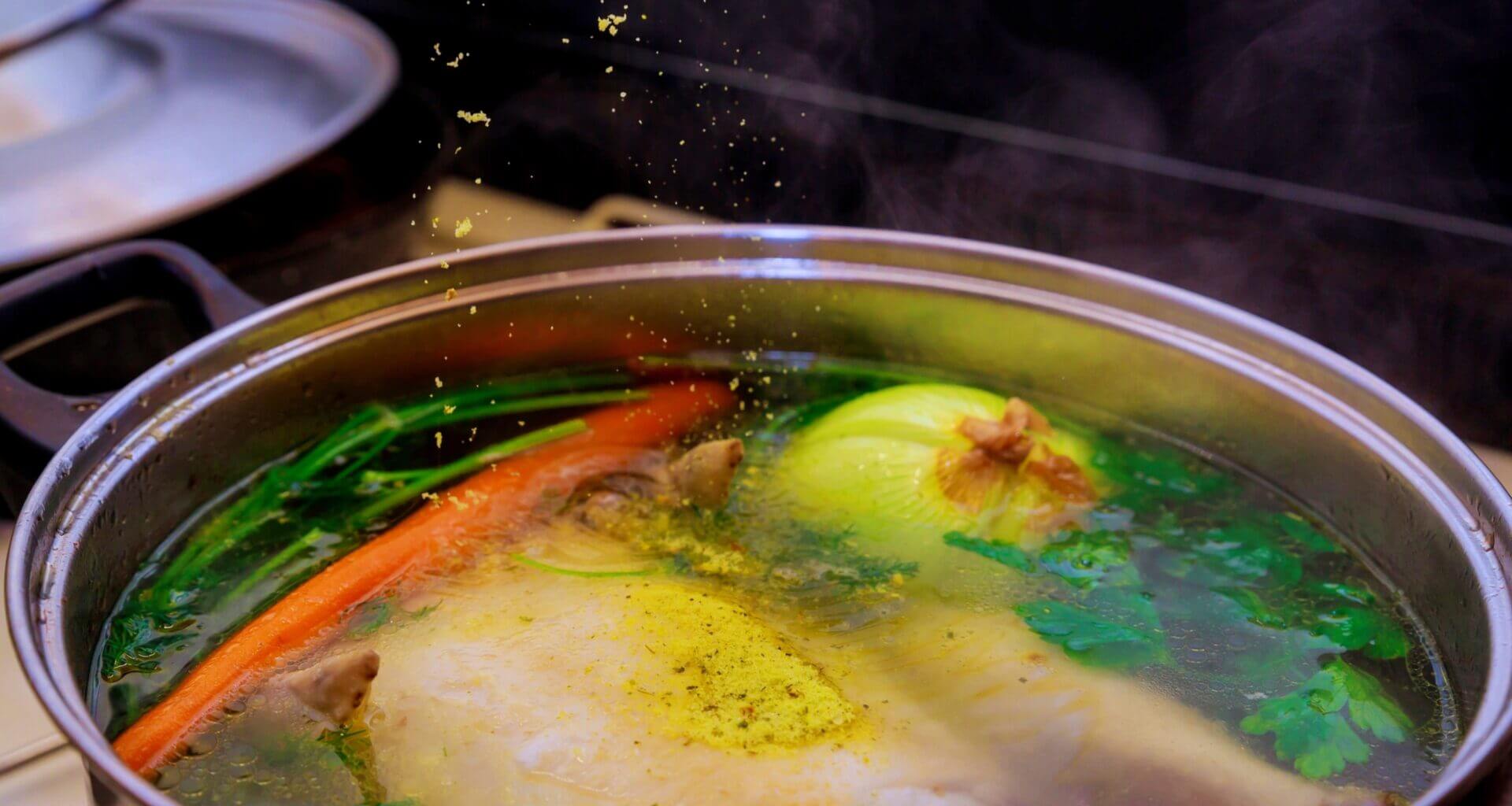
Stock starts with bones, mostly. Roasted or raw chicken bones, sometimes with a bit of meat still clinging to them, simmered low and slow in water for hours, often with some vegetables, herbs and maybe a splash of vinegar thrown in to help break down collagen and balance the flavor. That long, gentle simmer is what does the real work, it draws collagen out of the bones and connective tissue, and that collagen breaks down into gelatin. This is why a good stock, once it cools in the fridge, often turns thick and jiggly, almost like a loose jelly. That’s not a mistake, that’s actually the sign of a well made stock. It means there’s real body in there, and that body is exactly what gives a stock its richer texture and deeper mouthfeel when you use it in a sauce, a risotto or a braise. Stock, on its own, is usually not seasoned much, if at all. It’s meant to be a building block, not a finished product. You season the dish you’re making with it, not the stock itself.
And What About Chicken Broth?
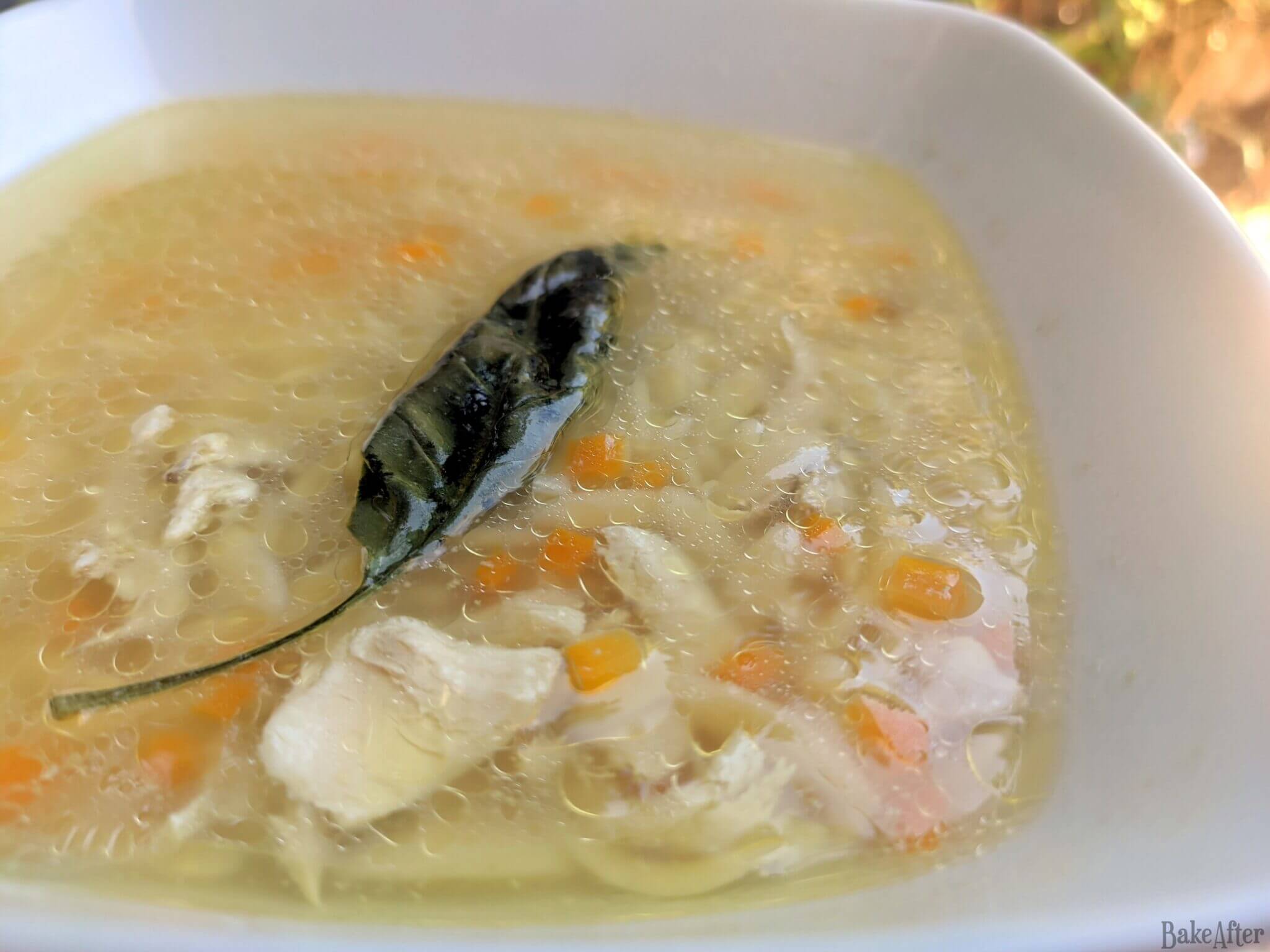
Broth takes a different starting point, meat rather than bones. You simmer actual pieces of chicken, sometimes with bones still attached, sometimes not, for a shorter amount of time than you would for a stock. Because it’s meat doing most of the work here and not hours of bone extraction, broth doesn’t develop nearly as much collagen, so it stays thin and liquid even when it’s cold, it never turns to that jelly texture stock can get. Broth also tends to be seasoned already, with salt at the very least, sometimes with a bit more going on depending on who’s making it. That’s because broth was traditionally meant to be sipped or eaten on its own, as a light meal, not necessarily used as an ingredient buried inside something else. Think of a simple chicken soup your grandmother made when you were sick, that’s broth doing exactly what it was designed to do.
So which One has the Flavour?
Here’s where people usually get surprised, because broth, made from actual meat, often tastes more immediately “chicken forward” than stock does. Stock’s flavor is deeper and more savory in a background sort of way, it’s the umami, the richness, the body, the mouthfeel, but it’s not necessarily the punchiest chicken flavor on its own. Broth is lighter, cleaner and more straightforwardly chicken flavored, because meat itself carries a lot of the taste that bones alone don’t. So if you’re drinking it straight from a mug on a cold day, broth is usually the better experience. If you’re building a sauce, a gravy or a braise where you want richness and body more than you want a strong upfront chicken taste, stock is doing the heavier lifting.
Does it Actually Matter Which One you Use?
Most of the time, no, not dramatically. If a recipe calls for chicken stock and all you have is broth, or the other way around, your dish is not going to fall apart. The differences we’re talking about here are real, but they’re subtle enough that in a lot of everyday cooking, rice, a quick pan sauce, deglazing a skillet, either one will get the job done just fine.
Where it does start to matter is in recipes that lean hard on that gelatin content. Risotto, for example, benefits a lot from stock’s extra body, it helps build that creamy, clingy texture risotto is known for. Same goes for gravies and reductions, where you’re relying on the liquid to thicken and coat, stock will get you there faster and with a rounder texture than broth will. Broth, being thinner, can leave a reduction a bit flatter and thinner no matter how long you cook it down, simply because there’s less natural body to work with. On the flip side, if you’re making a light soup where you want the chicken flavor to come through clearly and quickly, without a heavy or gelatinous background, broth is usually the better pick.
What About the Store Bought Stuff
This is where things get a little messier, because a lot of commercial “stock” and “broth” don’t follow these rules very strictly. Manufacturers often use the words almost interchangeably (and therefore this article), and what’s inside the carton can vary a lot more by brand than by label. Some “broths” on supermarket shelves are really closer to a thin stock, and some “stocks” are seasoned enough that they behave more like a broth.
The most reliable way to know what you’re actually getting is to check the ingredient list, not just the front label, look for how much sodium is added, whether there are extra flavorings or thickeners, and if you can, whether it lists bones or meat as the main starting ingredient. If you want to sidestep the confusion entirely, making your own at home from bones or leftover roast chicken carcasses is not complicated, it just takes time, and it will always beat anything from a carton in terms of flavor and control over the seasoning.
So, Stock or Broth? Which Should You Keep in your Kitchen?
Like any home cook, the ingredients you have in your pantry, depend on your way of cooking, it could be both if you have space and a habit of using them, you can keep a low sodium stock around for anything where you want richness and body, sauces, risottos, braises, and keep broth around (like frozen in a ice cube format) for anything where you want a lighter, more directly flavorful liquid, quick soups, cooking grains, or just something to sip. But if you only want to keep one, a good quality, low sodium stock is usually the more flexible option, because you can always season it up yourself, while it’s much harder to make an over salted, thin broth behave like a rich stock after the fact.
Tips and Tricks for Stocks and Broths
- If you’re making stock at home, roast the bones first, this alone makes a noticeably deeper, more savory stock than starting with raw bones.
- Always start stock or broth in cold water, not hot. Heating slowly allows soluble proteins to gently clump together and float to the top where you can skim them off, whereas boiling water cooks those proteins instantly into tiny particles that turn the liquid cloudy.
- Skim the foam that rises to the top in the first 20 to 30 minutes of simmering, this keeps your stock or broth clear instead of cloudy.
- Buy or make low sodium stock and broth whenever possible, it’s much easier to add salt later than to fix something that’s already too salty.
- If your homemade stock isn’t gelling in the fridge, don’t worry, it just means there wasn’t enough collagen extracted, it will still taste fine, it just won’t have that jelly texture.
- Freeze stock or broth in ice cube trays or small containers, this way you can pull out just what you need for a pan sauce or a quick risotto without thawing a whole batch.
- Never throw away the carcass after a roast chicken, that’s basically a free batch of stock waiting to happen, just simmer it with some vegetable scraps and water for a few hours.
- If a recipe just says “stock” or “broth” without specifying, and you only have the other one on hand, don’t stress, use what you’ve got, the dish will still work.
- Don’t be fooled by “bone broth” in the store, it’s mostly just a trendy marketing term for a well-seasoned chicken stock made for drinking straight.
And that’s it, also note that I’m talking about chicken as a generic example, this goes for any kind of broth or stock, its the same if you use fish, beef, lamb, etc. Hope this small article was helpful and see you next time! ;D
Discover more from BakeAfter
Subscribe to get the latest posts sent to your email.