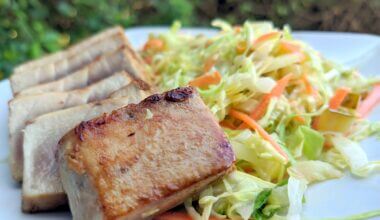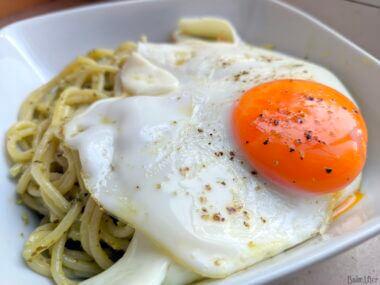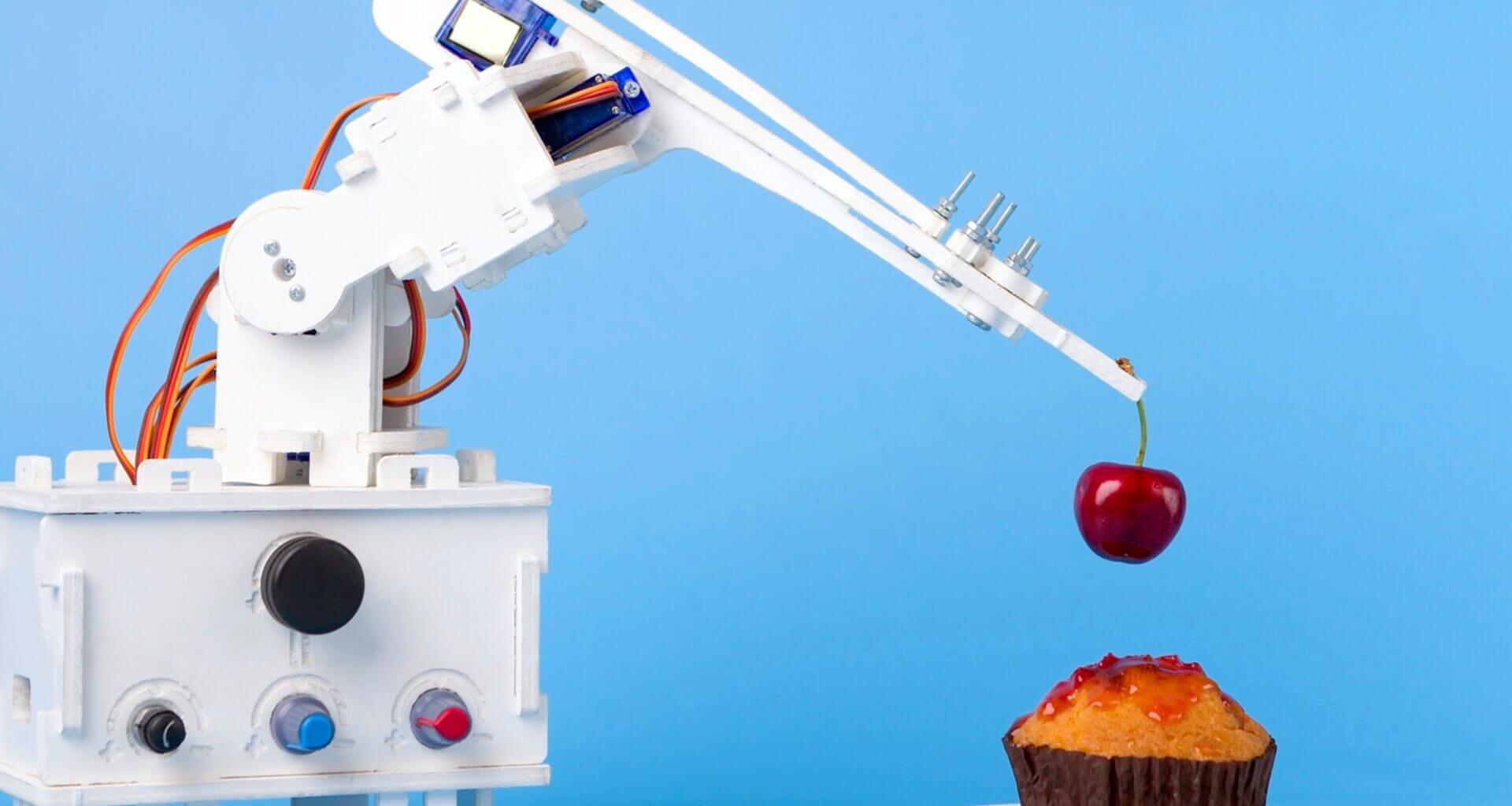

We are clearly approaching another revolution with the emergence of new types of AI’s or Artificial Intelligences, especially in the creation of images, videos, code, and natural language. I personally think we are still a fair way off from what anyone could call true intelligence, but even this step alone is already showing us an enormous number of things that can be created and problems that can be solved with AI.
That said, not everything is positive, and one of the things that has been giving me, let’s say, pause, is the growing number of websites and smartphone apps offering millions of recipes, and the use of bots and artificial intelligence to generate cooking recipes and sites. And even at a glance, I can already spot several problems.
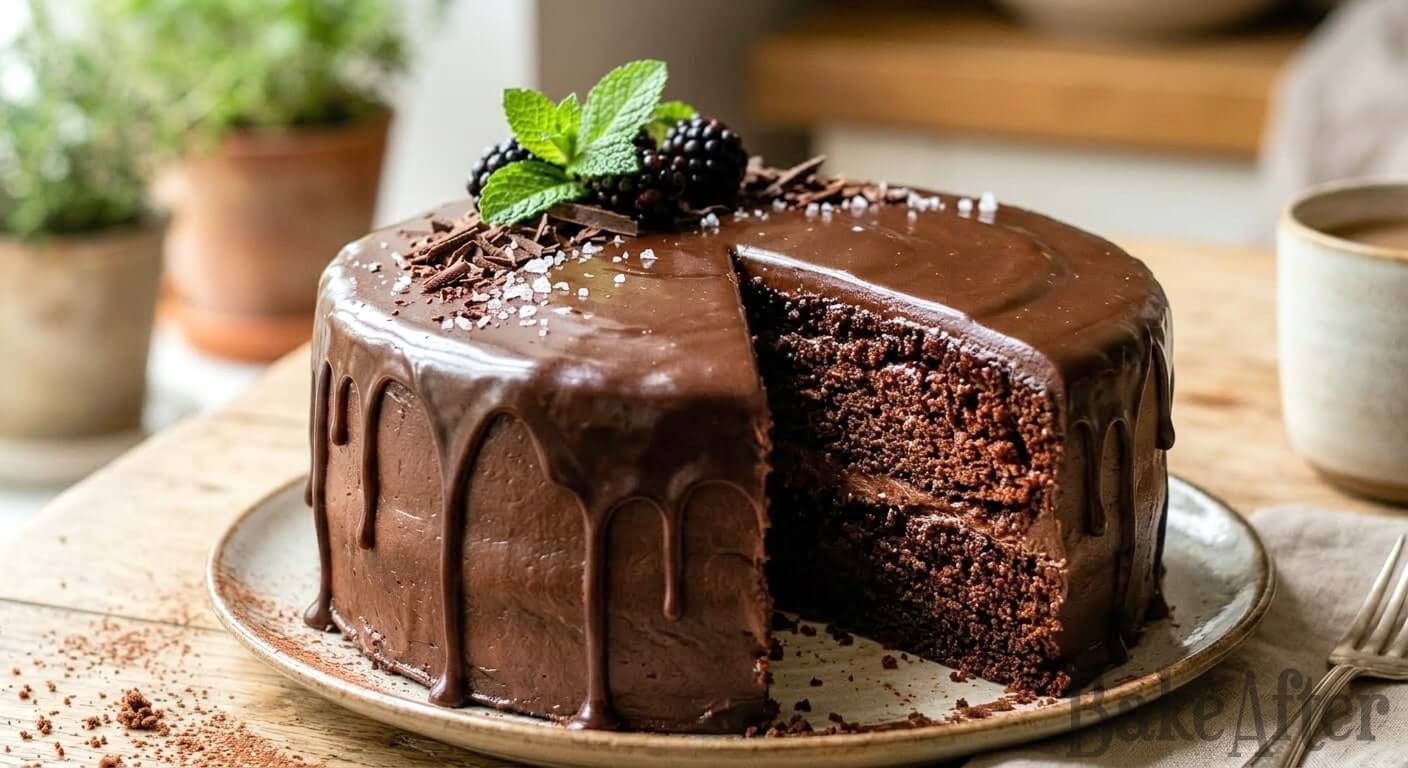
Do you like this cake? It’s a beautiful photo of a delicious cake that doesn’t exist, and never has existed outside the imagination of an artificial intelligence. You can ask any one of dozens of different AI tools to generate all kinds of things, including recipes, and it will give you something that looks very close to the real thing. But with recipes, “close to reality” isn’t enough. What you need is literally reality!
First, How Does This AI Actually Work?
Before getting into the problems, it helps to understand what we’re dealing with. These AI tools, whether they generate text, video, music, or photos, all work in a broadly similar way. They are called LLMs, or Large Language Models, and in basic terms they are created by accumulating enormous amounts of data and building relationships between that data so the model learns how words are connected and how to combine them into a text that makes sense.
If you give an LLM nothing, it produces nothing. But if you feed it the entire universe of medical books, journals, blogs, and research papers, it does NOT become an expert in medicine. It becomes an expert at writing about medicine. And that is the crucial difference.
That doesn’t mean it won’t say true things or even be helpful sometimes, of course not. But what the AI is doing is predicting which words are the most appropriate, or the most original, to use next. That’s it. It is not “thinking” like a human, these tools are, at their core, experts in language, not in the subjects they are writing about.
It’s a bit like asking a high school English teacher to explain nuclear fusion without the teacher knowing anything about physics. They might write something that sounds coherent, and if you give them a bit of information on the topic they might write something even more convincing and trutful. But they still don’t actually know what fusion is, because they don’t need to understand it to write about it. (I’m looking at you, TV sports commentators.)
And to add another layer, these AI models are also built with a certain drive towards creativity and variation. Partly because it makes them seem more intelligent, and partly to avoid being caught directly copying, say, a Wikipedia definition word for word, which wouldn’t look very smart and would also open them up to copyright claims. Try asking one of these AIs for the lyrics to a popular song or a chapter of a commercial book and you’ll see it either refuses, or worse, just makes something up entirely.
The Problems with AI-Generated Recipes
Now, about cooking and recipes specifically. I’ll use recipes as my example, but most of what follows applies to practically any other subject as well.
A good cooking recipe needs two things to succeed: it has to have been tested, and it has to have clear, precise ingredients and instructions. That’s really all there is to it.
When an AI “creates a recipe,” it searches its database of recipes, good and bad, finds ones similar to what was requested, and modifies them to create something that appears original. It might change the wording, adjust quantities, swap in complementary ingredients, choose a different technique, alter the cooking times, add extra steps, or remove steps, all to produce something that on the surface looks like a properly written recipe.
But is it a good recipe? Is it even really a recipe at all? No. It is a facsimile of a recipe. That doesn’t mean it can’t work, sometimes it’s good enough. Ask for something super simple like a ham omelet or a pancake and chances are the AI produces something reasonable enough. But you never actually know, because the AI’s only concern is writing text that has the correct structure of a recipe and includes what was asked for. Whether the recipe actually works, or even makes logical sense, is simply not its concern.
When a real chef, or a home cook, or a grandmother, creates a recipe, she knows what works and what doesn’t, she has experience and uses that experience and knowledge to create new things, sometimes even playing against expectations to invent new combinations and original dishes. Most importantly, once she writes it down, she goes and cooks it, checks whether she was right, and adjusts until it is right. That is the difference, and it is a crucial one, if someone cooked it and came out good, then the chances of coming out good for you are also very high!
The Real Challenges with AI Recipes
- Lack of Consistency and Reliability. Ask for ten omelet recipes and you’ll get ten different ones, with wrong proportions, mismatched ingredients, and cooking times that may be completely unrealistic. Worse, the AI can “hallucinate,” adding ingredients and preparation steps that aren’t even fit for consumption or are too high end for what was requested, why not put caviar and truffles on that omelet!
- None of These Recipes Have Been Tested. These recipes have never been made in an actual kitchen, and because of that you never really know if they work. Even when they do work on some level, a similar, more established recipe is almost certainly better, because when it was originally developed and tested, things like texture, balance of flavors, correct timing, correct ingredients, and correct techniques were all taken into account.
- Problems with Measurements, Units, Equipment, and Technique. Something every home cook has suffered from, recipes with imprecise measurements like cups, spoons, pinches, all things that the AI will struggle to correctly distinguish and convert. This leads to dishes with measurements that don’t make sense, or instructions involving specific equipment and techniques that need to happen in a precise order to produce the right result. Any change or creative flourish from the AI, and you have a disaster.
- Technique and Food Safety Issues. An AI-generated recipe won’t bother adding or correctly explaining culinary techniques that would be ideal for the dish. It also won’t think about food safety, potentially leaving raw eggs at room temperature, or combining raw ingredients that really should be cooked first. A good example: eggs in the United States are processed very differently from eggs in Europe, so an American recipe always accounts for that. When you ask an AI to generate a recipe, it may draw on American sources without accounting for the different food safety context of where you actually live.
- Difficulty with Context, Tradition, and Dietary Restrictions. If a regular recipe is already being “invented” by the AI, imagine what happens when you ask for something traditional, or gluten-free, vegan, dairy-free, or low-calorie. The AI doesn’t actually know any of that. It might produce a “gluten-free” recipe that uses wheat flour, or a “low-calorie” burger with exactly the same calorie count as a regular one, because it never actually calculated the calories. It just wrote what sounded like a plausible low-calorie recipe, from whatever it had in its database or whatever it searched and came out first on the search results (and we all know how the first results on some searches are absolute crap!).
- Data and Training Problems. These AIs are built on vast databases, and the quality of what comes out depends entirely on what went in. If the training data leans heavily toward French cooking, how is it supposed to generate a genuinely good Southern barbecue recipe or an authentic Oaxacan mole? If the data skews mostly Western, how can it produce quality African, Brazilian, or Asian recipes with any real depth? And ironically, more data doesn’t always mean better results. More data also means more chances to generate recipes that make no sense, or to produce increasingly bizarre variations that edge into plagiarism and copyright violation territory. And with more AI based recipes sites being created these AI’s are then being trained on recipes that AI already wrote, so learning new data from really bad data!
- It Can’t Explain the “Why.” This might be the second most important problem, and one of the hardest to fix. As I explained above, the AI knows what to write but doesn’t know what it’s writing. If you ask it why it included a particular step, it will give you a perfectly confident-sounding answer. But if you then ask it to rewrite the recipe without that essential step, it will happily invent something else. It doesn’t understand why the technique matters for the recipe, only that thousands of similar recipes included it, so linguistically speaking it was the right choice at that time. The AI’s decisions will always be driven by what “sounds right” and what it thinks are your expectations and not by what creates a better dish. Ask it to make a recipe that includes something crispy but requires boiling for four hours and it will hand you a “recipe” that makes no culinary sense whatsoever.
The Three Things a Real Recipe Actually Needs
A good recipe isn’t just a list of ingredients and instructions. It is built on three things, and unfortunately artificial intelligence has none of them. Experience, Imagination and Experimentation!
Experience tells you which tools to use and how to use them correctly, which ingredients to use and how to prepare them properly. Nobody needs to explain to an experienced cook what a bain-marie (water bath) is, how to fillet a fish, or how to break down a whole chicken. That knowledge is already there, built through repetition, and it is exactly that experience that makes a recipe author know how to write instructions that will actually work for someone who is just starting out.
Imagination is nearly the entire foundation of cooking. Almost every dish that has ever existed started as someone’s idea, a flash of inspiration, a decision to change one technique, swap one ingredient, or plate things a different way. Imagination is what drives the choice of which recipes to make in the first place, and what results you are actually aiming for. There is nothing more human than using our imagination in the kitchen. You need imagination when you have a thousand ingredients and when you have only one!
Experimentation has two meanings here: trying new things, using that imagination, and then after making the recipe, actually tasting it to see whether it’s good or not. A new recipe that has never been cooked is not a recipe. It’s a theory that hasn’t been put into practice yet. Cooking and tasting it is what tells you whether you have a good recipe, a bad one, or one that needs more work. There’s a reason we have dishes we call classics or traditional. They didn’t earn that status overnight. They earned it over many years of many people cooking the same dish, tasting it, adjusting it, and little by little, through something like natural selection, arriving at a form that is close to an ideal and therefore a classic recipe!

So What Does the Future Look Like?
I do think there is a future for AI in cooking. Maybe not through LLM-based systems, which are fundamentally language teachers, but through new forms of AI or so-called hybrid AI models that bring together different types of artificial intelligence. Something that could genuinely understand the nuances of a recipe, know its constraints and proportions, and perhaps in the not-too-distant future generate recipes that are actually reasonable, maybe even excellent. But until the day an AI actually cooks the recipe, tastes it, and confirms that it is genuinely good, I think every chef, home cook, and food lover has nothing to fear, except the proliferation of bad recipes on the internet, something that has happened way before AI was even here!
And on that note: I think in this environment, trusted food sites, well-known chefs, and dedicated home cooking communities are going to become more valuable, not less. Because you can see the results. The photos show food that was actually made. The recipes were cooked, tasted, and approved before being published.
Compare that to the businesses already out there that, for about ten dollars a month, will take a recipe name and automatically generate dozens of AI photos and AI recipes, ready to publish instantly. A site that has been publishing three or four hand-tested recipes a week for years can be “matched” in two months by an AI farm churning out a hundred untested “recipes” a day. Today it’s easy to produce junk in volume. A few years ago the problem was people copying recipes or making recipes up and copying photos without permission. Now they don’t even need to do that.
That said, there is absolutely a place where AI can help in the kitchen, and I do use it occasionally myself. Think of it the way you’d think of a calculator or a kitchen scale, a tool that helps, not a replacement for the cook. Specifically, AI can be useful for suggesting alternatives (other frostings for a carrot cake, additions to a cookie recipe, wine pairings for a dish), helping you understand or look up a technique that a recipe mentions briefly, translating a recipe from another language, building a shopping list, or giving general feedback about a recipe concept, like whether it feels like a Christmas dish or whether the portions seem right for ten people. Things like that, where a thoughtful suggestion is more valuable than a precise answer, are where AI genuinely shines.
While things AI still struggles with, like creating a very specific recipe from scratch, converting a recipe with not very precise measurements from 2 servings to 10, calculating correct nutritional values, or giving precise substitutions with exact measurements, it will attempt confidently. But ask three different AI tools the same question and you’ll get three different answers, so those areas still need a healthy dose of skepticism.
And that’s it hope this was helpful, any questions and whatnots hehehe, feel free to comment below and have a great day! ;D
Discover more from BakeAfter
Subscribe to get the latest posts sent to your email.