
You open the fridge, find an egg carton with a date that is either in the past or completely unreadable, and then comes the question. Is it fine, or are we about to ruin a perfectly good omelet? Or worse, a cake batter, where the bad egg is only discovered at the very end, noooooooooo! (insert darth vader meme) ;D
The good news is that checking an egg is much simpler than it sounds, and you don’t need any special gadgets. Also, an old egg and a bad egg are not the same thing, and mixing the two up is how a lot of perfectly good eggs end up in the trash. So here is what works, what doesn’t, and what to look for, before and after the shell comes off.
Why Eggs Are Stored Differently Around the World
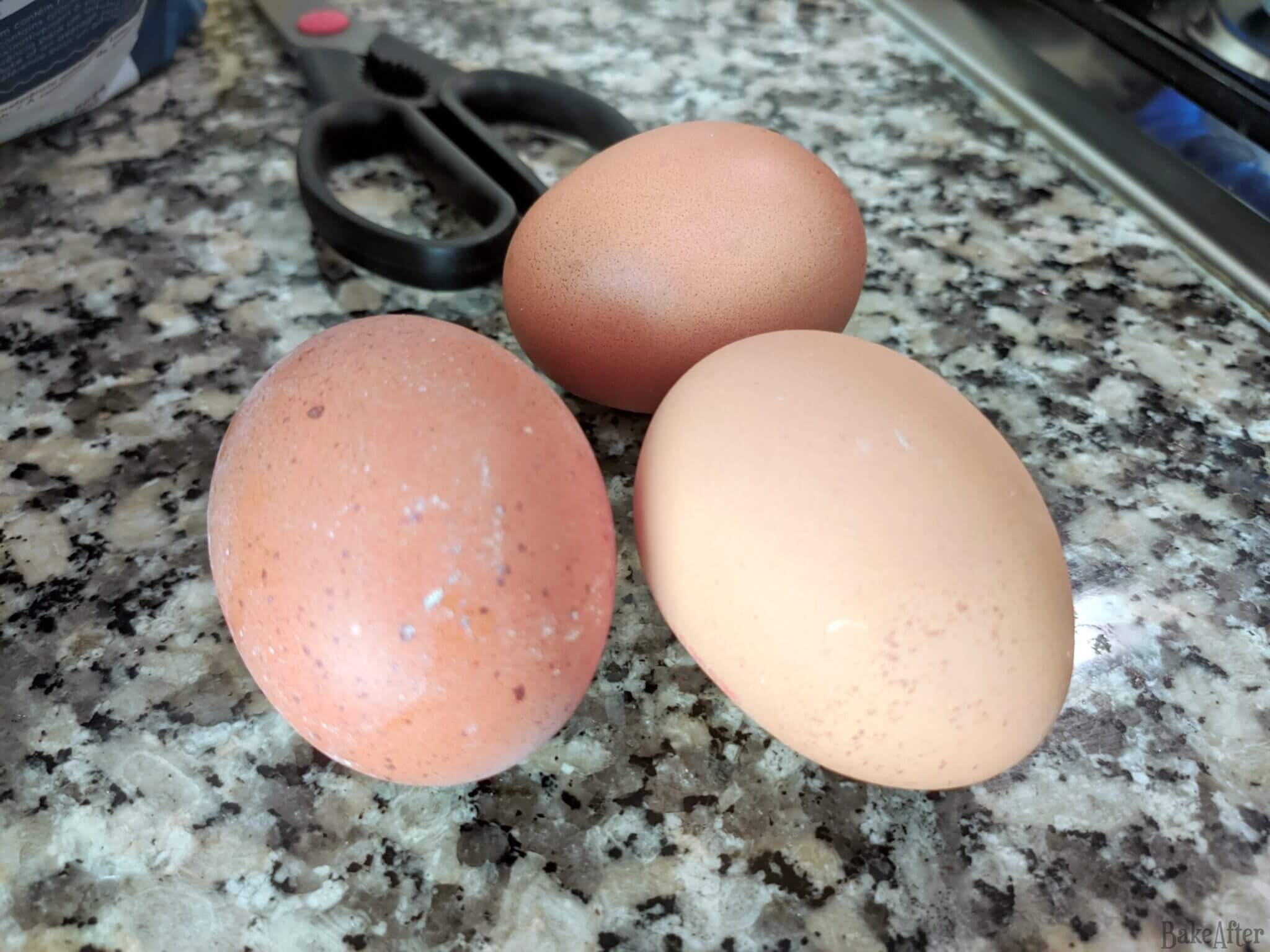
First its important to note some differences, if you’ve ever traveled, you may have noticed something odd. In the USA and Japan, eggs mostly live in the refrigerator section of the supermarket. But in a lot of Europe, they sit on a regular shelf next to the flour and the canned tomatoes, at room temperature, and nobody blinks. Both are doing it on purpose, and it all comes down to one thing, a very thin natural coating on the shell called the cuticle, or bloom.
That coating seals the tiny pores of the shell and helps keep bacteria out, while still letting the egg breathe. In the USA, commercial eggs are washed before being sold, and washing removes that protective layer. Without it, eggs have to be kept chilled to slow down bacterial growth, especially Salmonella, so the USDA requires eggs to be refrigerated within 36 hours of laying and kept cold from then on. Japan follows a similar washed and refrigerated approach, although I’ve seen in Japan also room temperature eggs.
Also as a sidenote that this has nothing todo with eggs that are meant to be eaten raw, those eggs are normally pasteurized, so they are safe to eat raw, so both chilled eggs like in the USA or room temperature eggs like in Europe are not ideal to be eaten raw.
So most of the European Union goes the other way that the USA. Eggs are not washed and are not refrigerated, even in stores, because the cuticle is still doing its job. Chickens in many European countries are also vaccinated against Salmonella, which adds another layer of protection.
So who is right? Honestly, both, as long as you stay inside your own system. The problem starts when you mix them up, like moving to a new country and using your old habits.
So How Long Do Eggs Last?
Ok here’s a rough idea. But dont take what i say as law, i would say your best guide is always what the “best before” date on your egg carton! ALWAYS!
USA, Japan (washed and refrigerated) – About 3 to 5 weeks from packing for best quality.
Europe and others (unwashed and room temperature) – About 21 days (you can extend a bit by keeping the eggs in the fridge when you bring them from the supermarket).
Cooked, hard-boiled eggs (refrigerated) – About 1 week.
Some more details worth knowing:
USDA research found that refrigerated eggs, washed or oiled, were still Grade A after 15 weeks. Unwashed eggs left at room temperature dropped from Grade AA to Grade B in just a week in the same study. That is quality, not safety, but it shows how much the cold helps keeps the quality.
In the EU, the best-before date is counted from the lay date, while in the USA you will often see a pack date (a number from 1 to 365) or a sell-by date. Different systems, different math.
And here comes the important rule: once an egg has been refrigerated, keep it refrigerated. Taking a cold egg out and letting it sweat on the counter all day is not a great idea, because condensation on the shell can help bacteria move in. If you buy your eggs from a shelf, fine you can keep them out, but its best to refrigerate, but if they came from a fridge, send them back to a fridge.
Checking an Egg Before You Crack It
You can learn a lot from an egg without ever breaking the shell. These are the simple checks I trust.
The Water Float Test (The Classic)
Fill a bowl or a tall glass with cold tap water and gently lower the egg in. An egg breathes through its shell, so as it ages, moisture escapes and the air pocket inside the egg gets bigger, and that air is what changes how the egg sits in the water.
- Sinks and lies flat on its side: very fresh, probably under a week old. Great for poaching and soft-boiling.
- Sinks but tilts up at the wide end: a week or two old, perfectly fine for anything.
- Stands upright on the tip at the bottom or floats halfway: a few weeks old. Still usable, but crack it into a separate bowl first.
- Floats to the surface: old. Crack it into a bowl and smell it before you decide.
Now the honest part. A floating egg is an old egg, not automatically a bad egg. Floating tells you that the egg has been losing moisture for a long time, but it does not guarantee that it has spoiled. So treat the float test as a warning light, and let your nose make the final call.
The Shake Test
Hold the egg next to your ear and give it a gentle shake. A fresh egg stays quiet. If you hear something sloshing around, the inside has loosened up, which usually means an older egg. It’s not as reliable as the float test, but it works when you have no bowl around.
Look at the Shell
Check the egg in good light before you use it.
Cracks or leaks: throw it away. A broken shell is an open door for bacteria. Slimy or powdery patches on the shell: not a good sign, so skip it.
The Smell Test (Yes, Through the Shell)
A bad egg can sometimes smell even with the shell closed, a sulfur or rotten smell that is hard to miss. If you smell it before you even crack it, you already have your answer, and I’m sorry for your nose.
Signs of an Older Egg After Cracking
Now crack the egg onto a flat plate or into a small bowl, never straight into the pan or the batter. This is the habit that saves the most recipes.
Then have a look…
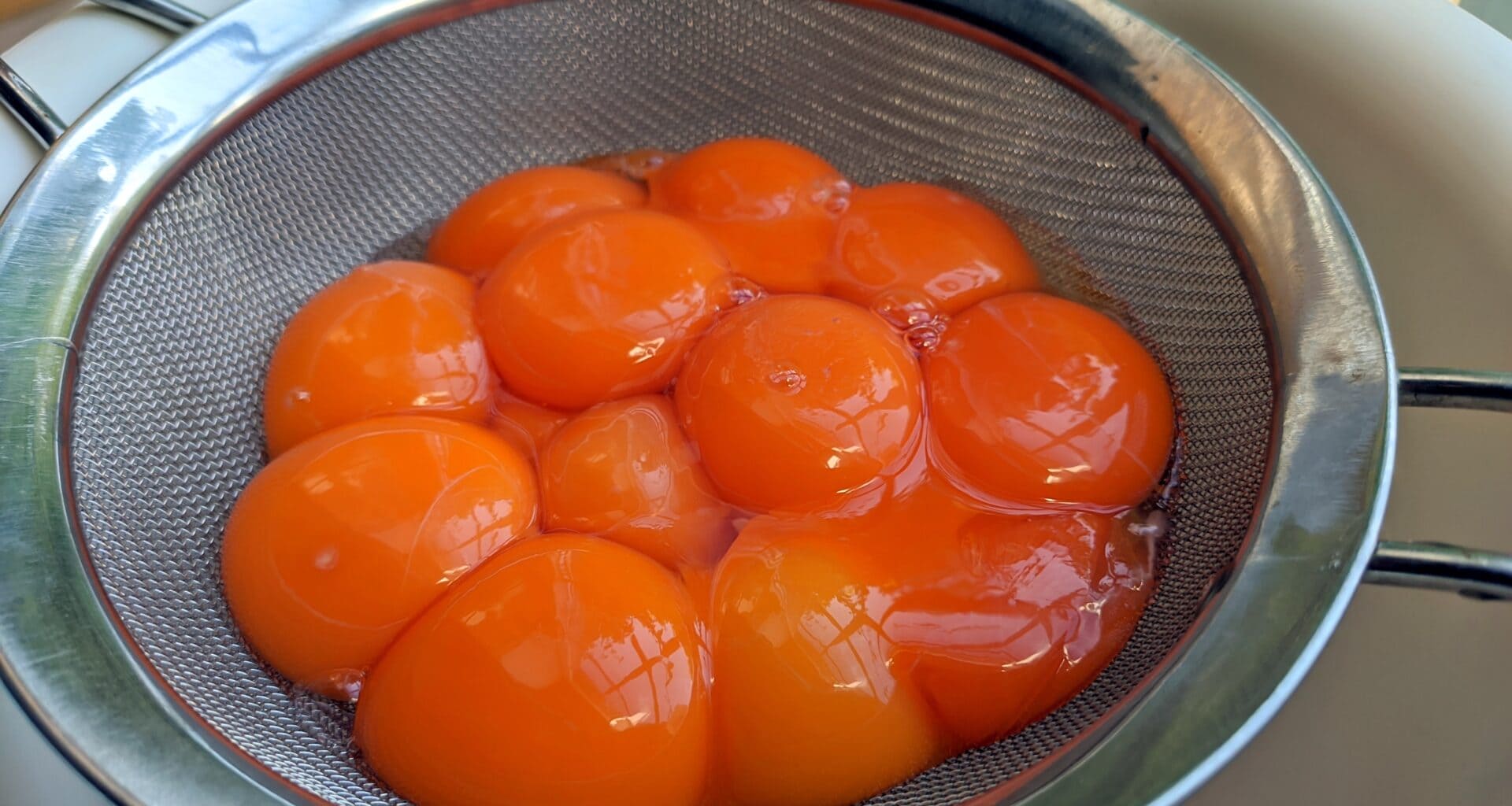
- A fresh egg: The white is thick and holds together in a neat mound around the yolk, and the yolk sits tall and round in the center, with a bright yellow or orange color.
- An older egg: The white runs thin and spreads wide across the plate, and the yolk sags, flattens or breaks easily. It’s still safe to eat if it smells normal, it just won’t fry or poach as nicely, which is why poached eggs with older eggs turn into those messy, stringy clouds.
- A bad egg: Here the signs are clear, and you won’t have to wonder. It will have one or several of these signs…
A sour, sulfur or “off” smell, the kind you notice right away.
A murky or cloudy look with no clean separation between the yolk and the white, plus the smell (just because some super fresh eggs start a bit murky/cloudy)
A discoloured yolk, or a white that is pink, green or iridescent.
Any slimy texture.
If you see any of these, throw it away, wash the bowl, and don’t think about it twice. And don’t taste it “just to check”, that is the one test everyone should skip.
Signs of a Fresh or Older Egg After Cooking
Sometimes you only find out after the egg is already cooked, so here is what to look for in a boiled egg.
- It is hard to peel. This one is a bit funny, because a very fresh egg is the hardest to peel, since the white sticks to the membrane. A slightly older egg, about a week or two, peels much easier. So a hard-to-peel egg is actually a good sign of freshness.
- A flat spot or a big air pocket at the wide end. The older the egg, the larger that air pocket, and you will see it once you cut the boiled egg in half.
- A gray-green ring around the yolk. Is not a sign of age, that is just overcooking, so no panic.
- A smell. Cooked eggs naturally smell a little like sulfur, but a strong, rotten smell after peeling means into the trash it goes.
- A watery or slippery white in a fried or poached egg. Again, older, not necessarily bad.
Tips and Tricks for Keeping Eggs Fresh Longer
A few extra things I’ve gathered from handling eggs almost every day:
- Keep eggs in their original carton. It protects them from picking up fridge smells and shows the date, so you don’t have to guess.
- Store them on a shelf inside the fridge, not in the door. The door gets the most temperature swings every time you open it. And yes i know thats where they put the egg holders… skip them or take them out.
- Keep them pointy end down. The air pocket stays at the top, away from the yolk, and the egg lasts a little better.
- Write the date you bought them on the carton if the printed one is hard to read. Future you will be grateful.
- Put new eggs behind the old ones, so the oldest get used first.
- If you’re not sure, use the older eggs for boiling, baking or scrambling, and save the freshest ones for poaching and frying. That is where freshness really shows.
- Wash your hands after touching raw eggs, and don’t rinse the eggs yourself right before storing them, because it can remove what is left of the protective layer on unwashed eggs.
- Never use a cracked egg in anything that won’t be cooked well.
- Cook it well when in doubt. An egg that is simply old is fine when thoroughly cooked, but an egg that smells wrong is never fine.
- If you want to use raw eggs, then get pasteurised eggs, things like raw cookie dough, homemade mayonnaise or tiramisu need the freshest, best eggs you can get.
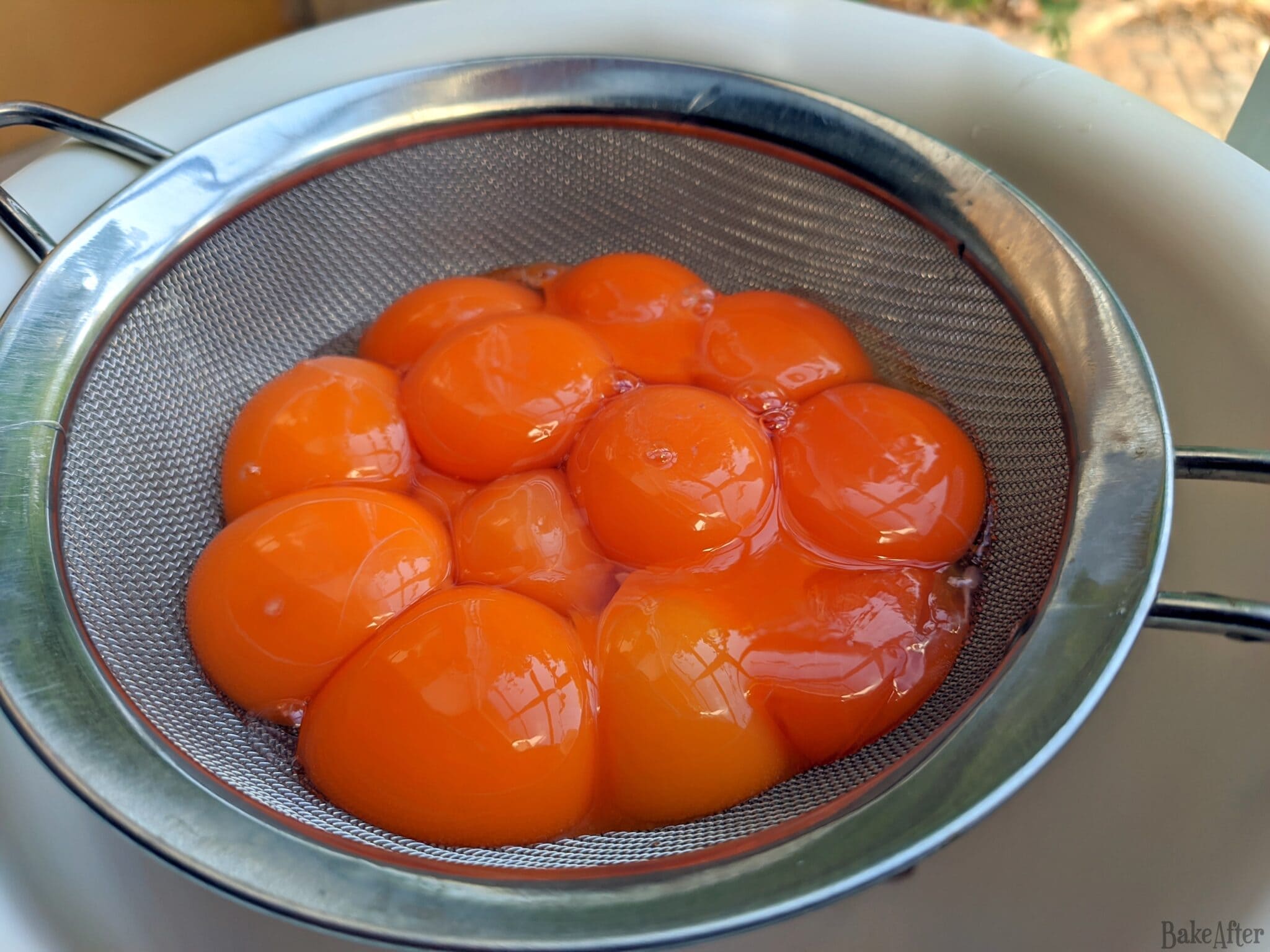
- Do note that egg yolk color is 100% from the hen’s diet, so if you give it food very rich in carotenoids then you will have bright orange egg yolks, you can even have pure while yolks if you give a very wheat/barley based diets.
And that’s it! Checking an egg is not complicated, a bowl of water, your eyes and your nose will get you through most situations. But storing the eggs properly and having the best before date will always be your best bet! Have a good one and see you next time! 🙂
Discover more from BakeAfter
Subscribe to get the latest posts sent to your email.