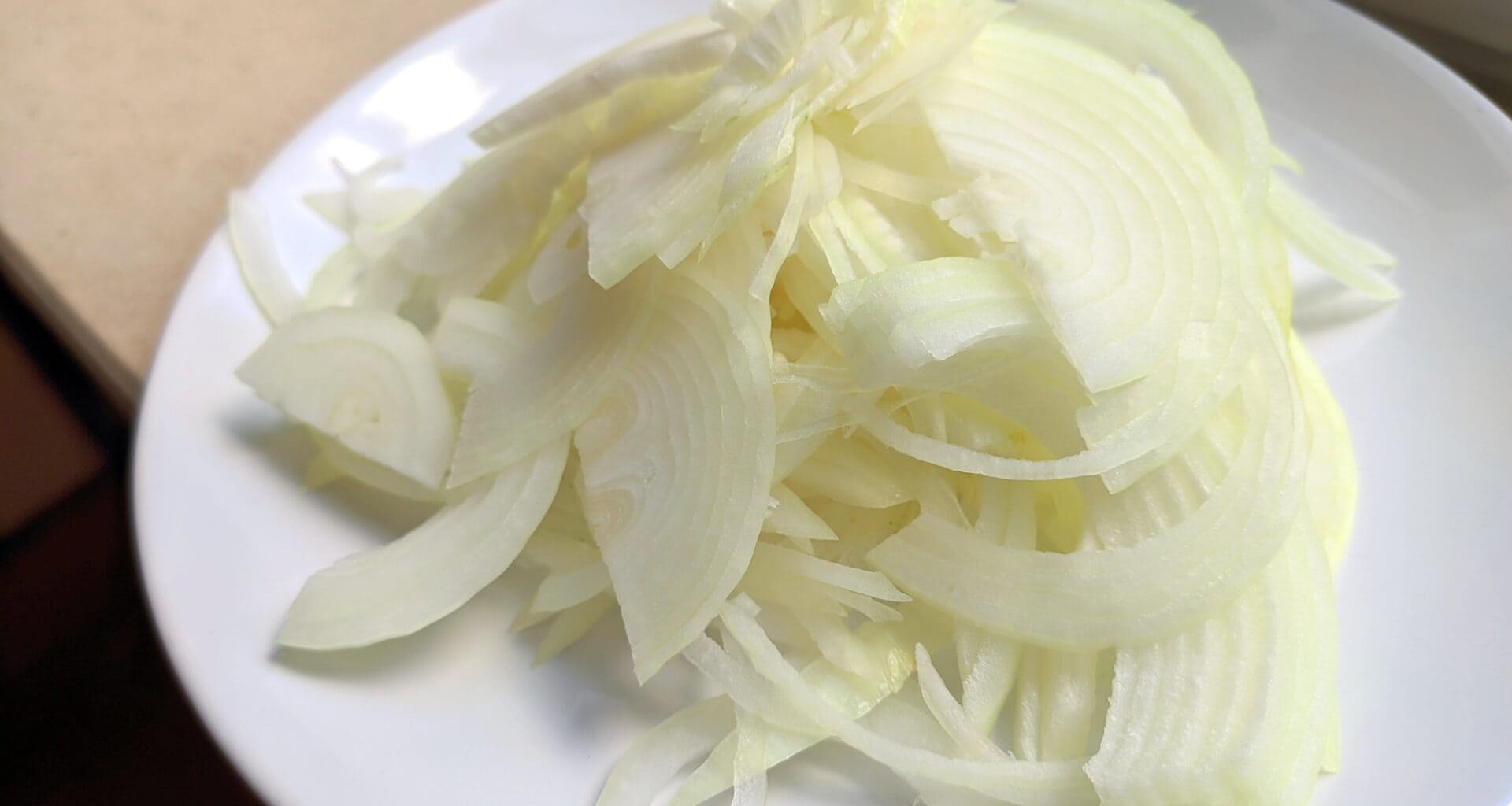

Here in Portugal, onions are kinda the quiet backbone of most dishes. They start the soup, the sauce, the stew and the salad, and I don’t know a single home cook who can do without them. They also have one small flaw, they sometimes make us cry like little babies. Here’s why that happens and what to do about it, so you can chop chop those onions in peace.
What Is an Onion, Anyway?
An onion is a bulb, the part of the plant that grows underground and stores food for the plant. Onions belong to the same family as garlic, shallots, leeks and chives. They come in yellow, white and red, and anywhere from mild and sweet to sharp enough to make you wince. The tears are not an accident. They are the onion’s way of defending itself.
So Why Do Onions Make You Cry?
When you cut an onion, you break open its cells. That lets compounds that were kept apart mix with enzymes. The result is a gas called syn-propanethial-S-oxide, which floats up toward your face. When it reaches your eyes, it reacts with the thin layer of moisture there and forms irritating substances, including a mild acid. Your eyes sting, and your tear glands start working to wash it away.
Think of it as the onion’s version of a guard dog. In nature, the damage would come from an insect or animal, and the gas is there to drive it off. Unfortunately, the “insect” in this case is you, holding a knife.
One more detail worth knowing, the base, or root end, has the highest concentration of these compounds, so cutting there causes the most tears. And if you cook the onion, the heat destroys the enzymes that make the gas, so cooked onions don’t make you cry.

The Most Common Ways to Avoid the Tears
- Use a sharp knife. A dull blade crushes more cells, and more crushed cells means more gas. A well-honed knife slices through cleanly and damages the fewest cells. It’s also safer to cut since a onion can be slippery, which is a nice bonus.
- Chill the onion first. Put the onion in the fridge for an hour or so, or in the freezer for about 30 minutes. Cold slows down the chemical reactions that make the gas. Don’t leave it in the freezer for hours, or you’ll end up with a soft, sad onion. Chilling can also tone down the flavor a little, so keep that in mind for raw onion dishes.
- Cut it under running water, or in a bowl of water. Water catches the gas before it reaches your eyes. Cutting under a running tap works, and cutting the onion submerged in a bowl of water works even better. Expect it to be slippery and a bit awkward, so go slowly, this is best if you are just cutting large chunks of onion and not thinly slices.
- Turn on a fan or the range hood. A fan blowing the fumes away from your face does a lot of the work for you. Put the fan behind or beside the cutting board, not in front of it.
- Leave the root end for last. Since the root end is the most potent part, slice off the top, peel the onion, and cut the root off at the very end, or leave it in place as a handle while you chop.
- Cut with the grain when you can. If you’re slicing, cutting along the onion’s lines instead of across them breaks fewer cells, so you get fewer tears.
- Wear goggles. They look a bit silly, but swimmers goggles do work. Some food scientists suggest adding nose plugs too, since the gas can travel through your nose to your eyes. I’ll leave the fashion choice up to you.
- Pick a different onion. This is the most reliable trick of all, and it gets its own section below.

Onions That Make You Cry Less
Some onions are simply gentler. Sweet varieties like Vidalia tend to have lower levels of the irritants. Sweet onions are also milder to eat, so they’re great raw in salads and burgers.
Then there are the “tearless” onions. Sunions is a yellow onion bred specifically so it doesn’t make you cry, and it’s described as slightly sweet and very crunchy. The growers say it also mellows and sweetens in storage, and they test it by having people cut it and hold it to their eyes before it goes to stores. Smileys is another variety that is known for not making you cry. Availability varies by country and season, so check your local supermarket. One honest warning: a mild, sweet onion won’t give you the same punch in a long-cooked dish as a regular yellow onion, so use whichever suits the recipe.
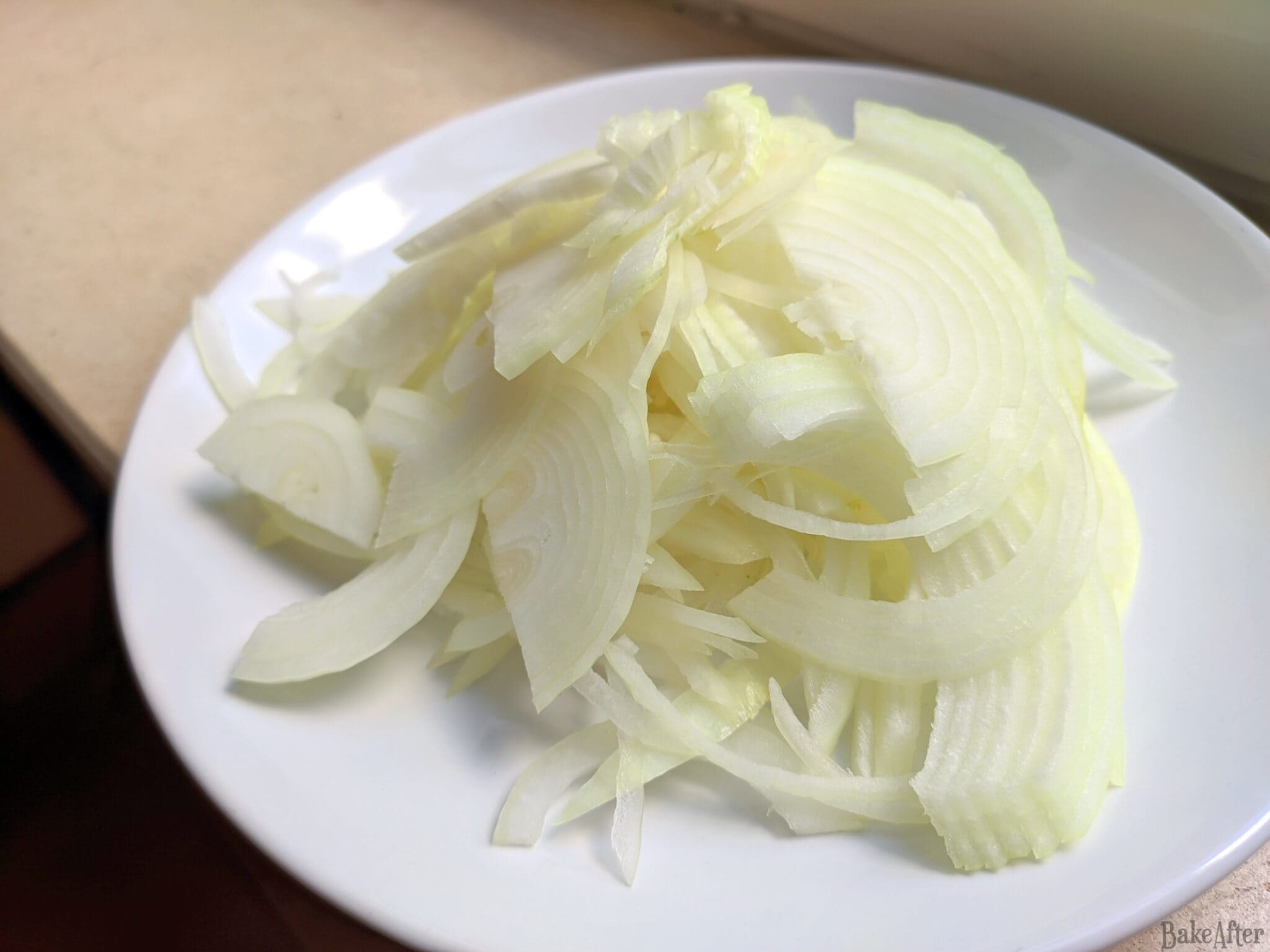
Tips and Tricks With Onions
- For the best results, combine methods. Chill the onion for 30 minutes, use a sharp knife, switch on the fan, and cut the root end last. Each trick helps a little, and together they usually do the job.
- If you’re short on time, keep a bowl of water and a sharp knife handy and give the onion a quick rinse after cutting.
- To make cut onion crunchier and less harsh, soak the slices in cold water for about 30 minutes. This also works well for salads.
- For milder raw onion in salads, you can soak the slices in lemon juice for a few hours.
- To get the onion smell off your hands, rub them with salt, lemon juice or a little parsley. To freshen your breath after eating raw onion, try mint or coffee.
- Chop the carrots after the onion. Raw carrot helps remove some of the onion smell from the board and knife.
- If you really can’t face it, buy pre-cut onions, or ask someone else to chop. It’s a perfectly valid kitchen strategy! But not the kids, we don’t want them cutting themself!
Got another trick for onions? Tell us in the comments! 🙂
Discover more from BakeAfter
Subscribe to get the latest posts sent to your email.