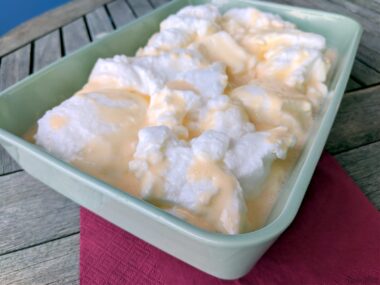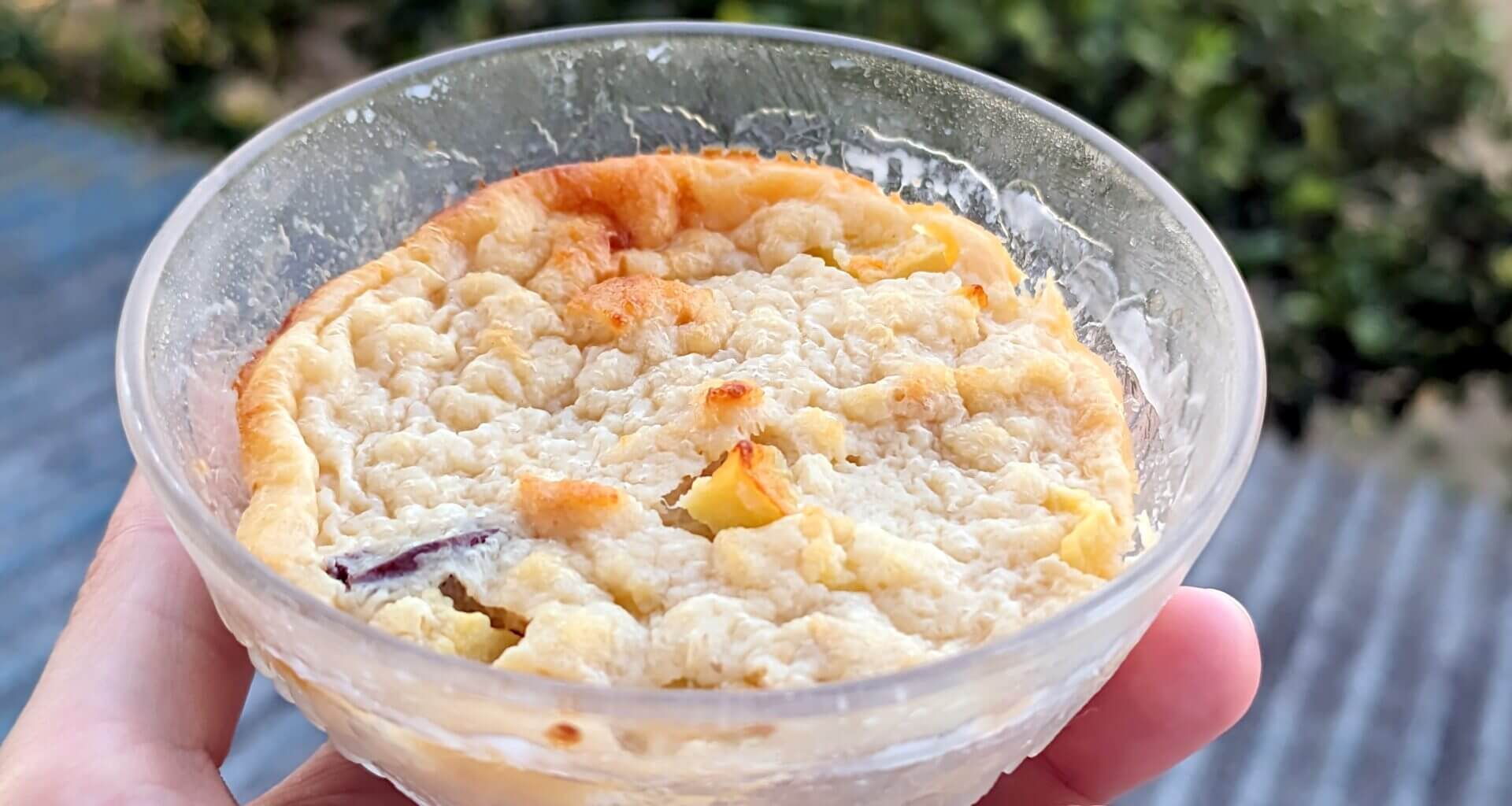

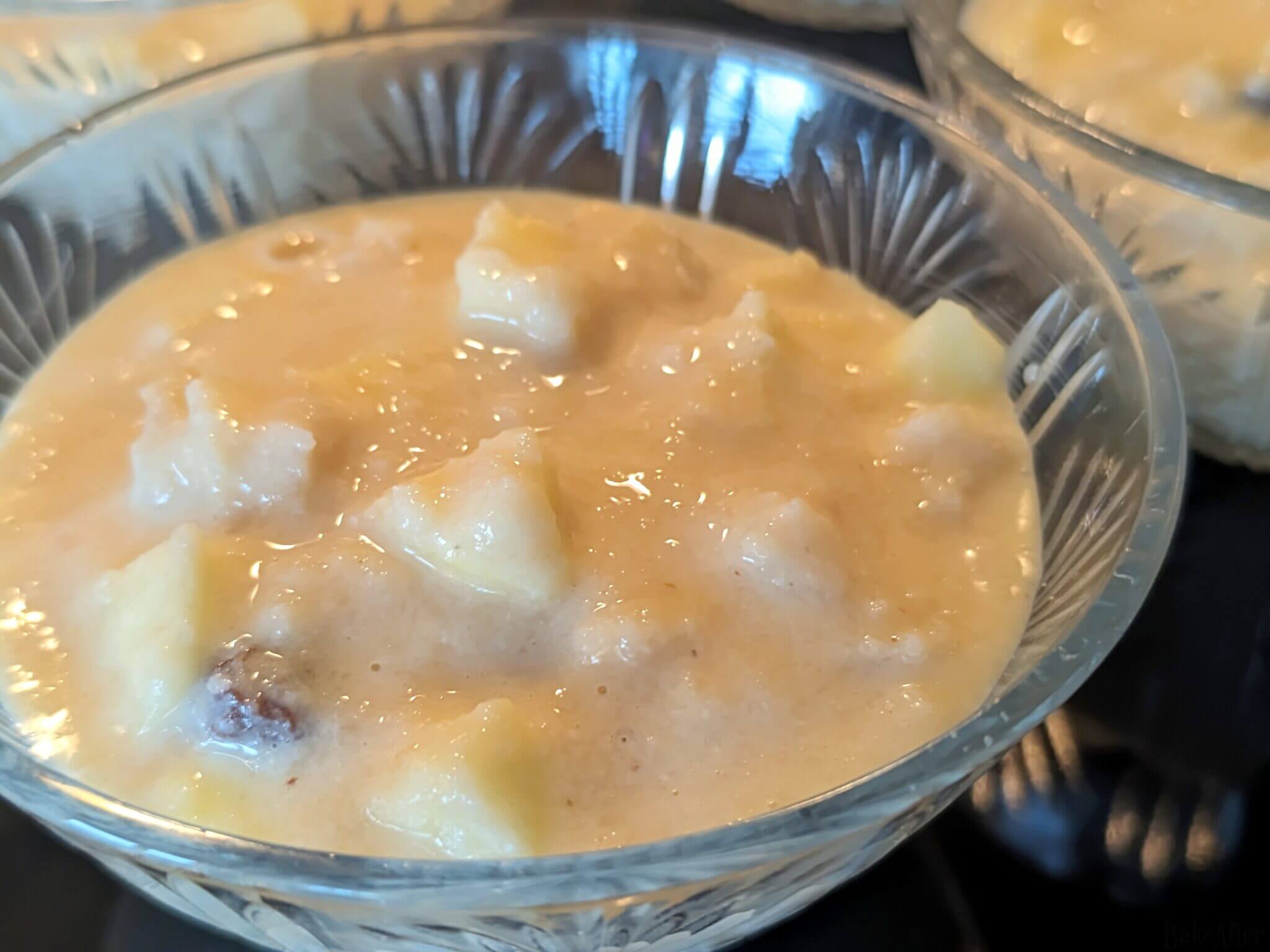
So, here we have it, a bread pudding! Now, I know what you might be thinking, bread pudding is bread pudding, nothing all that special. But hold on a second, because this one is a little different and I think it’s worth your attention.
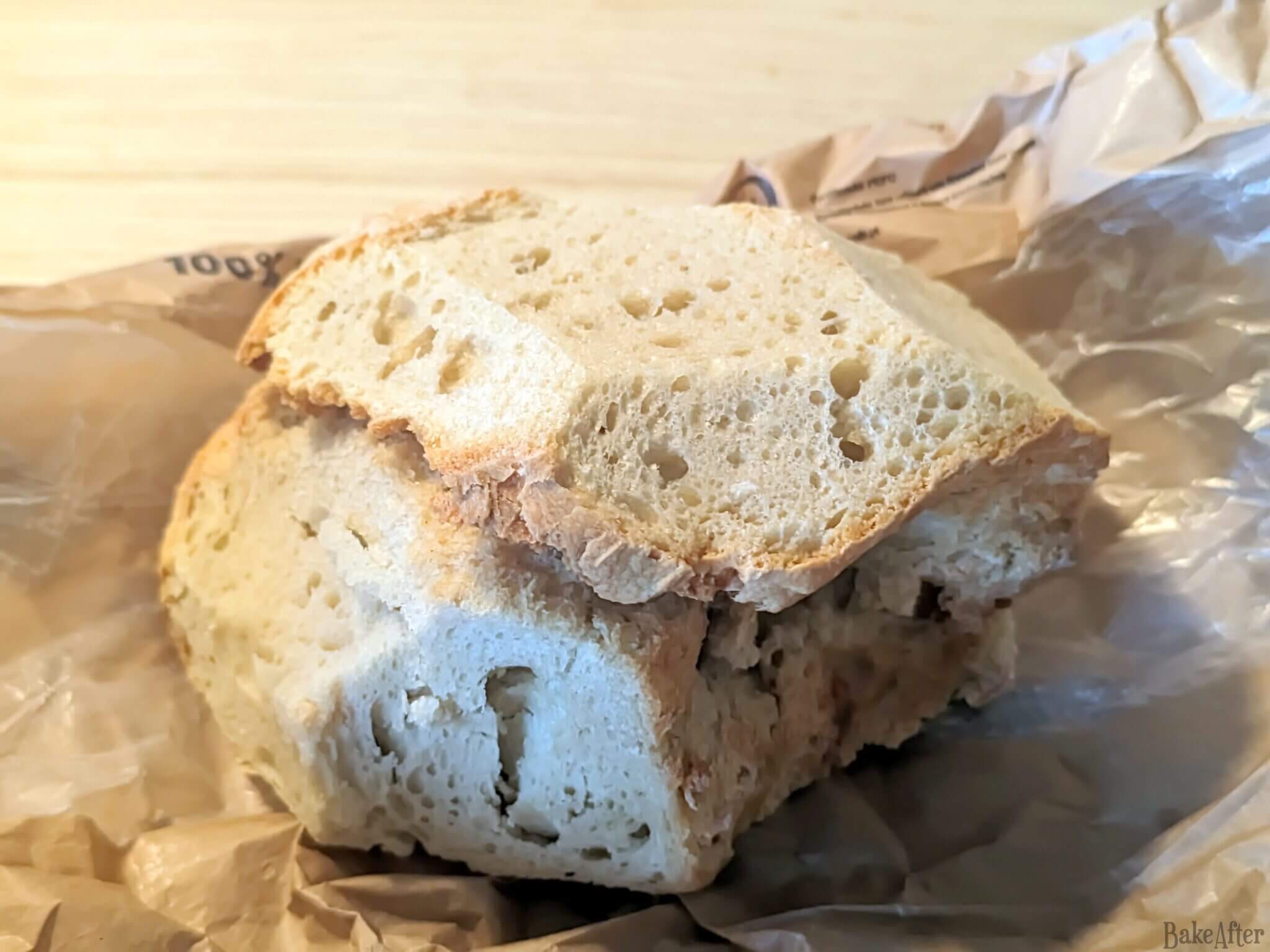
Instead of using a regular everyday loaf, this recipe calls for Pão de Rio Maior, a classic Portuguese bread from the town of Rio Maior. If you’ve never come across it before, it has this wonderfully dense crumb and a subtle bittersweet aroma that is honestly kind of perfect for a bread pudding. You know how with a lot of bread puddings you have to fuss around adding all sorts of things to build up body and flavor? Well, here the bread does a whole lot of that work for you, which is pretty great.
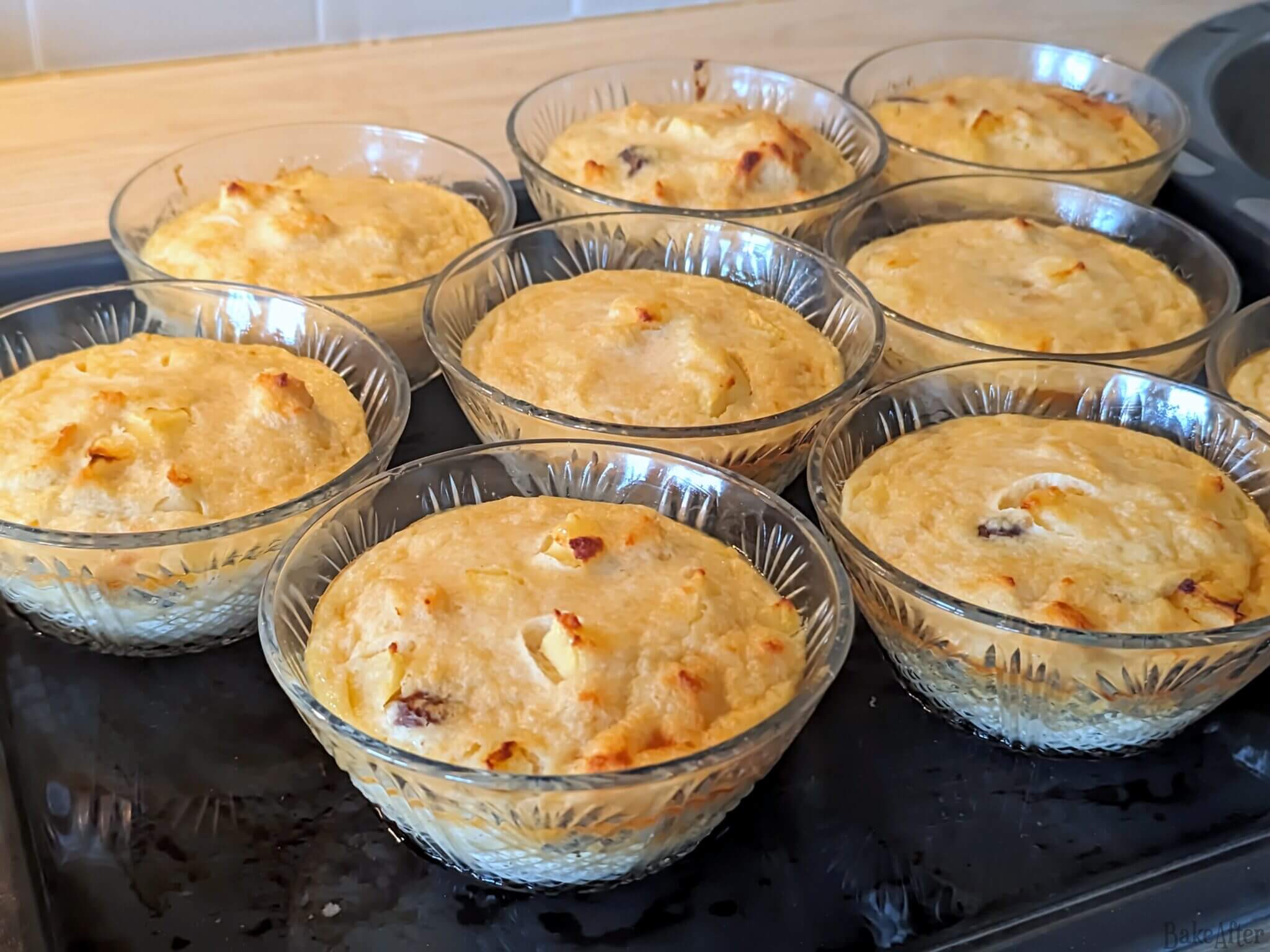
This is also a fantastic alternative to the more straightforward, plain bread pudding you might already know. It shows you just how versatile this dessert really is. You can make it as one big, impressive pudding baked in a single dish, which is the more traditional way to go, or you can do what was done here and use individual ramekins for individual portions, which is a little more charming and a little more fun to serve at the table. Either way works beautifully, so don’t be afraid to adapt it to whatever you have on hand.
The other thing I want to mention is the apples and raisins, because they really do make a difference. The apples add a fresh, slightly tart note that cuts through the richness of the bread custard, and the raisins, once they’ve been rehydrated in warm milk, become plump and jammy and wonderful. Oh, and there is one more thing worth mentioning, the original recipe had a crumble topping planned for these, which got forgotten along the way. I’ve included the crumble recipe in the notes below, because honestly, a crunchy, buttery crumble on top of something this creamy would be pretty spectacular. So learn from that oversight and add it if you can! Let’s get to the recipe!
Creamy Portuguese Bread Pudding with Apples and Raisins
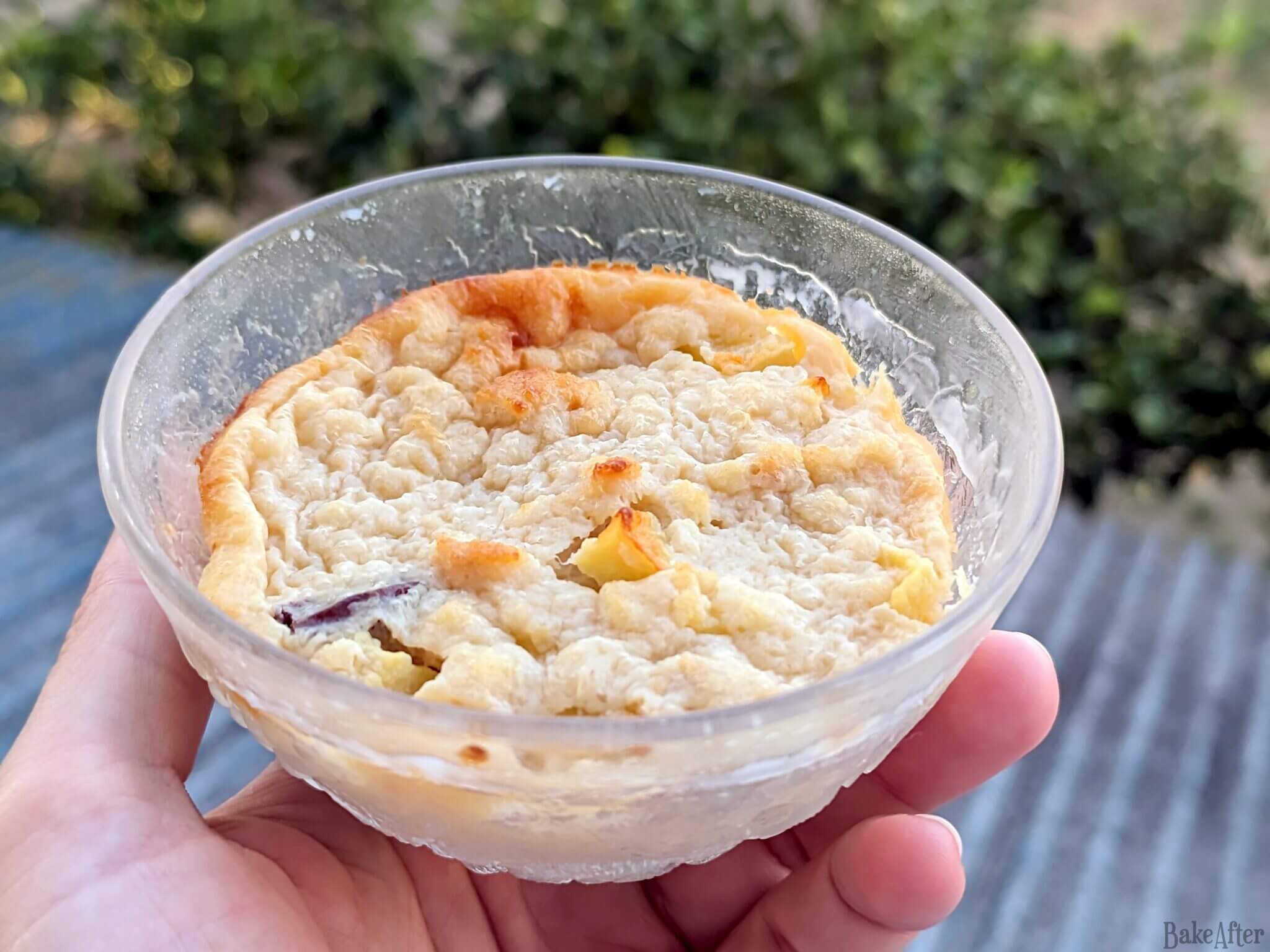
Its beige, but nothing quite hits the spot like a creamy, cozy bread pudding packed with all the flavors of autumn.
Ingredients
- Bread – 300g (Portuguese Pão Rio Maior)
- Apples – 2
- Milk – 1000ml (semi-skimmed)
- Eggs – 4 L (room temperature)
- Brown Sugar – 150g
- Raisins – 40g
- Cinnamon – 1 Stick
- Lemon – 1 Peel
- Butter – For Greasing
- Salt – A Pinch
Directions
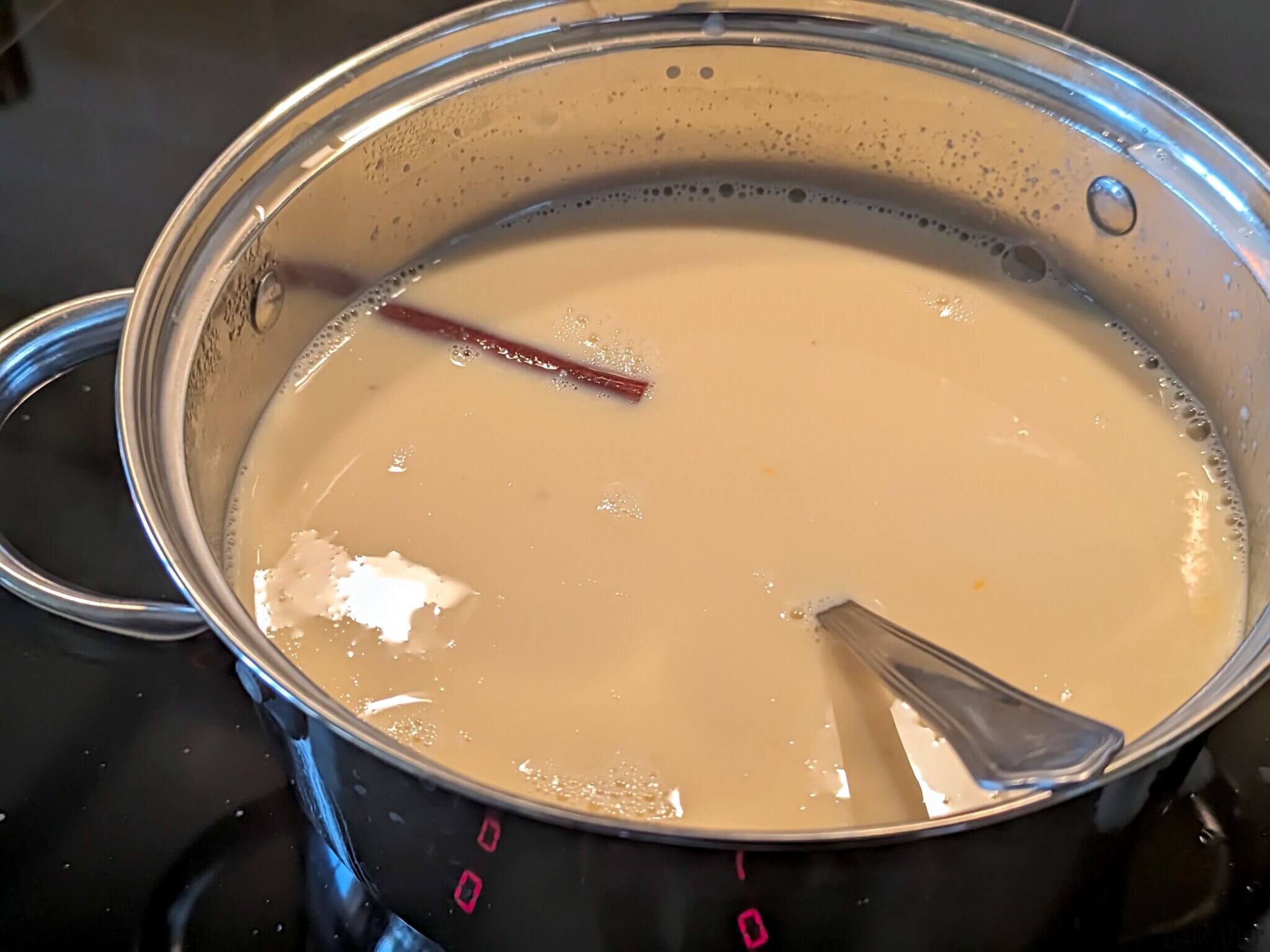
- Start by infusing the milk. Put it in a pan with the sugar, cinnamon stick, and some lemon peel. Let it simmer, but don’t bring it to a boil.
- Then remove some of the milk and pour it into a bowl with the raisins. Do this just to rehydrate the raisins well.
- In a separate bowl, whisk the eggs until creamy, then add a few spoonfuls of hot milk, stirring the eggs constantly (this is to gradually heat the eggs so they don’t curdle).
- When the eggs are hot, pour the egg mixture into the hot milk, stirring constantly, cook for another couple of minutes and then remove from the heat.
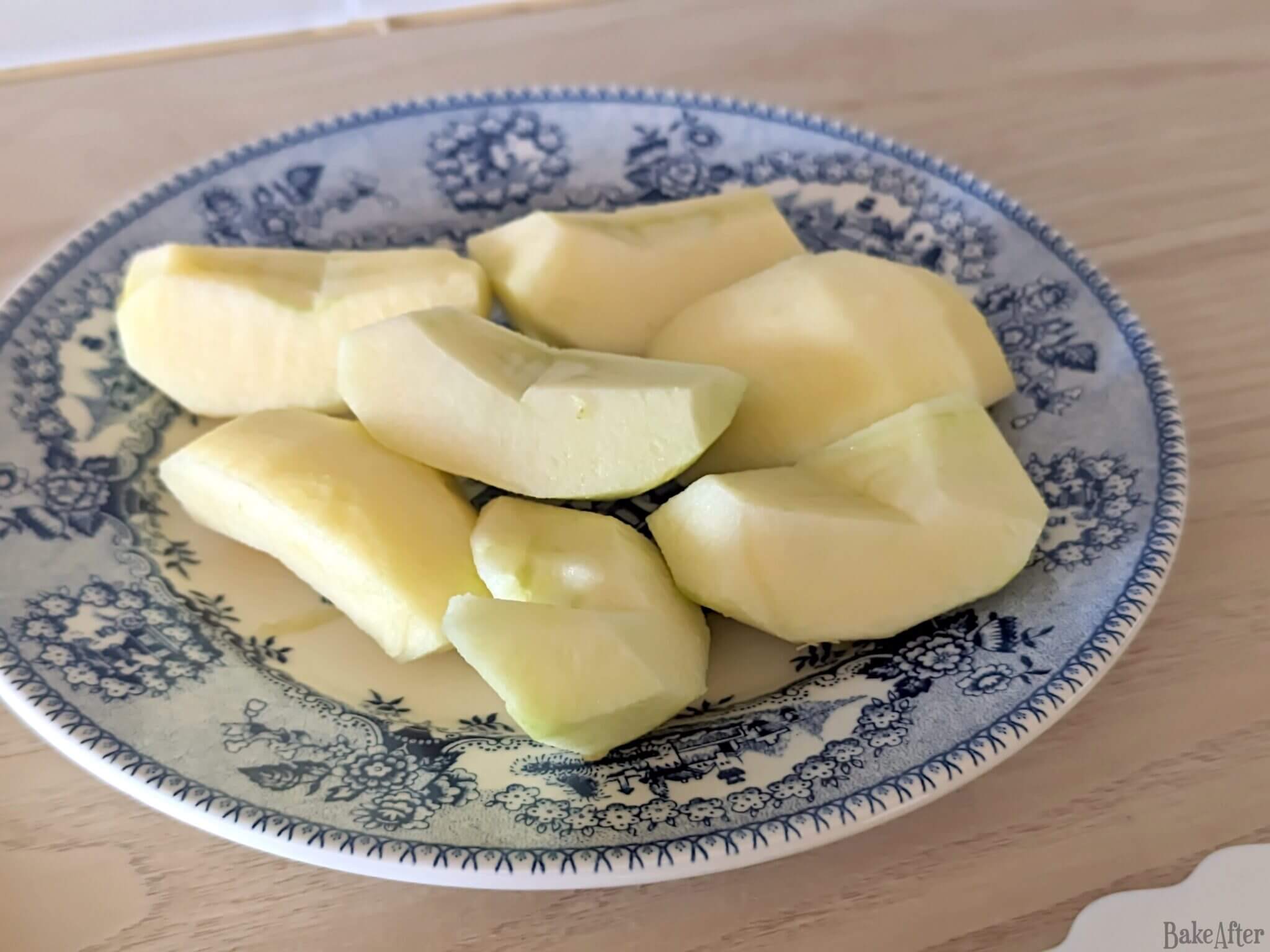
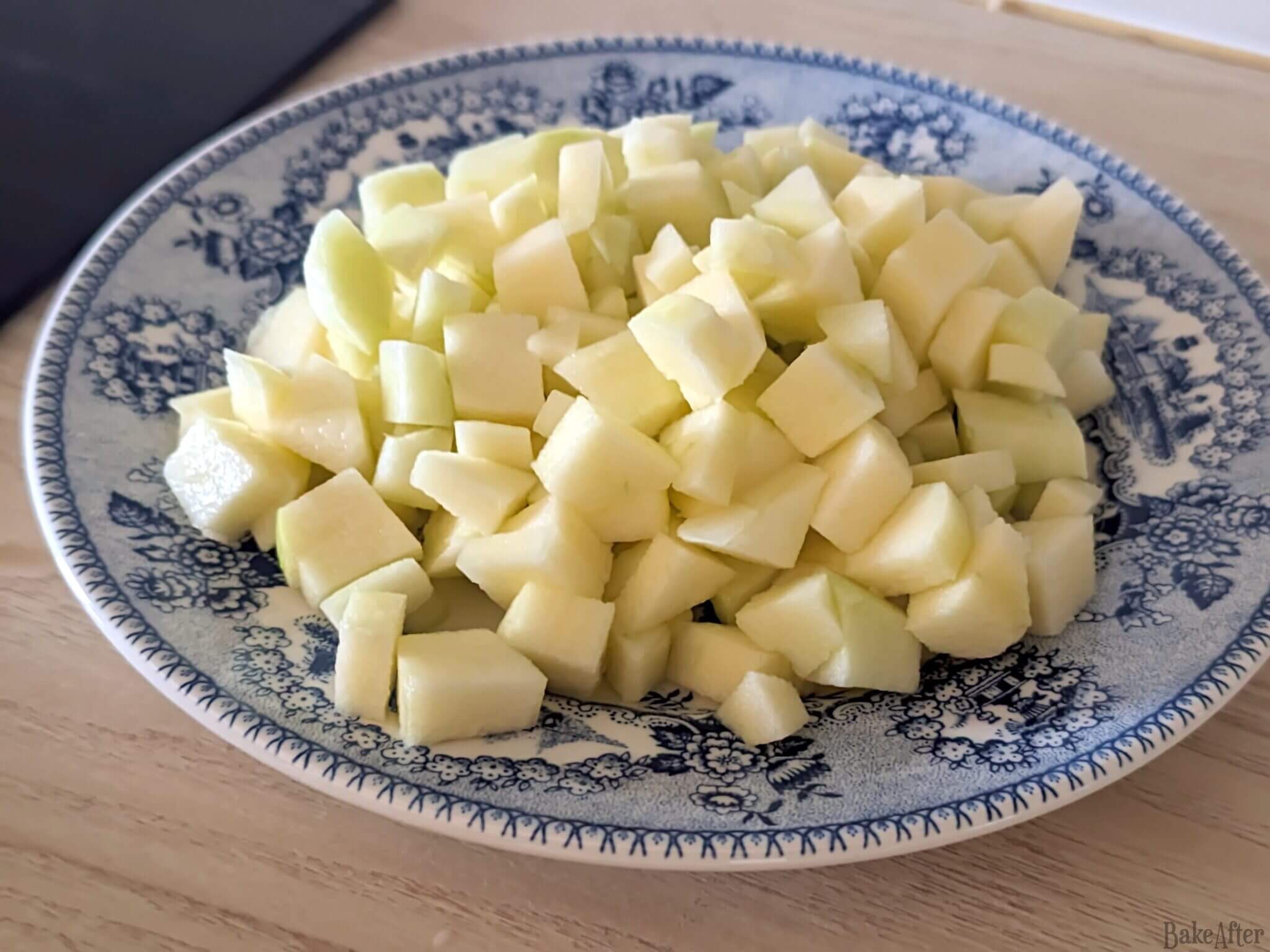
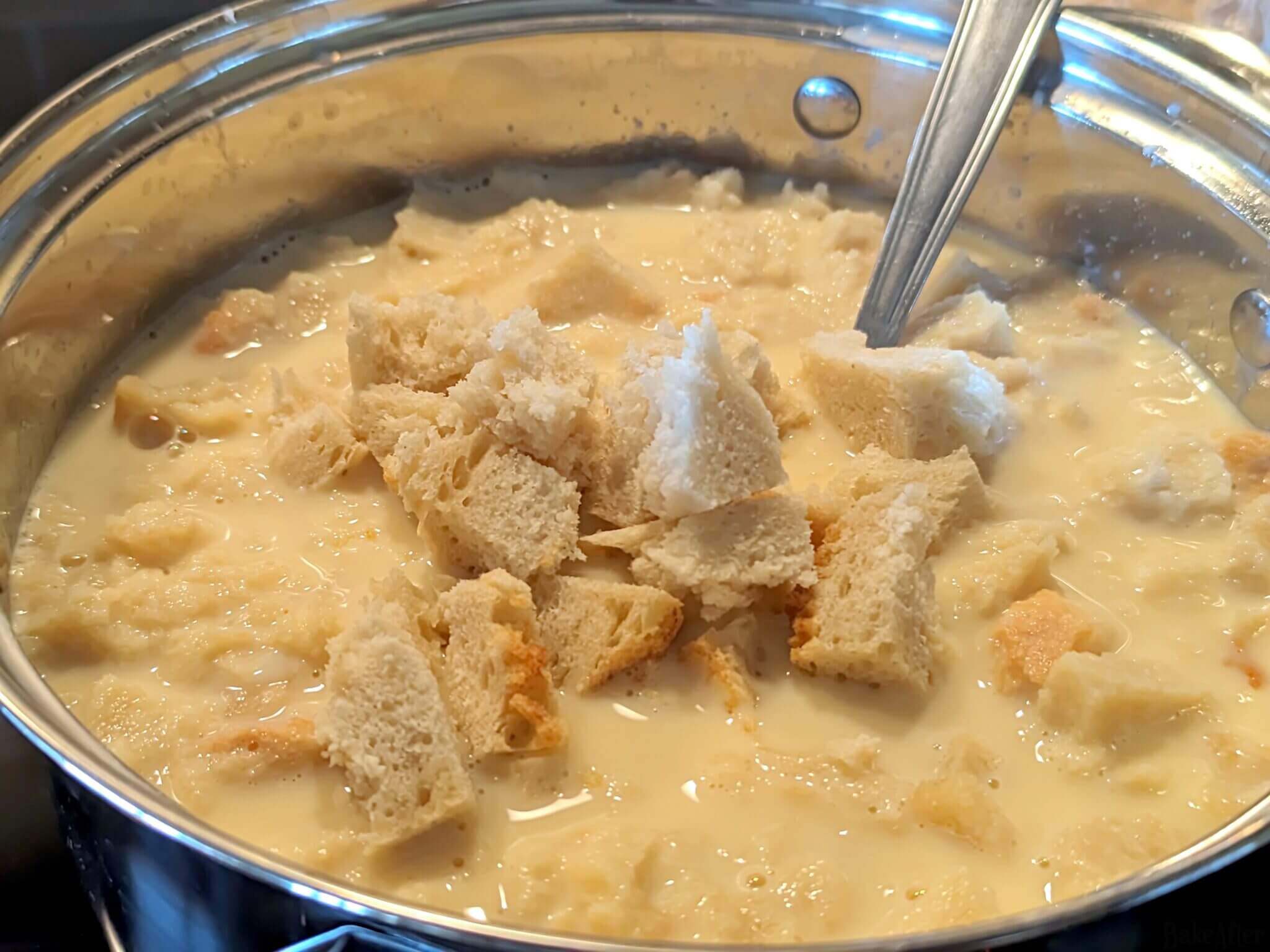
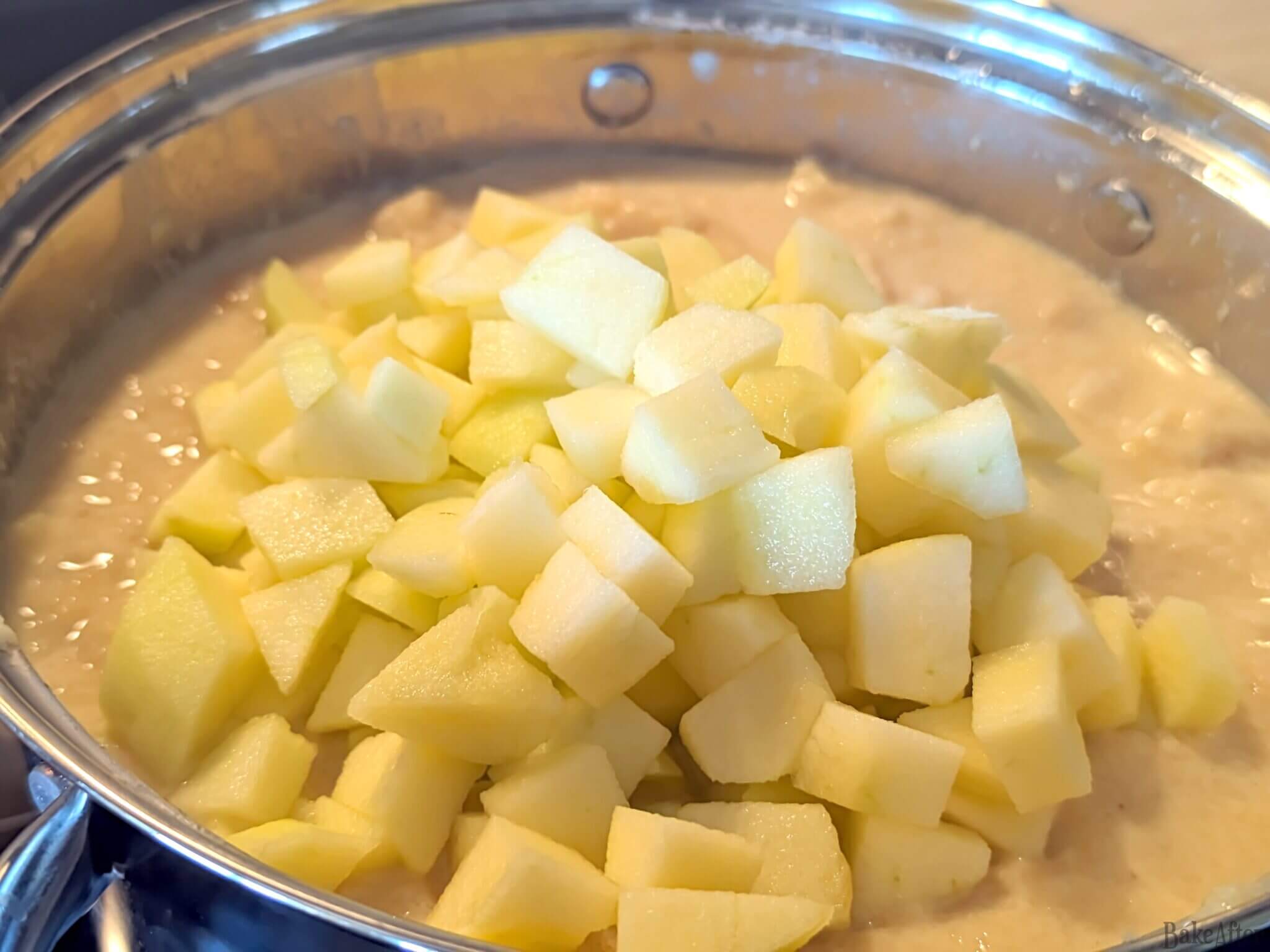
- Cut the crust off the bread and cut it into small cubes and add to the milk and eggs, followed by the raisins, mix, then peel the apples and cut them into cubes or thin slices and also add them to the milk and egg mixture.
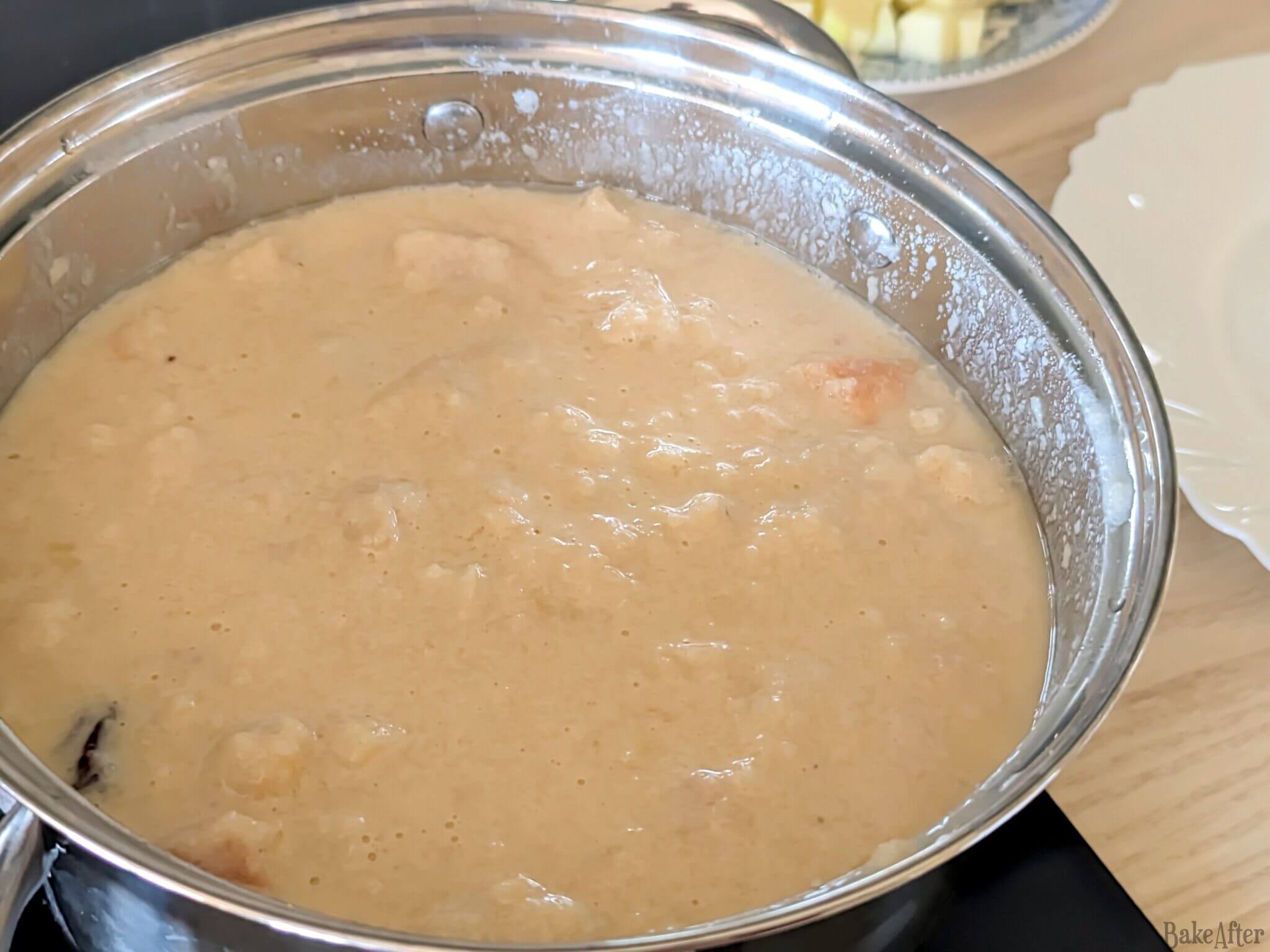
- Now this is important! Cover and let the mixture rest for at least 1 hour or you can even leave it overnight in the refrigerator. This is important for the bread to rehydrate completely!
- After the time has passed, preheat the oven to 180ºC (350°F) and prepare a tray with hot water to put the ramekins in, thus creating a water bath in the oven.
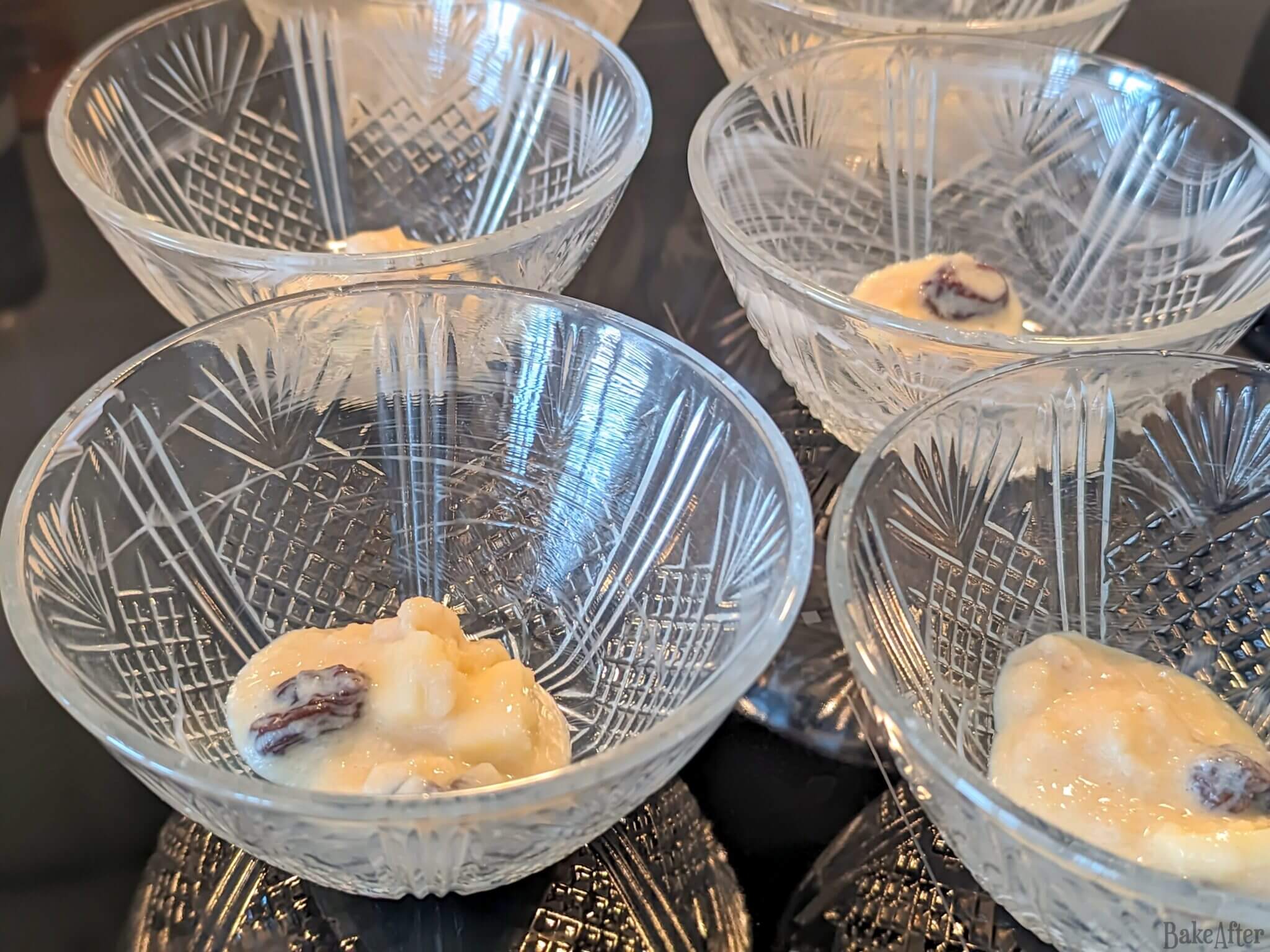
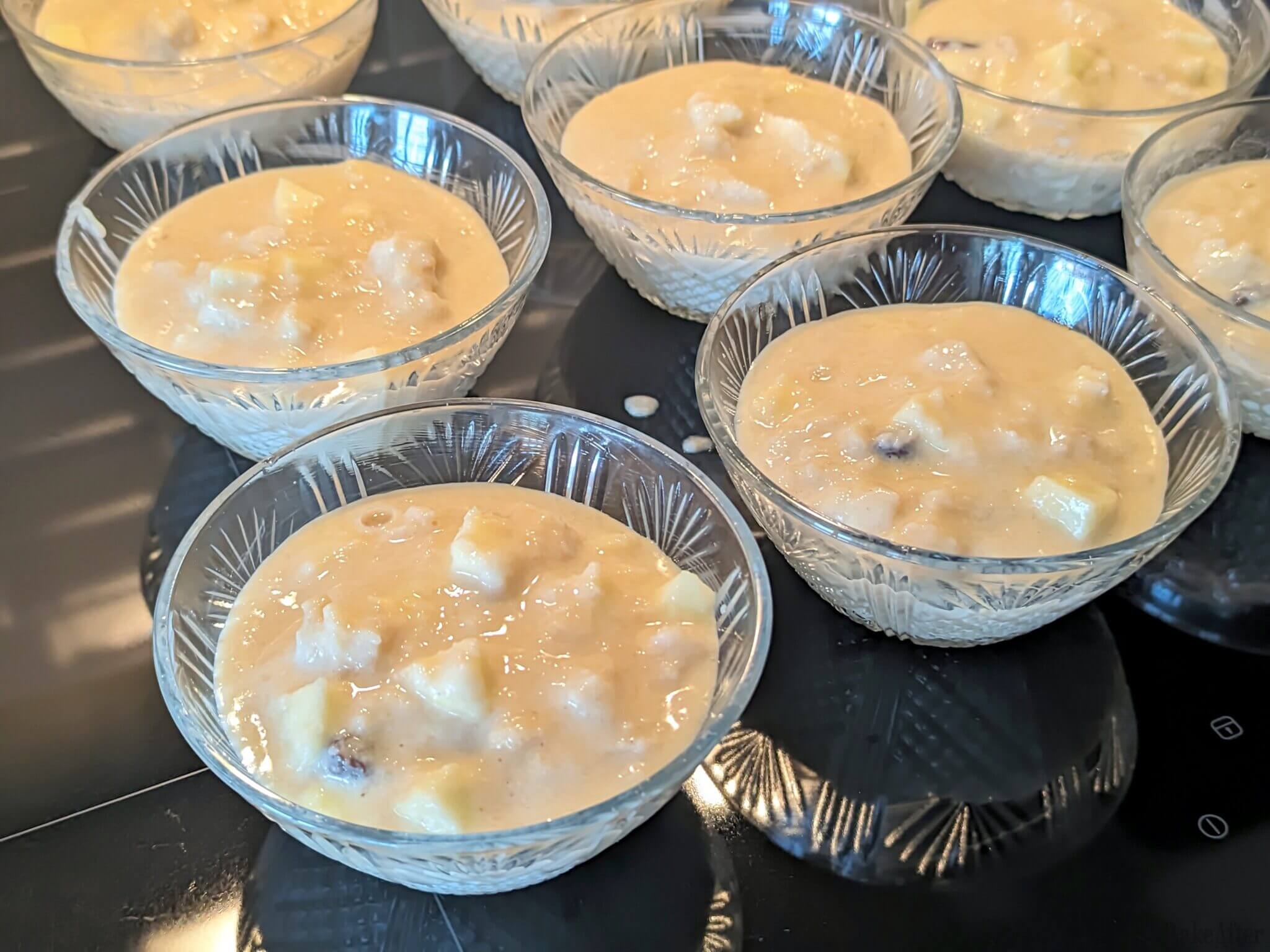
- Then divide the bread pudding mixture between the ramekins (at this point, it is common to sprinkle with sugar and cinnamon or add the crumble, but I didn’t do either, hehehe, what a recipe i know! ;D).
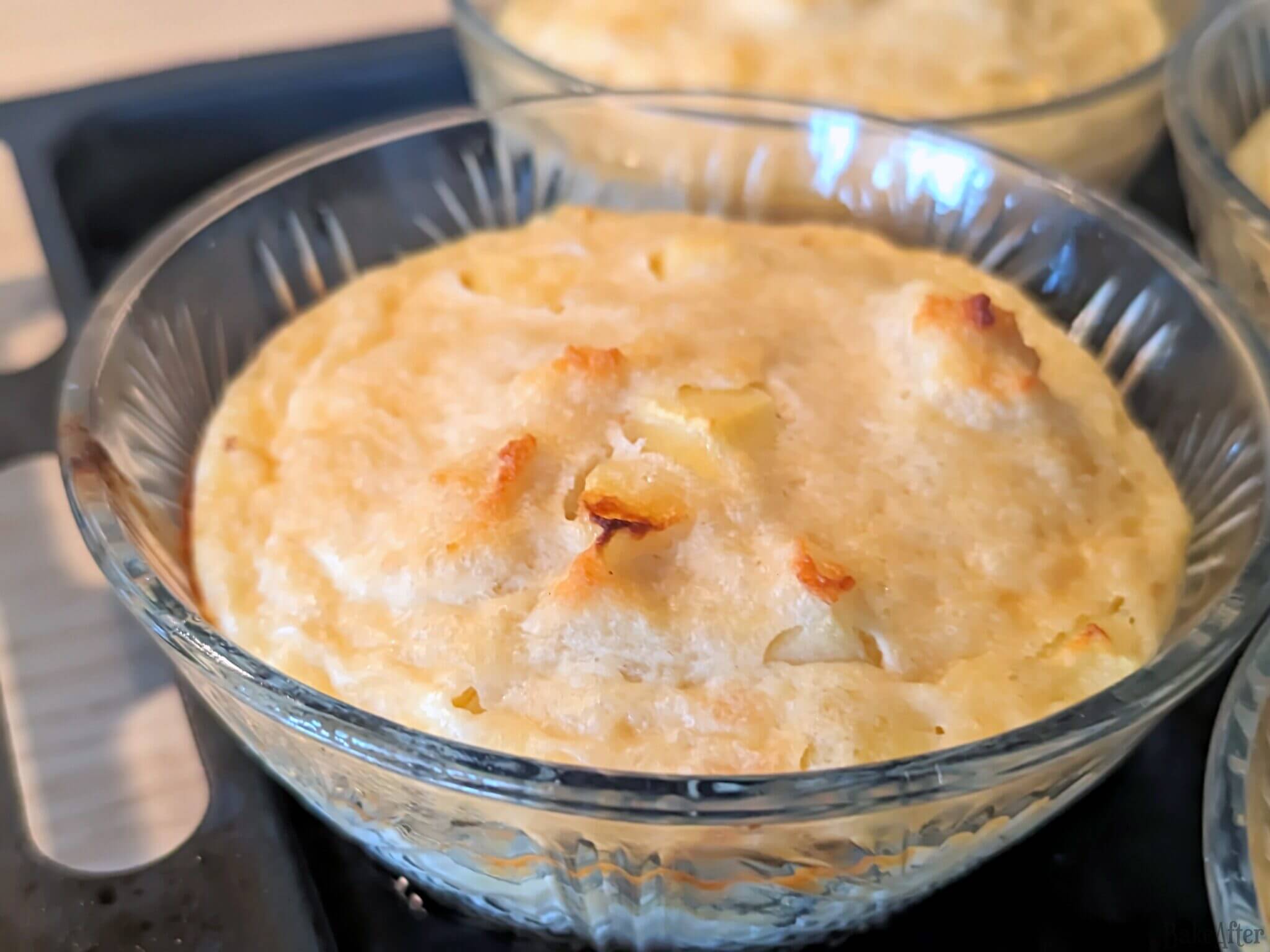
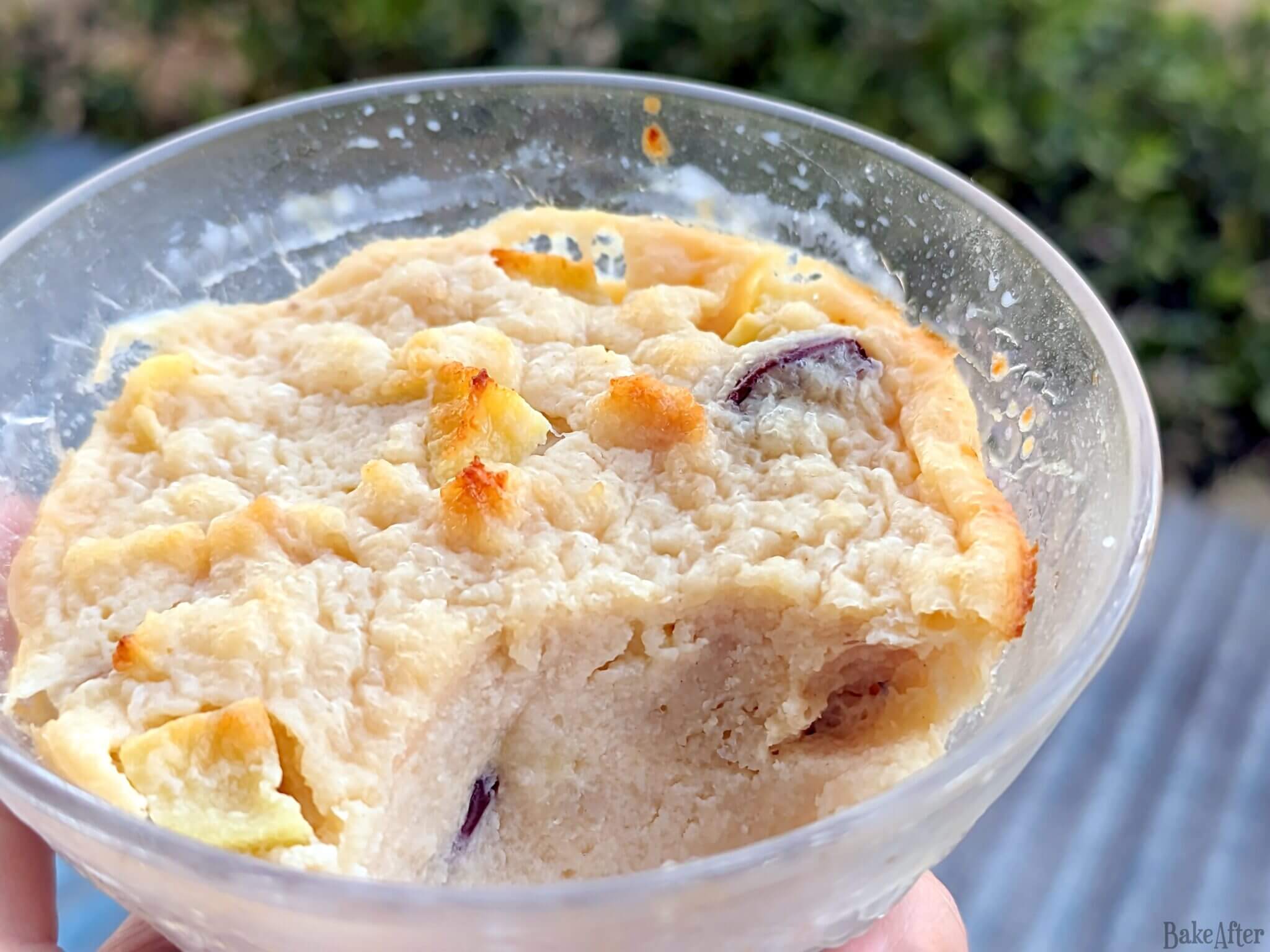
- Bake for about 20 minutes, until the puddings are firm and the tops are golden brown. That’s it! You can remove them from the oven and serve immediately while hot, or refrigerate and serve cold. Bon Appétit and Happy Easter!
Crumble topping (highly recommended!): Mix together 75g (2/3 cup) all-purpose flour, 50g (3.5 tablespoons) cold butter, and 40g (3 tablespoons) sugar. Work everything together with your fingertips until it forms a coarse, sandy texture, then sprinkle it over each pudding before baking.
Use bread that is already 2 to 3 days old. Drier, slightly stale bread absorbs liquid far more evenly and gives the pudding a much better texture than fresh bread, which can turn mushy or gummy.
If you can’t find Portuguese Pão de Rio Maior, a good dense rustic sourdough, country loaf, or any artisan bread with a thick crust will work well. Commercial sandwich bread will give you a lighter, spongier result, which is perfectly fine, but these more rustic breads create way better bread puddings.
Don’t rush the soaking step. The secret to a really creamy, evenly textured pudding is letting the bread soak in the warm milk mixture long enough to absorb it completely. At least 1 hour is the minimum, but overnight in the fridge is genuinely better if you have the time.
The water bath is not optional! Baking the puddings in a bain-marie is what gives them that silky, custard-like texture. The indirect heat slows the cooking down and stops the eggs from overcooking and turning rubbery or scrambled-looking around the edges.
When it comes to the apples, a slightly tart variety like Granny Smith works beautifully here and balances the sweetness of the raisins and brown sugar. That said, a sweeter variety like Fuji or Honeycrisp will give you a more mellow, dessert-forward flavor, it really comes down to personal taste.
For a little extra flavor, you can soak the raisins in a splash of brandy, rum, or even apple juice instead of warm milk. This makes them even more plump and aromatic and adds another subtle layer of flavour to the finished pudding.
This recipe for Creamy Portuguese Bread Pudding with Apples and Raisins was originally created on BakeAfter.com. Esta receita de Pudim Cremoso de Pão de Rio Maior com Maçãs e Passas foi publicada em português no Iguaria.com.
Nutrition
Per Serving: 274 calories; 5.7 g fat; 46.6 g carbohydrates; 10 g protein.Did you try this recipe?
Let me know how it turned out for you! You can leave a comment below ;D
Discover more from BakeAfter
Subscribe to get the latest posts sent to your email.