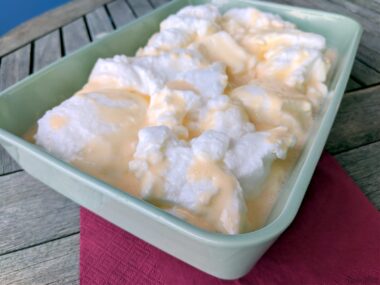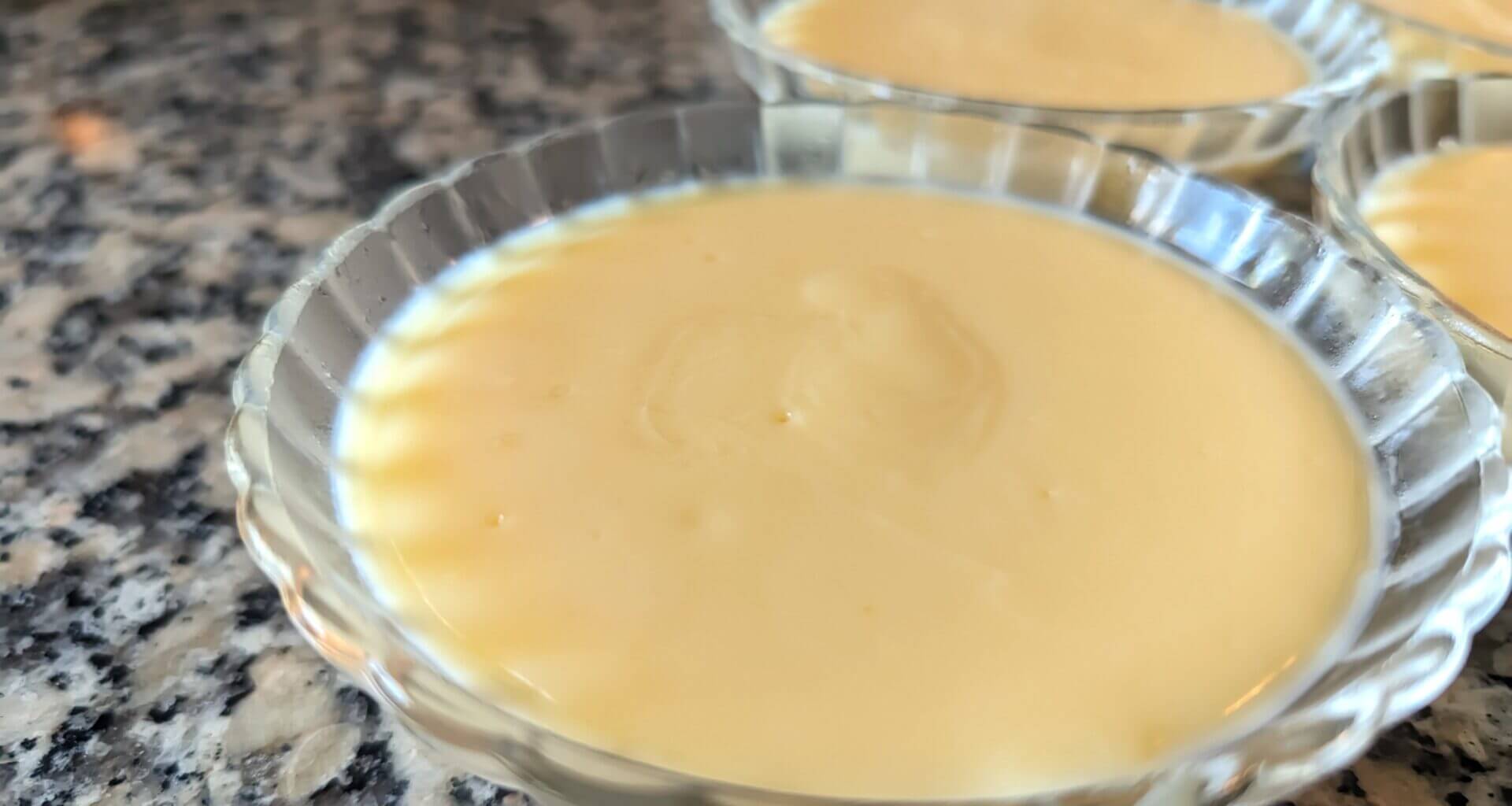

I was watching a video on YouTube of a Japanese housewife (I think she lives in Canada) putting together some Japanese obento (basically Japanese lunchboxes) for her kid and her husband, and since she wrapped that up pretty quickly, she said she’d take the extra time to make a purin (a Japanese style pudding). A purin is an interesting type of pudding, it’s basically a custard with a bit more eggs, or in another way its a flan style pudding with less egg and starch, hehehehe somewhere between a crème caramel and a custard, did that help? At all? ;D And it’s normally cooked in a water bath in a pot on the stovetop, mostly because the vast majority of Japanese kitchens have a grill at home and not a oven.
I had never made a Japanese purin before (besides buying the instant japanese pudding)… so nothing like trying it out! Worth noting that in Japan, just like in Portugal, “pudding” isn’t just one thing, there are lots of different recipes for pudding like desserts. For example, the commercial puddings you find in Japan tend to be more starch or gelatin based, so they’re much denser than the ones in Portugal. The name for this homemade style is “Mushi Purin,” mushi means steamed and purin means pudding. And as is typical with Japanese sweets, these are naturally not very sweet, the idea being that this lets the other flavors come through like the eggs and vanilla. So if you want a sweeter pudding i suggest a bit more sugar, so lets get to the recipe!
Silky Stovetop Purin Japanese Egg Custard Pudding
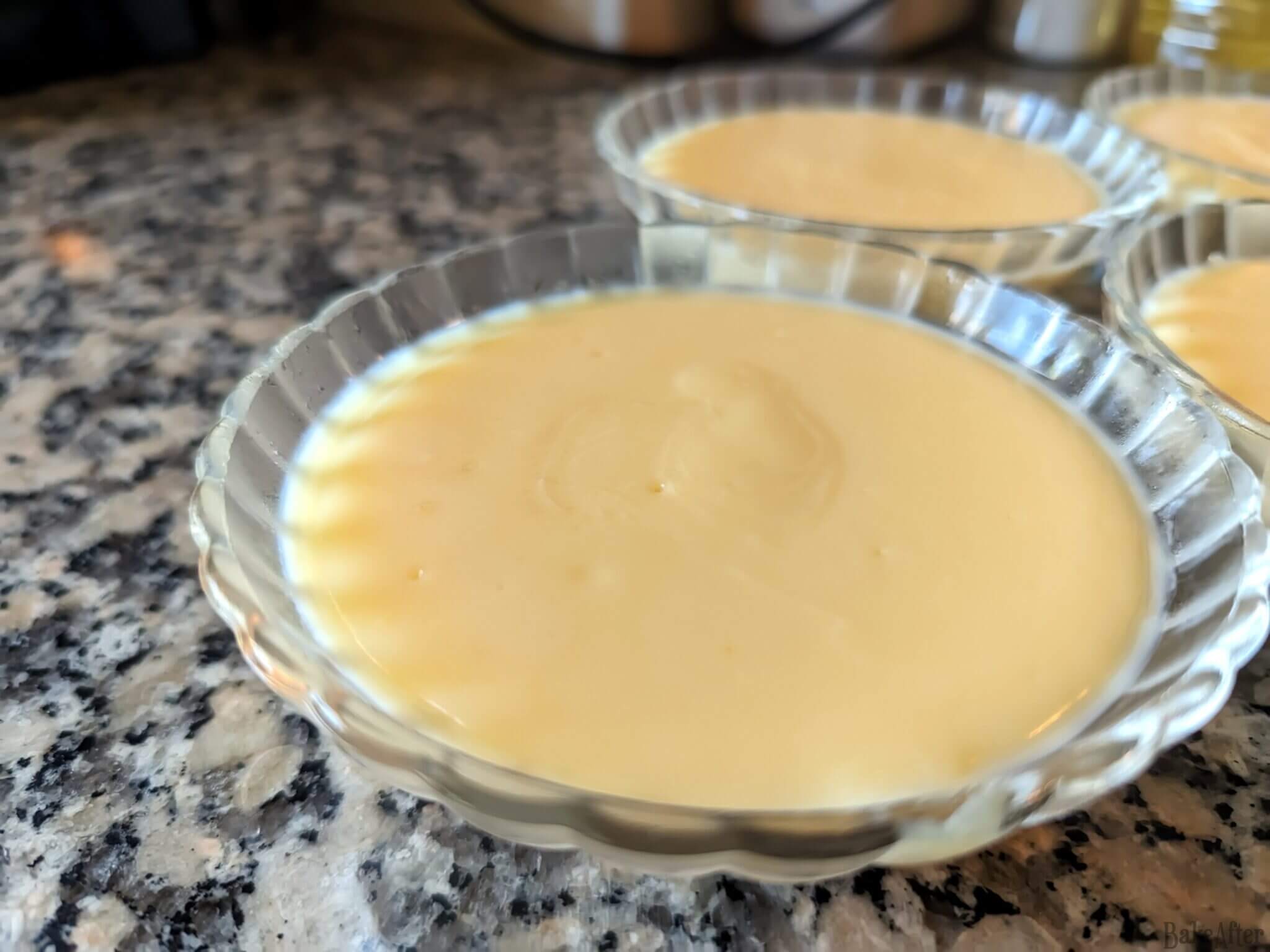
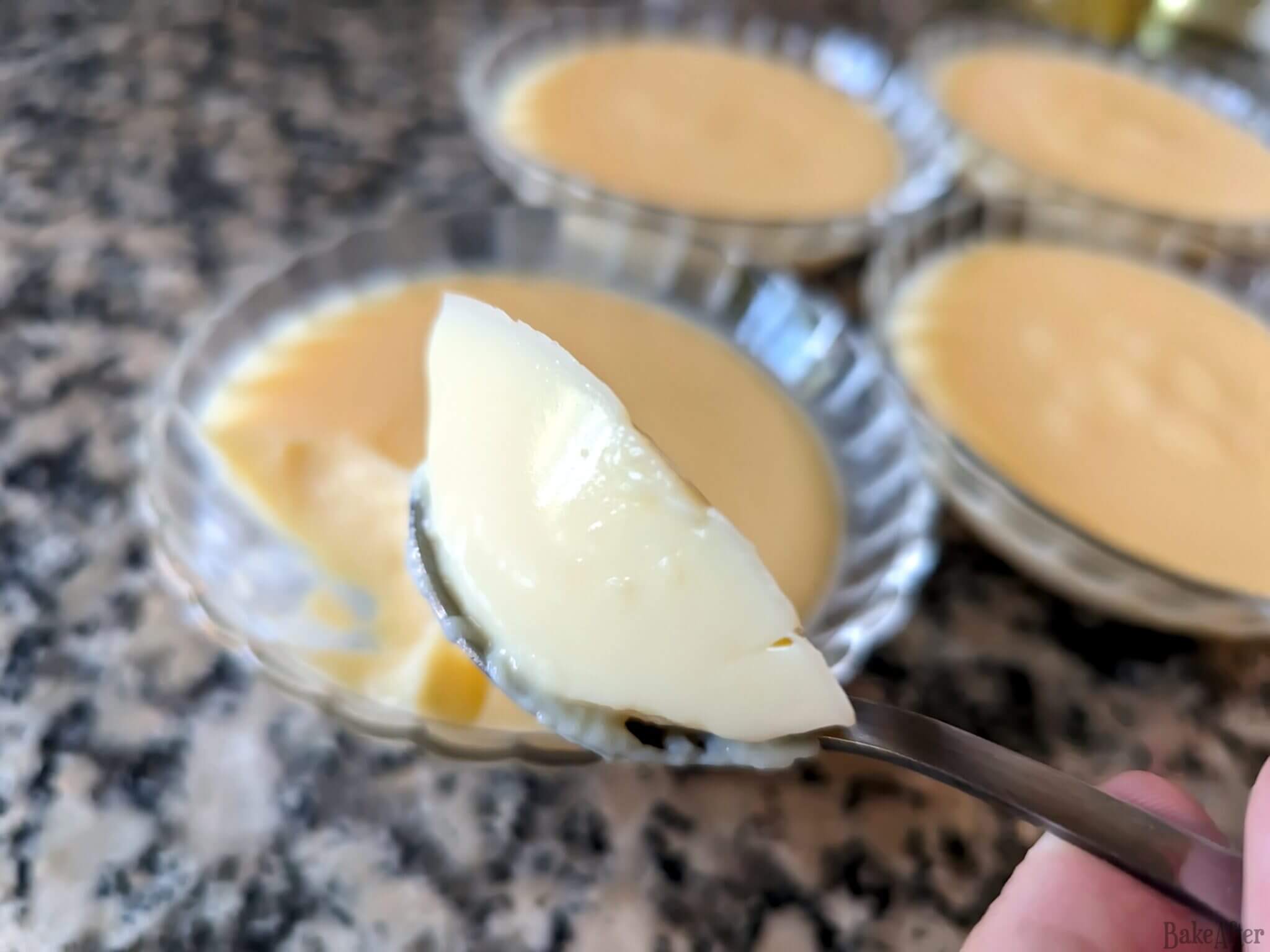
Oh yeah wobbly, silky, barely sweet, this little custard jiggles its way into any tummy, and you can actually make it two ways, on the stovetop or in the oven. I made this one on the stovetop, just for a change. ;D
Ingredients
- Milk – 400ml (Full-fat)
- Cream – 100ml
- Vanilla – 1 teaspoon (Extract)
- Eggs – 3 L (Room temperature)
- Sugar – 70g
Directions
- Start by boiling water, you’ll need this for the double boiler. Set it aside. In a small saucepan, add 400 ml of milk, 100 ml of heavy cream, and a teaspoon of vanilla extract. Mix well and heat over medium-low heat until it begins to warm through but doesn’t boil.
- In a separate large bowl, whisk the eggs until creamy, then add the sugar and whisk again.
- When the milk is very hot, remove it from the heat and slowly pour it into the egg mixture, stirring constantly (this is to warm the eggs without curdling). Continue stirring and adding until you obtain a lukewarm egg and milk mixture.
- Then pour the egg and milk mixture back into the remaining milk, stirring constantly.
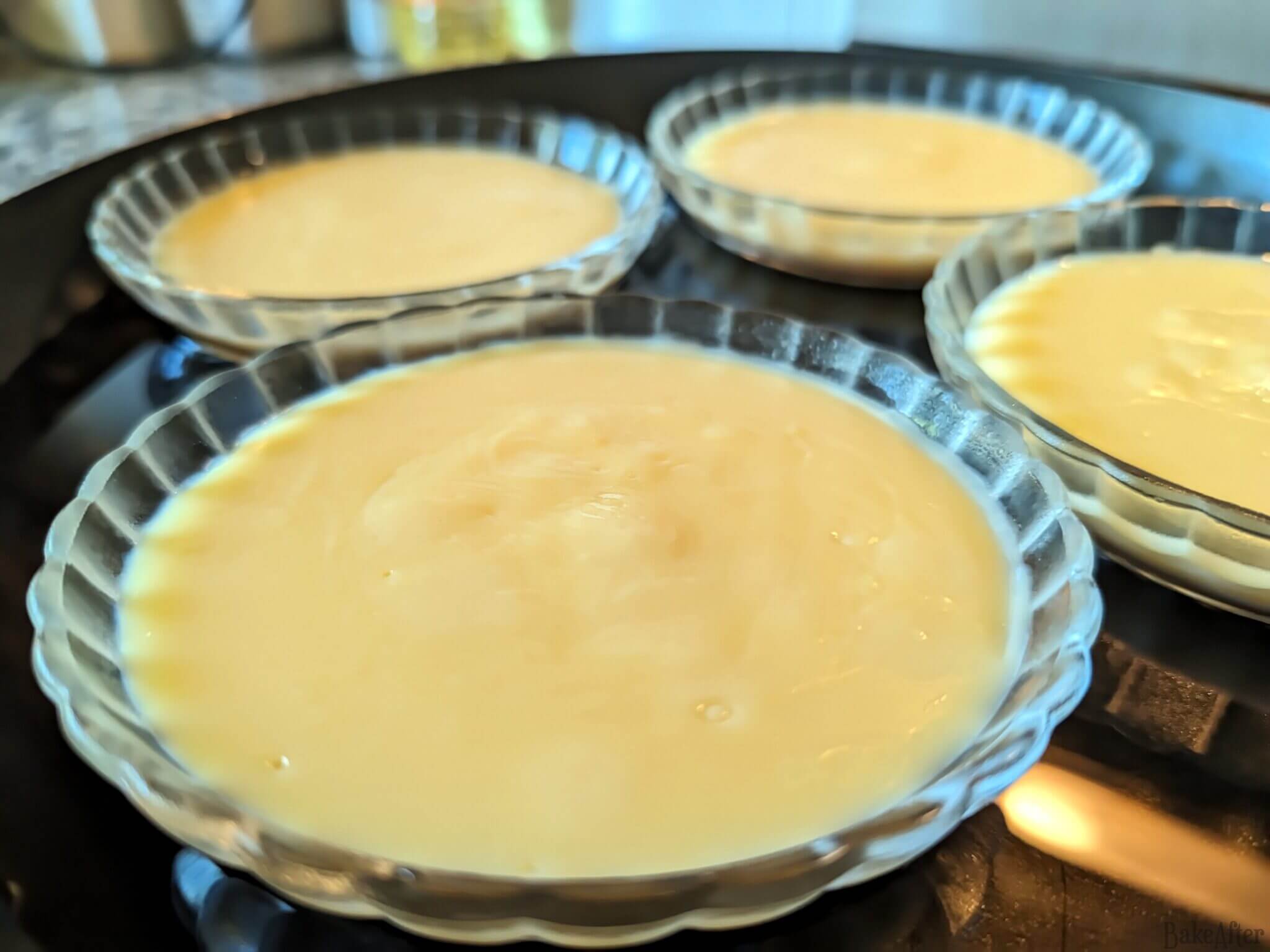
- Then pass the mixture through a fine sieve (to remove lumps and ensure the mixture is creamy and uniform) and distribute the mixture into small ramekins/bowls that you can put on the stovetop/in the oven. Take care to distribute it evenly so that each one has the same amount and they will cook evenly.
- The recipe at this point calls for tapping the bottom of the ramekins and using a lighter to remove air bubbles from the surface of the pudding (professional cookbook, hehe), but in my case there weren’t any large bubbles.
- Place a saucepan over medium/low heat and fill it with hot water until it reaches about halfway up the sides of the ramekins. Add the ramekins to the saucepan and cover the pan with a cloth followed by the lid (you do this to prevent water from accumulating on the lid and then dripping into the puddings). Let it cook for about 10 to 12 minutes.
- After turning off the heat, wait another 10 minutes and let it cook in the residual heat. Open and shake one of the ramekins, you’ll immediately see if it’s liquid or cooked through. If it’s liquid, it’s ready. If not, add a little more hot water and cook for another 5 minutes until cooked through.
- Remove from the heat and let cool completely before covering each pudding with plastic wrap and refrigerating for about 4 hours or overnight to set. Then, it’s ready to serve! Enjoy!
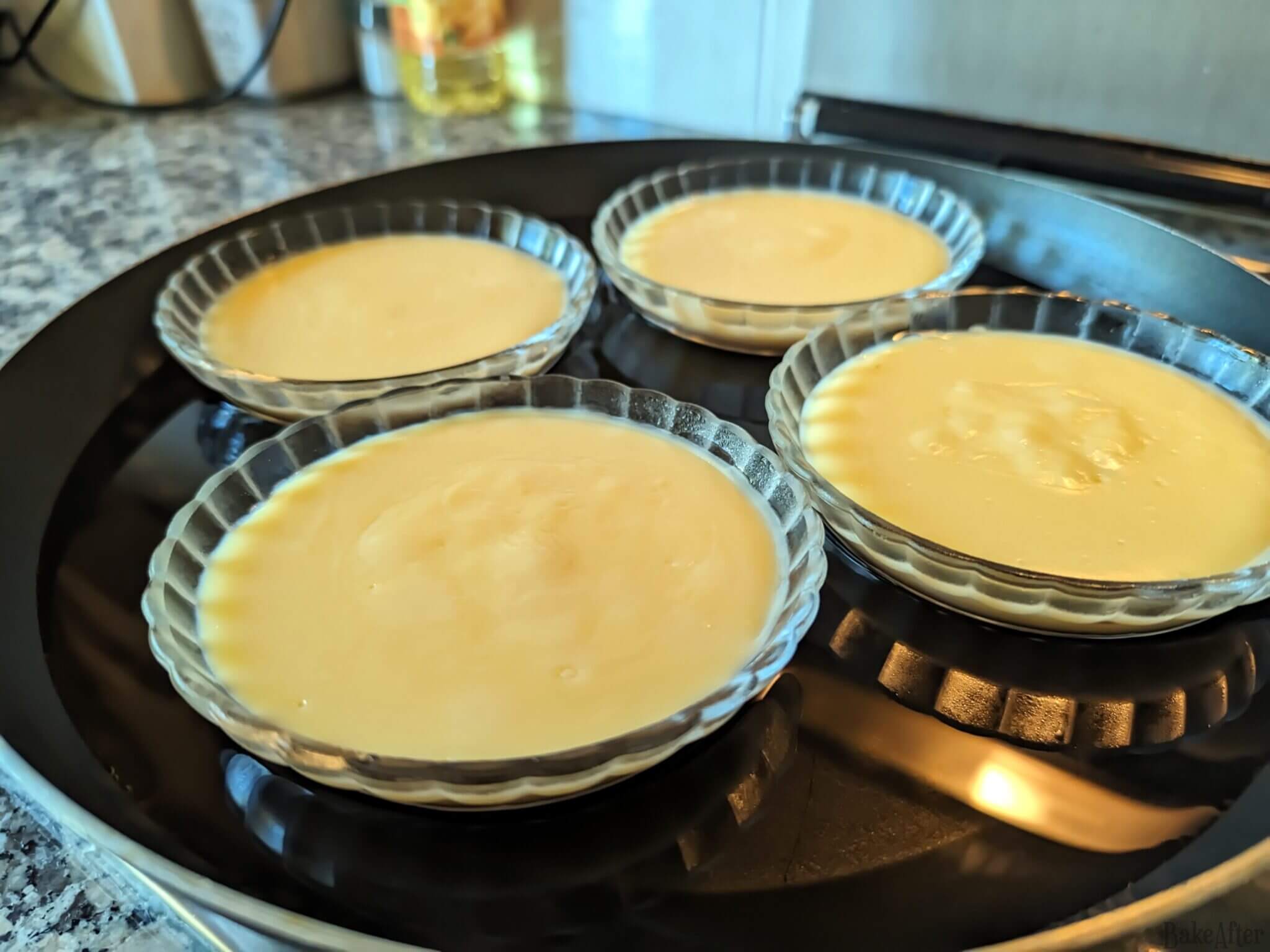
Yes, you can absolutely make this recipe in the oven instead, using a water bath. Just use a baking dish with hot water and bake at around 150ºC (302ºF) for about 45 to 60 minutes, depending on how much you put in each ramekin.
It’s also possible to steam these without a water bath, but I haven’t tried that method myself, so I can’t say whether it works better, worse, or at all, that’s for another time! ;D
This recipe, like most puddings, often comes with a caramel topping. You can look up a good caramel recipe for puddings, or just use store bought caramel. The original recipe didn’t call for one, so I skipped it and honestly didn’t miss it.
Since this custard is delicate and barely sweet, straining it really matters, don’t skip that step, it’s what gives you that silky, jiggly texture instead of a grainy one.
Keep an eye on your heat during the water bath too, if it bubbles too hard the custard can turn rubbery or riddled with air holes, gentle and steady is the name of the game here.
Since the flavor is so subtle, good quality vanilla extract (not imitation vanilla) makes a real difference.
If you’d rather serve it in the ramekins instead of unmolding, that solves the “losing its shape” issue entirely, and it’s honestly the safer bet for a first attempt.
This recipe for Silky Stovetop Purin Japanese Egg Custard Pudding was originally created on BakeAfter.com. Esta receita de Purin Pudim de Ovos Japonês foi publicada em português no Iguaria.com.
Nutrition
Per Serving: 272 calories; 16 g fat; 23.4 g carbohydrates; 8.5 g protein.Did you try this recipe?
Let me know how it turned out for you! What are your favorite puddings? You can leave a comment below ;D
Discover more from BakeAfter
Subscribe to get the latest posts sent to your email.