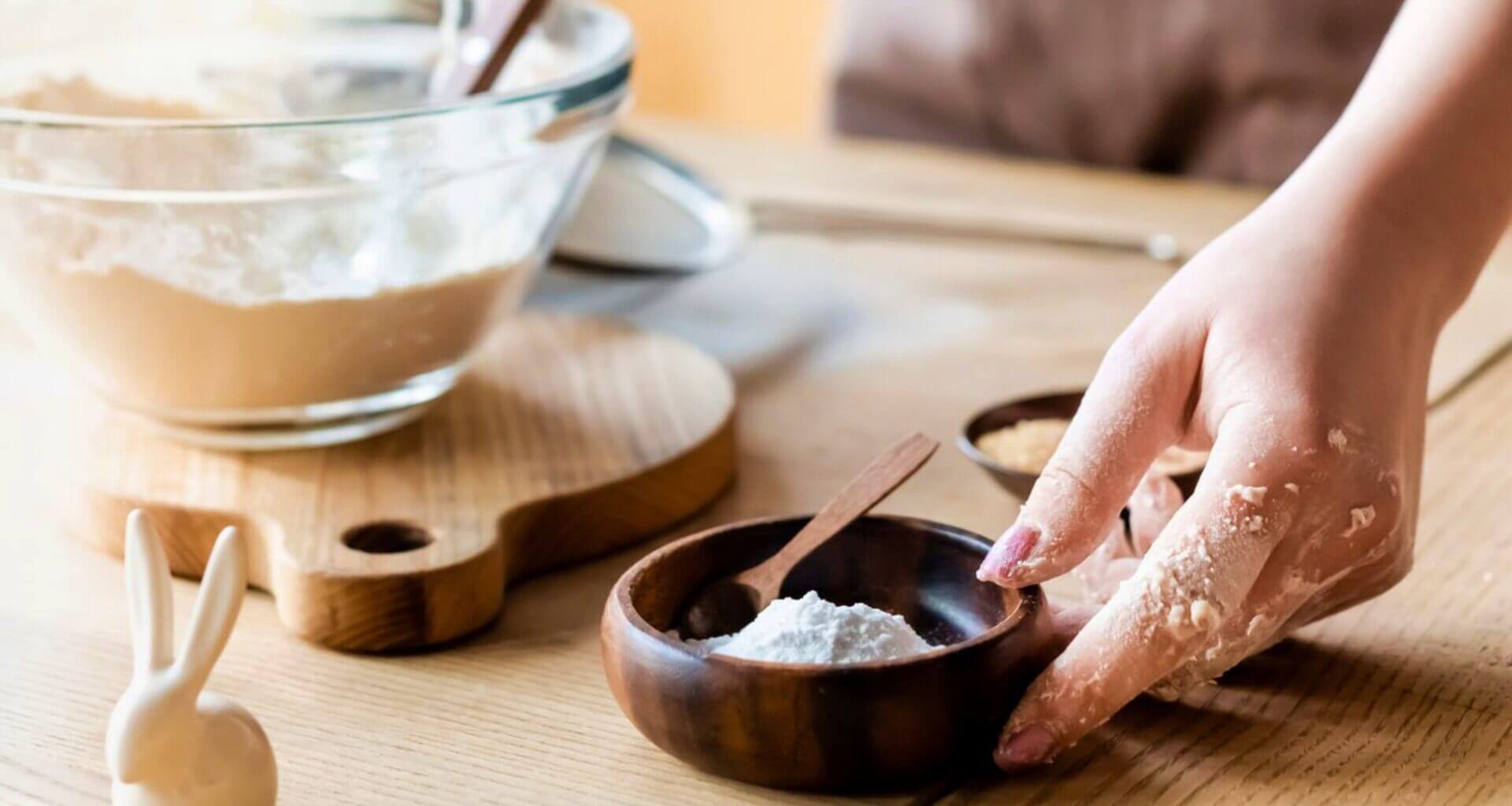

Here’s one of those kitchen questions that sounds simple, but somehow trips me up at some point, what’s the deal with baking soda and baking powder hehehehe, well they look nearly identical, both are white powders that live in little boxes or tins in your pantry, both make baked goods rise, and both get tossed around in recipes like they’re interchangeable. They are not. I’ve seen people substitute one for the other and end up with a cake that never rose, or worse, one that tastes like a metallic sponge. So let’s actually clear this up once and for all.
Baking Soda (Sodium Bicarbonate)
Baking soda is a single ingredient, pure sodium bicarbonate, nothing else added. Chemically it’s a base, and it relies heavily on an acidic partner in the recipe to work properly. The moment it touches an acid, like buttermilk, yogurt, lemon juice, brown sugar, natural cocoa powder, or vinegar, it reacts immediately and starts releasing carbon dioxide gas. That gas is what creates bubbles in your batter, and those bubbles are what make your cookies, pancakes, or muffins rise. (While heat alone can break baking soda down, doing so without an acid leaves behind a harsh, soapy compound called sodium carbonate, so that acidic ingredient is crucial both to fuel the rise and to neutralize the taste.)
The catch is that this reaction happens fast, and once it’s done, it’s done. There’s no second wave coming later in the oven. That’s why recipes that use baking soda usually tell you to get the batter into the oven pretty quickly after adding it and mixing, otherwise you lose the lift before it even gets a chance to bake.
How Baking Soda Behaves
Baking soda is a fine white powder, slightly gritty if you rub it between your fingers, with basically no smell and a salty, faintly bitter taste if you were to taste it plain (please don’t, it’s not pleasant). It’s highly reactive, which is exactly why it needs an acidic partner in the recipe to balance it out. If you use baking soda in a recipe that doesn’t have enough acid to neutralize it, you’ll actually taste it, that soapy, metallic aftertaste some homemade cookies have is almost always too much baking soda with not enough acid to react with.
Where Baking Soda Is Typically Used
You’ll find baking soda in recipes that already have a built in acidic ingredient, think chocolate chip cookies with brown sugar, buttermilk pancakes, banana bread, gingerbread, and anything with natural cocoa powder (not Dutch-processed cocoa powder, which has been treated with alkali to neutralize its acidity) or yogurt in the mix. It’s also the go to for recipes where you want a lot of spread and a crisp, slightly craggy texture, which is part of why so many cookie recipes lean on baking soda instead of, or with baking powder, sooooo, and as a side note… if a cookie recipe calls for baking soda only and uses plain white sugar with no other acidic ingredients, there might be a problem with that recipe! ;D”
Baking Powder
Baking powder is a completely different animal, even though it’s made partly from baking soda. It’s actually a mix, it contains baking soda, one or more powdered acids (like cream of tartar or sodium aluminum sulfate), and a bit of cornstarch to keep everything dry and prevent the acid and base from reacting prematurely inside the container.
Because the acid is already built in, baking powder doesn’t need any extra acidic ingredient in your batter to work. Just add liquid and it starts reacting on its own. Most baking powder sold today is “double acting,” which means it reacts twice, once when it gets wet during mixing, and again when it hits the heat of the oven. That second reaction is what gives baked goods that extra lift and makes baking powder a lot more forgiving if your batter sits around for a few minutes before baking.
How Baking Powder Behaves
Baking powder looks almost identical to baking soda, a fine white powder, but if you look closely it’s sometimes slightly less bright white and can feel a touch less fine, since it’s a blend rather than a single pure compound. The taste is milder too, since the acid inside is already balanced against the soda, so you don’t get that same harsh metallic bite if you happen to use a bit too much (though too much is still not a good idea, it can leave a bitter, slightly chemical aftertaste and can even make baked goods collapse from over expansion).
Where Baking Powder Is Typically Used
Baking powder is much more common and shows in pretty much all baked goods where you want a lift, if not alone as part of the flour mix, of course it also shows up in recipes that don’t have a strong acidic ingredient to lean on, think plain vanilla cakes, biscuits, scones, and quick breads where the batter doesn’t include buttermilk, yogurt, or citrus. Since it reacts twice, it’s also the safer choice when you can’t get your batter into the oven the instant you finish mixing.
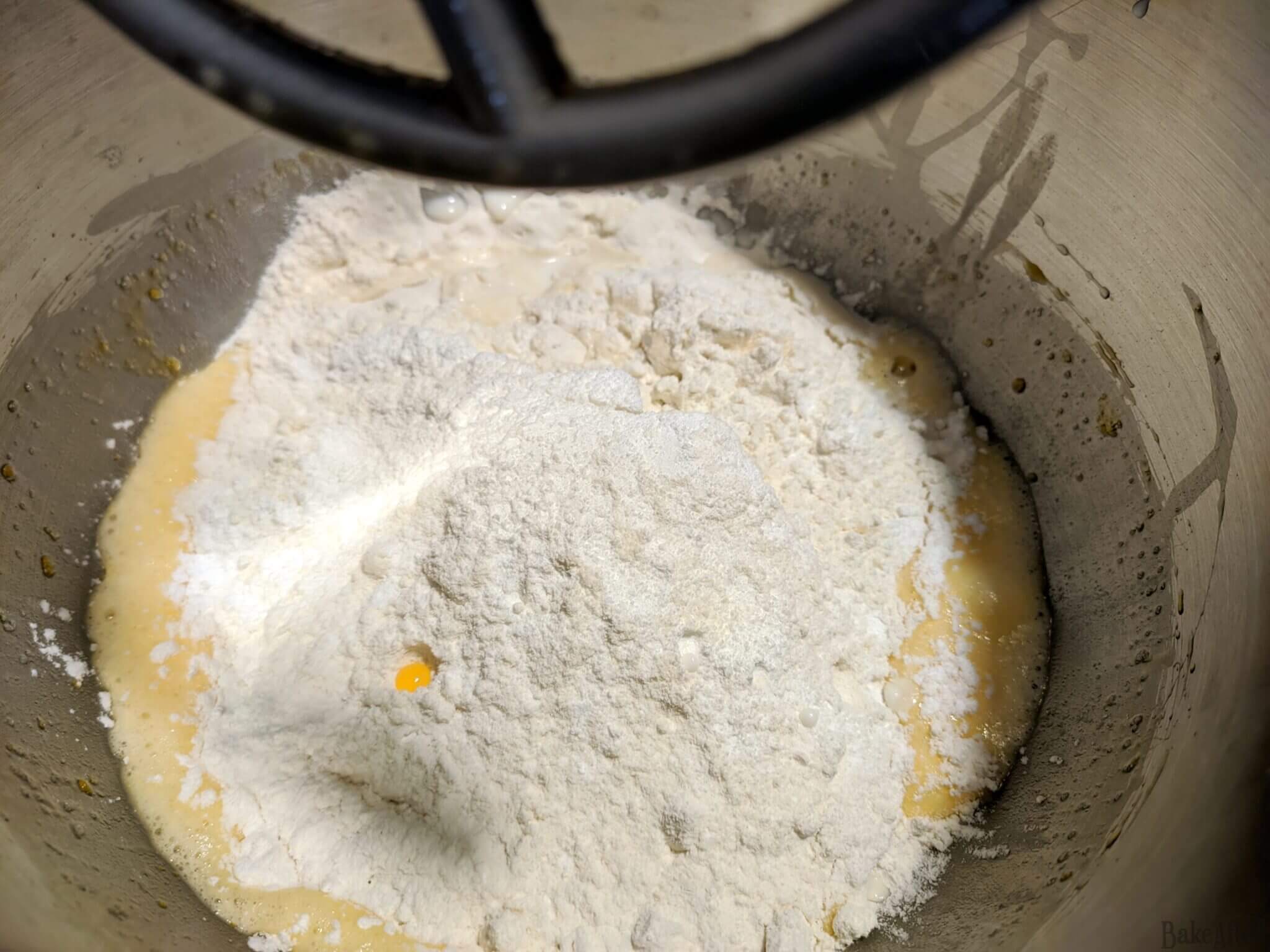
So, is Baking Soda and Baking Powder Kinda the Same Thing?
No. Not even close. Baking soda is a single, pure ingredient that needs an acid to activate and balance it. Baking powder is a ready made blend that already includes its own acid, so it works on its own with just liquid and heat. To put it simply and summarise,
- Baking Soda: Pure sodium bicarbonate, needs an acidic ingredient in the recipe to work properly, reacts fast and only once, very small amounts needed.
- Baking Powder: A blend of baking soda plus acid plus starch, works on its own, usually reacts twice (once wet, once hot), needed in larger amounts than baking soda.
What confuses people is that both are leavening agents, both are white powders, and plenty of recipes actually use both at once, which makes it seem like they must be doing the same job. They’re not, baking soda in that case is usually there to neutralize excess acidity in the batter (and help with browning), while baking powder is doing the actual heavy lifting for the rise.
Can You Substitute One for the Other?
Technically yes, but it’s not a straight swap. If a recipe calls for baking powder and all you have is baking soda, you’d need to add an acid to activate it, and getting the ratio right is fiddly, roughly a quarter teaspoon of baking soda plus about half a teaspoon of cream of tartar can stand in for one teaspoon of baking powder, but the results can vary depending on what else is in your batter.
Going the other way, using baking powder instead of baking soda, is a bit safer but you’d need roughly three times as much baking powder to get the same lift, and since baking powder isn’t as pure, you risk adding a slightly bitter, chemical aftertaste along with a texture that isn’t quite right, since the extra starch and acid change how the batter behaves.
Honestly, if a recipe calls for one and you don’t have it, my honest advice is the same as with most substitutions, it’s usually better to wait until you have the right ingredient than to force a swap and end up disappointed with a flat cake or a bitter batch of cookies.
How to Tell What’s in Your Pantry
If your box or tin isn’t labeled clearly, or you’re not sure which one you’re holding, here’s a simple trick: drop a small pinch into a splash of warm water. If it immediately starts bubbling and fizzing on its own, it’s baking powder, because the water dissolves and activates its dry built-in acid. If it simply settles or dissolves into the water without any fizzing, it’s baking soda, it’s waiting for an acid before it can react.
Tips and Tricks with Baking Powder and Baking Soda
- Check the shelf life. Pure baking soda chemically lasts almost indefinitely if stored in an airtight container away from ambient odors. Baking powder, however, degrades over time, usually within 6 months to a year once opened, because moisture in the air slowly triggers its built-in acid and base to react early inside the tin, a good way to store baking powder longer is instead of buying a tin, buy pre-packaged sachets, so a pack will have like 10 or 12, each is enough for about 2 bakes, so you will always have good sealed baking powder.
- To test baking soda, add a splash of vinegar to a spoon with the baking soda. If it starts vigorous fizzing it means it’s still potent.
- Store both in a cool, dry place with the lid tightly closed. Humidity is the enemy here, it triggers the reaction early and slowly kills the leavening power before it ever reaches your batter.
- Don’t overmix once baking soda or baking powder is added to a wet batter. The gas bubbles start forming right away, and overmixing knocks a lot of them back out, which means less rise in the oven.
- If a recipe calls for both, don’t assume you can leave one out. They’re usually doing different jobs, normally baking soda balancing acidity and helping browning, baking powder providing the actual lift, and skipping one can throw off both the texture and the flavor.
- When in doubt about quantities, less is safer than more. Too much of either can leave a bitter, soapy aftertaste and can actually cause baked goods to rise too fast and then collapse.
- Cookies are a classic combination of baking powder and baking soda and slightly adjusting them can create different varieties of cookies, like Increase the Baking Soda, gives you a wider spread, a darker golden color, crispy edges, and a craggy, chewy center (soda weakens gluten and boosts browning). Increase the Baking Powder, gives you a taller, puffier, paler cookie with a soft, cake-like texture and a smooth top (powder lifts upward and inhibits heavy browning). With no leavener at all, the results are a dense, flat, fudgy disc that barely spreads or browns. And too much of either causes the cookies to balloon rapidly in the oven and then collapse into a flat, brittle disc with a harsh chemical aftertaste.
And that’s really the whole story, two very different ingredients that happen to look alike and do a similar sounding job, but work in completely different ways. Hopefully this clears up the mix up for good, and next time a recipe calls for one or the other, you’ll know exactly why.
Ohhh and if there is something that i want you to keep from this, its my golden rule on the matter, if a recipe asks for one, or the other, or both, then use the exact ingredient in the exact amount, yes even if you are experienced like me! The first time you make a recipe, follow it to the letter, then after that, you can tweak to your hearts content ;D Have a lovely day!
Discover more from BakeAfter
Subscribe to get the latest posts sent to your email.