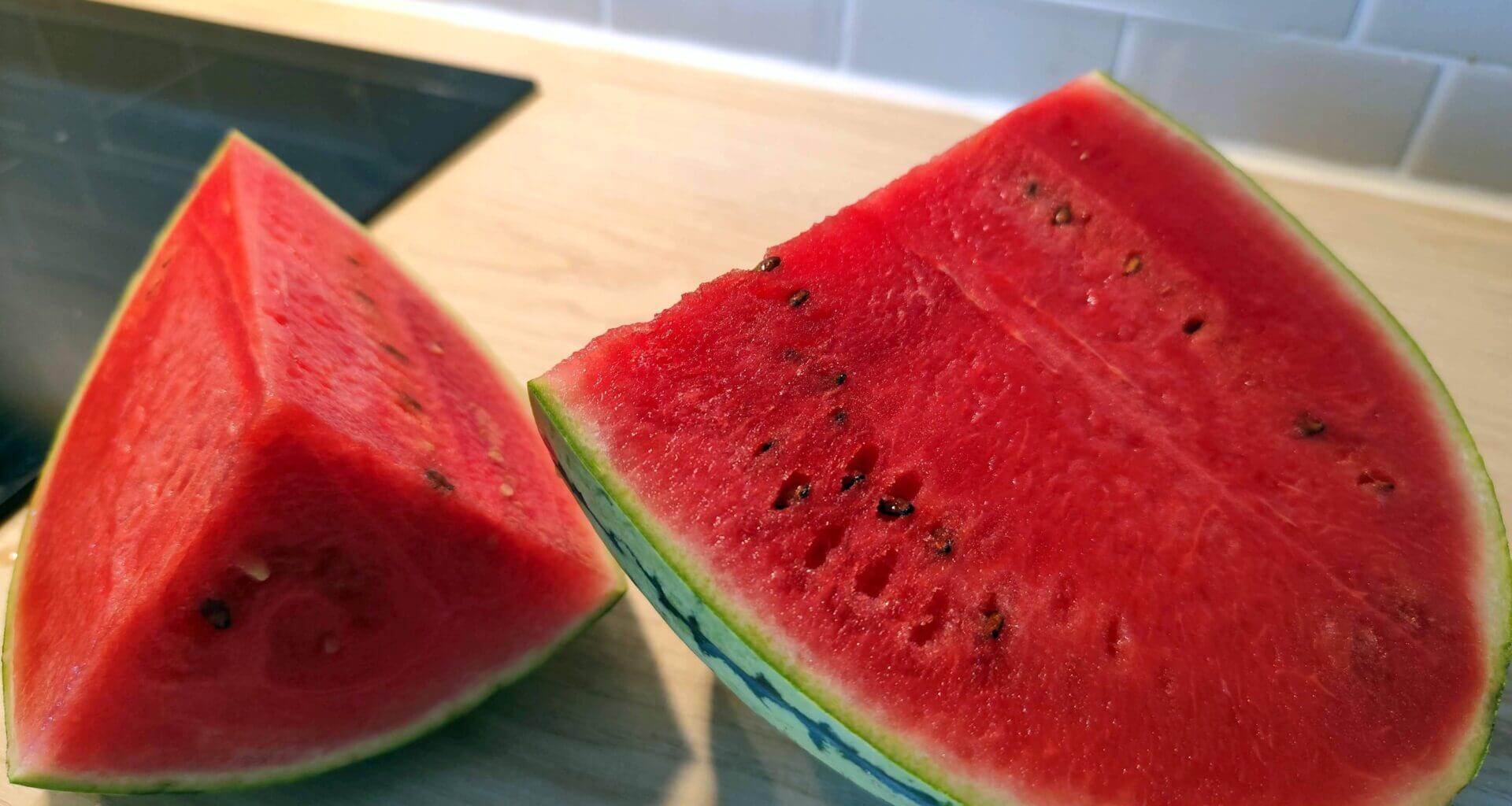

I’ve eaten my fair share of disappointing watermelons, pale, watery, sometimes almost tasteless, and after a while you start noticing patterns, not of the watermelons, oh no, of my blood pressure spiking while I’m cutting into a brand new one hoping i don’t get a dud. So eventually i got my act together and after some practice and know-how im now a natural born watermelon winner, i never get a dud, I’m always winning heheheh, so let me share with you my insight and get you on the right and righteous path of a watermelon savant! ;D
My Way to Find a Ripe Watermelon
I use basically the sonar method, that is, i use the sound as my main filter, if a watermelon doesn’t pass that test, I don’t even bother checking anything else, do note that sometimes even a nice sounding watermelon isn’t very good, so the sound is just the main filter, so lets organize the steps to find a perfectly ripe watermelon!
Step 1: Instead of inspecting every single watermelon in the pile, I knock on each one with my knuckles. The ones that sounds like a drum, a deep sound that vibrates (i dont need to tell you, just go hit a bunch of watermelons you will know right away what i’m saying, some will have no sound, some will have a wood sound, and some vibrate like a drum), these are the ones I keep in the running, normally 2 or 3, I take them out of the pile.
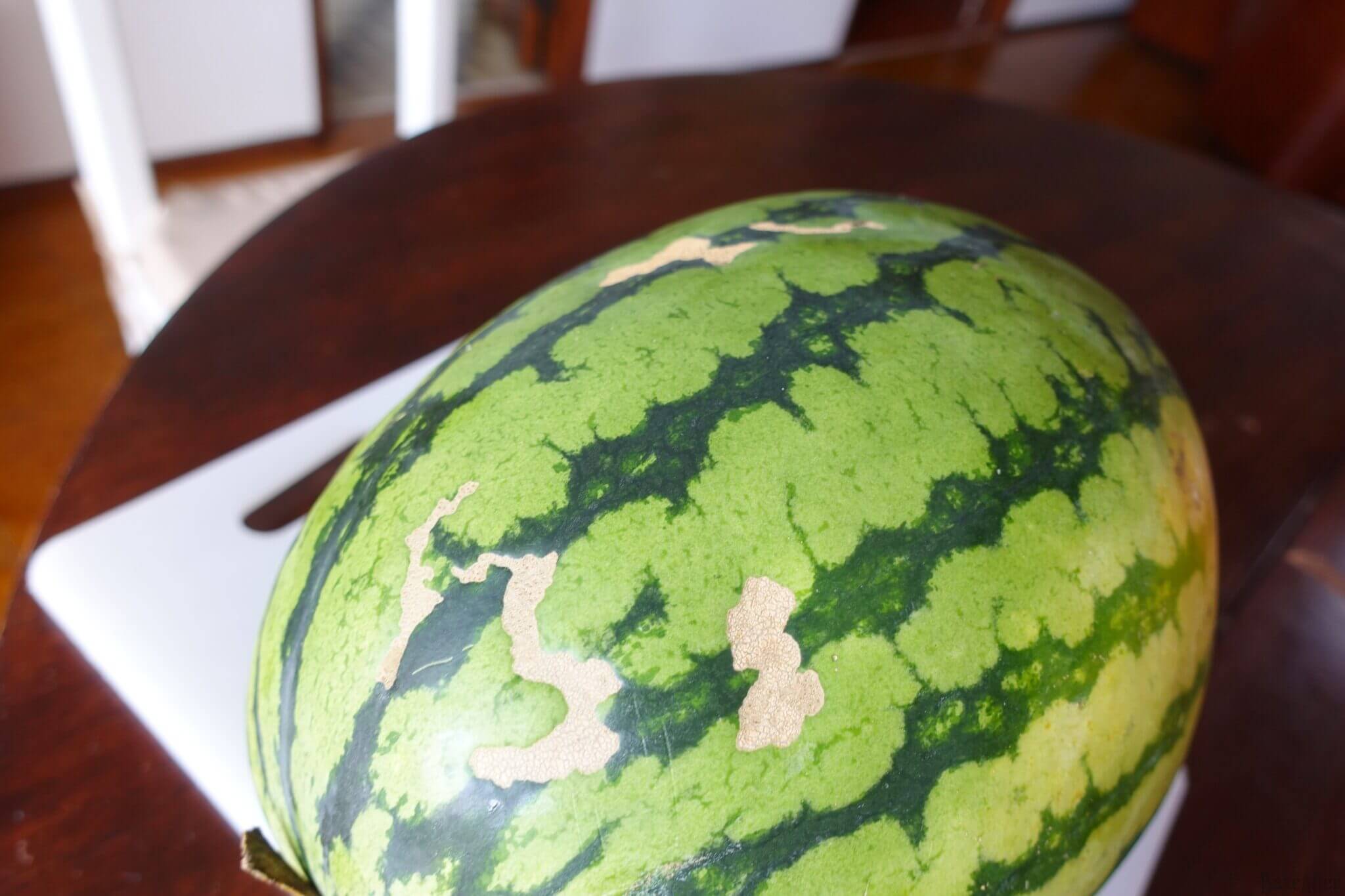
Step 2: Now, among only the watermelons that passed the sound test, I look for the field spot, this is where the watermelon sit while it grows, the more yellow and dark it is, the better. I also check for scars/webbing on the skin, this is a sign of the young watermelon being pollinated, the more the better, and I finally compare the weight, not between the watermelons, I’m going for the one that feels heavier than it looks.
Step 3: This is not a step, but i like to include it as well, know when to say no. if none of the watermelons pass step 1, better to just walk away and buy something else. There might be a couple of okay or even good ones, but you will never find gold in that pile.
Other Good Signs of a Ripe Watermelon
- Weight: Pick up two watermelons that look about the same size and go with the heavier one. Watermelons are about 92 percent water, so a melon that feels heavy for its size is packed with well more juice. If it feels lighter, it’s likely drying out inside or was never given enough water.

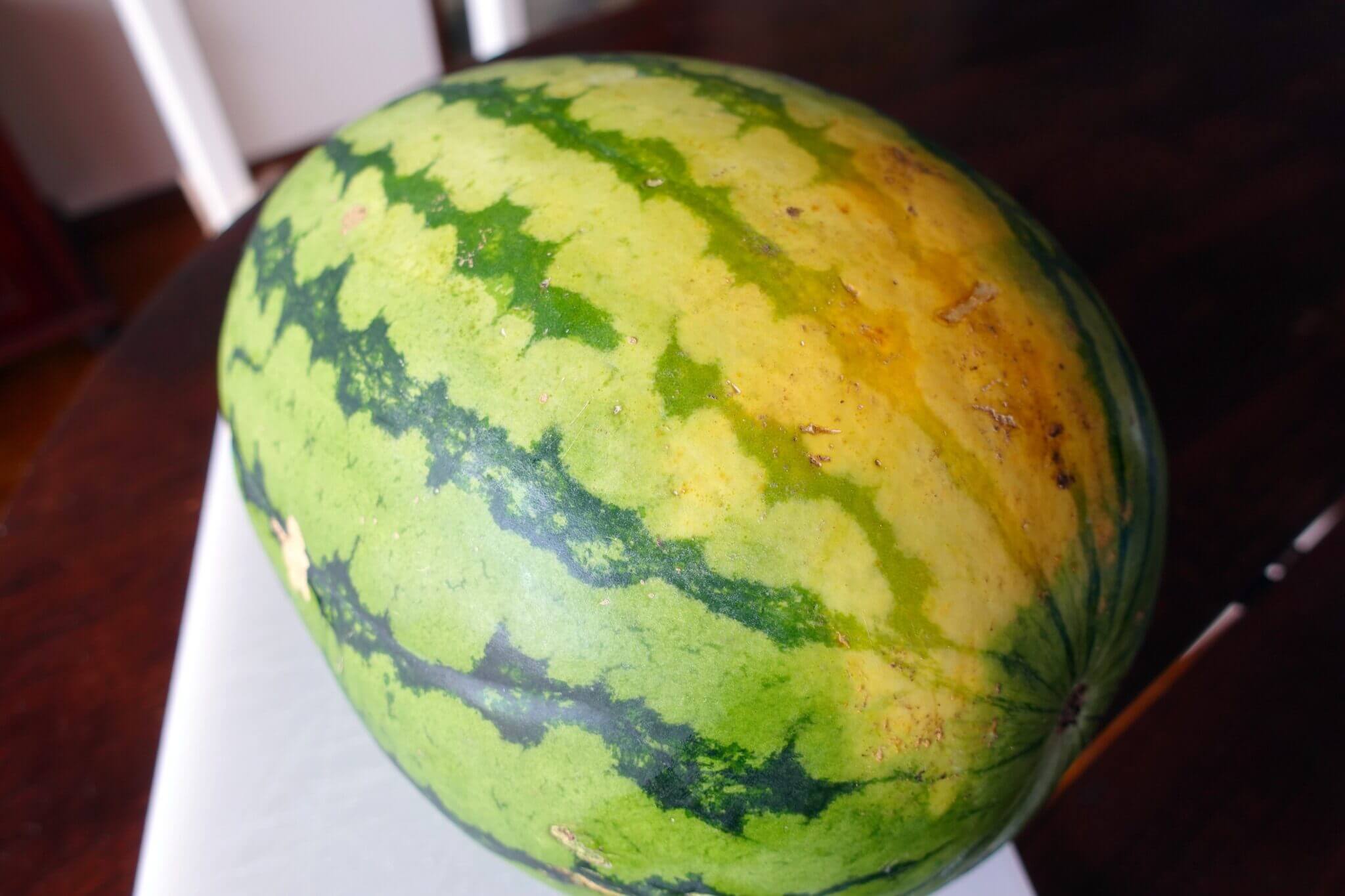
- Field spot: Look for the pale patch on one side of the melon. That’s where it rested on the ground while ripening in the sun. The darker yellow, almost orange, that spot is, the sweeter the melon. If it’s white or greenish, it was picked too early and will taste closer to cucumber than watermelon.
- The drum sound: Give it a knock or a light slap. If you hear a hollow, deep sound with some resonance, like tapping your own chest or a drum, it means it’s ready. A dull or muffled sound, like knocking on a wall, means it’s either underripe or overripe and mealy.
- The stem: If the watermelon still has its little tail attached, take a look at it. A dry, brown stem means it separated or was picked at the right time. A green, flexible stem means it was pulled off the vine before it was ready.
- Shine and stripes: On striped varieties, darker and more defined green stripes are a good sign, but the real tell is the shine. A ripe watermelon should look dull, almost matte. If it’s very glossy, it might look pretty, but it’s still underripe.
- Webbing or scars: Those brown, spiderweb-like lines or blotches on the skin aren’t a flaw. They’re pollination scars. The more of them there are, the more times bees visited the flower, and that usually means a sweeter melon.
- Shape: A round shape doesn’t automatically mean a better melon, some varieties are naturally more oval, and that’s fine. What actually matters is symmetry. Go for a melon that’s even all around. Bumps, dents, or flat spots usually mean it grew with uneven water or sun exposure, and it might have dry or bland patches inside.
And that’s it! I hope you find this quick guide helpful and happy watermelon hunting! ;D And please tell me if you used my way, but only if it worked out hahahahah, I’m kidding ;D Any questions hit me up on the comments! Have a great one!
Discover more from BakeAfter
Subscribe to get the latest posts sent to your email.