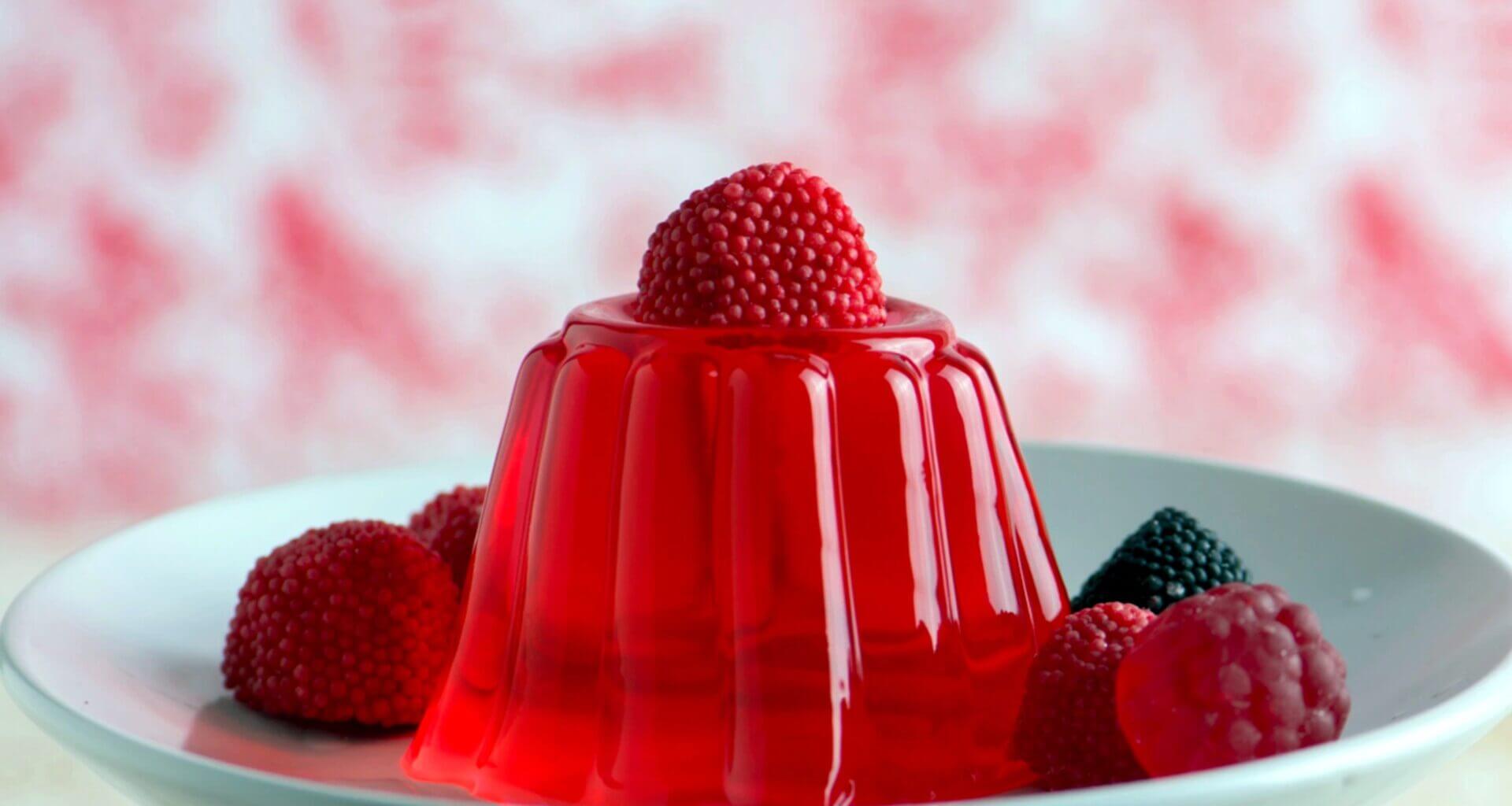

Does gelatin really have tips and tricks? Isn’t it just… follow the instructions in the box? Naaaa, gelatin might not look like it, but it’s a super versatile, delicious, and easy ingredient to work with, so sharing some of my ideas, tricks, and tips is always a great way to learn something new, and maybe get a little inspired to go beyond “the jello flavored packet”! ;D
But What Even Is Gelatin?
Gelatin is a translucent, colorless or slightly yellowish substance, obtained from the collagen found in animal tissues, particularly bones and skin. It’s widely used across several industries, including food, cosmetics, and pharmaceuticals, thanks to its unique texture and solubility properties.
Sources of Gelatin
Animal-based gelatin are extracted from the collagen found in the skin, tendons, bones, and cartilage of mammals, especially cattle and pigs.
Plant-based gelatin has a bit more of a loose category. You have agar-agar and carrageenan, both derived from seaweed (and often combined since they have different gelling strengths), but also pectin, which comes from the peels of fruits like apples and citrus, and konjac, which is extracted from the root of the konjac plant (also called konnyaku in Japan). Each one gels differently, so they’re used in different applications.
Now I do need to add a note here, because gelatin is, as mentioned above, an animal product made primarily from collagen, so how can there be a “plant-based gelatin”? Well, it’s more of a borrowed term, a way of acknowledging that other ingredients like seaweed extracts share similar gelling capabilities. Since this is relatively recent compared to animal gelatin, but achieves somewhat the same results, these plant-based options picked up the “gelatin” label colloquially. That’s why the distinction between animal and plant-based gelatin exists at all, because strictly speaking, “gelatin” by itself has always meant an animal origin.
Types and Formats of Gelatin
Both animal and plant-based gelatin are usually sold in sheets or powder. Sheets typically need to be hydrated in cold water before use, but they tend to have a higher gelling concentration, so they create a firmer result or you can use less of the product. Powder is simpler to use, usually dissolved in a small amount of liquid first, but you generally need a bit more of it.
This matters because if a recipe calls for sheets and you use the same amount in powder form, the result might not be what you’re expecting. A rough rule of thumb: one sheet of gelatin (around 6g) is roughly equivalent to about 7g of powdered gelatin.
In the same spirit, using animal versus plant-based gelatin generally gives different results. Sometimes you can swap them, but broadly speaking they’re different products even if the end result can look/taste similar. And even within plant-based options, the differences are real. You can easily make a classic fruit jello with agar-agar and it’ll set right on the counter without any refrigeration. But if you dump a whole jar of pectin in, yes, you’ll get something thick, but it won’t be anywhere close to a classic jello, because pectin’s gelling power is much weaker than agar-agar or collagen.
Animal Based Gelatin
You can use it in practically any preparation, from desserts and confectionery to mousses and aspics. One important thing to keep in mind is that it needs refrigeration to maintain its gelling properties (shocking, right? hehe), or it needs to be used in higher quantities to create something stable at room temperature, like a gummy candy.
Pork-derived gelatin tends to come mostly from skin and is often used as a thickener, while beef gelatin is extracted mostly from bones and is traditionally used to clarify broths and create very firm gelatin preparations like aspic. These days that distinction is much less relevant for everyday cooking, but it’s fun to know.
Plant Based Gelatins
Agar-agar is an incredibly strong gelling agent that works for almost everything. What makes it really great is that it sets at room temperature, which means no fridge needed, and as a plant-based ingredient it’s perfect for vegan and vegetarian recipes. By far the most versatile alternative to animal gelatin.
Pectin is used primarily to make jams, jellies, preserves, and fruit pastes. Guava and quince are fruits that are naturally high in pectin, which is why their classic preparations come out nice and firm in a jello kind of way.
Carrageenan is widely used in the food industry as a thickener and stabilizer, especially in dairy products. Next time you grab a thick yogurt or an extra creamy chocolate milk, take a look at the ingredients list. 😉
Konjac is often found in low-calorie food products because it’s incredibly easy to shape into things like “noodles” as an alternative to rice or wheat pasta. Since it’s made of water, fiber, and glucomannan (the gelling agent derived from konjac), it has virtually no calories. It’s also used as a thickener in sauces, soups, and desserts.
Tips and Tricks With Gelatin
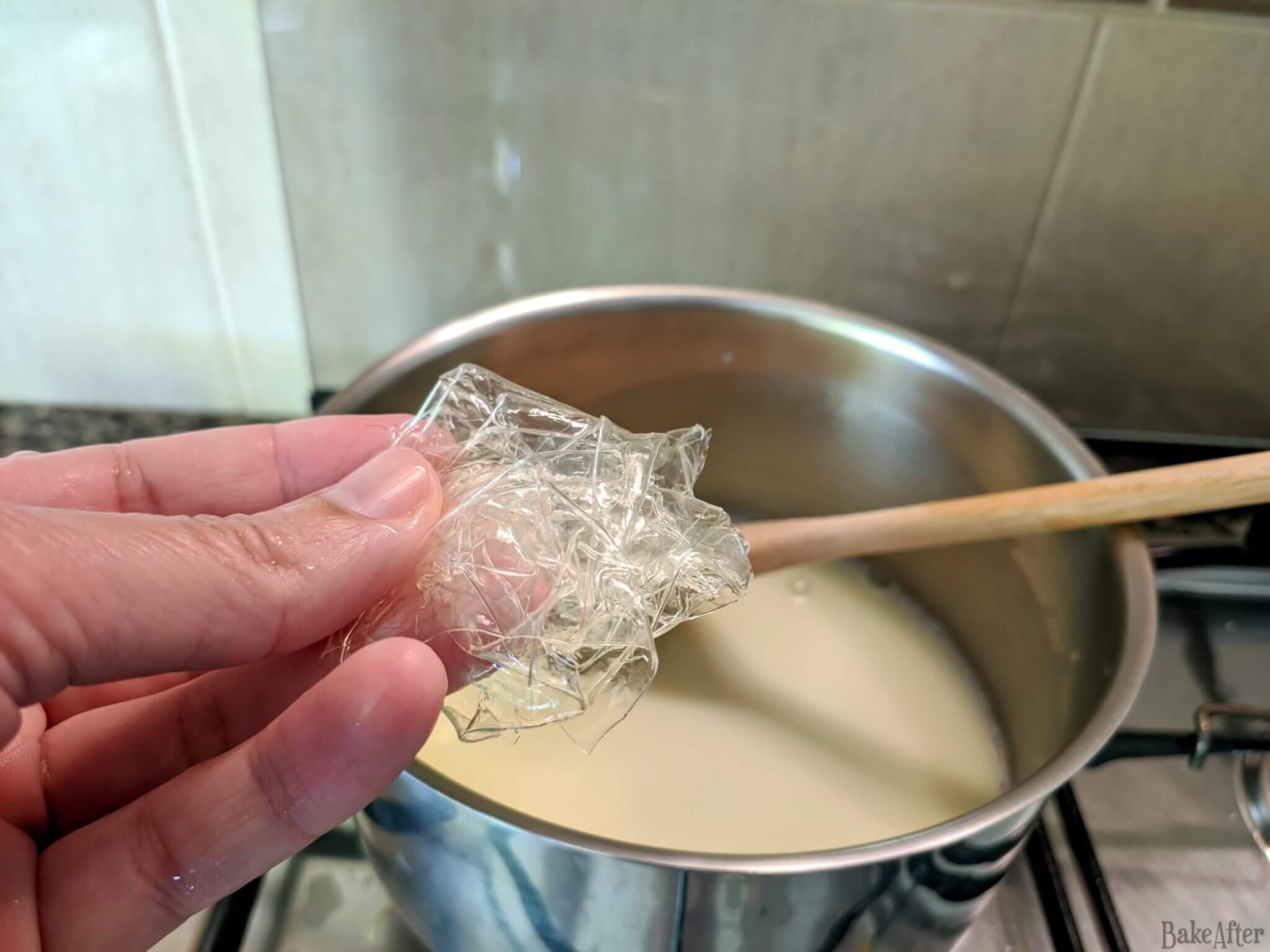
- Bloom your powdered gelatin first, dissolve it in cold water before adding any hot liquid. This prevents lumps from forming when the hot liquid hits it. And yes, the same logic applies to sheets, hydrate them in cold water before combining with hot liquid. Déjà vu? ;D
- Never boil your gelatin! Both animal and plant-based gelatin will denature at 212°F (100°C), meaning it loses its gelling ability and also drops in nutritional value. For animal gelatin, you want to stay around 175°F (80°C), and for plant-based options like agar-agar, aim for around 195°F (90°C).
- Gelatin is way more versatile than the box suggests. Buying a flavored packet and adding hot water is just the beginning. Use unflavored gelatin with fresh fruit juice and you’ve already got something far better than any boxed version. You can also stir in heavy cream, fresh or blended fruit, yogurt, or coconut milk, there’s a lot of room to play around and make it your own.
- Make a firmer jello. I personally love a firm jello, so if the box says 2 cups of water, I’ll use about 1¾ cups instead. The result? A nicely firm set. Also worth noting, if you’re adding fruit to your jello, it’s a good idea to cut back on the water anyway, because the fruit will release its own moisture into the jello as it sets, and you want jello, not soup.
- Use firmer jello for molds. Following right on from that, the firmer your jello, the easier it is to unmold cleanly, and the better it holds its shape once it’s out. This is especially important if you want those beautiful detailed mold shapes to actually survive the plate.
- Create layered jello. Super simple, really beautiful, and honestly more fun to eat. Make two or three different flavors, set the first layer in your mold or individual cups, leave space for the next layers, and let it set for several hours (8 hours is ideal). Then gently spoon the next flavor on top and repeat. You can also go in a completely different direction and make a “jello fruit salad”, make two or three flavors separately, cut them into cubes, and toss them together to serve. Firmer jello works best here too.
- Use gelatin as a thickener. It’s often a better choice than cornstarch, rice starch, or plain flour, mainly because those can carry their own flavors. One note though: use animal-based gelatin only if the sauce or dish will be served cold, and use a plant-based option if it needs to be creamy at room temperature or slightly warm.
- Avoid certain fruits with animal-based gelatin. Pineapple, kiwi, papaya, mango, figs, guava, and even fresh ginger all contain enzymes that break down proteins, which is exactly what stops your jello from setting. These are great for marinating a steak, not so great for dessert. If you really want to use them, boiling the fruit for a few minutes (except kiwi) deactivates those enzymes and makes them safe to use in a jello.
- Suspend fruits or mix-ins evenly. If you want fruit or other pieces to float in the middle of your jello rather than sink to the bottom, chill the jello until it reaches the consistency of cold egg whites, then stir in your well-drained additions and return it to the fridge to set completely.
And that’s it! I hope the article is useful. I still have flashbacks to the watery school cafeteria jello that barely held itself together… the trauma is real hahaha!
One last note on animal-based gelatin: like any industrial animal product, it involves animal processing and its environmental footprint. That said, gelatin is essentially pure protein, and it’s made from parts that would otherwise go to waste as animal feed or fertilizer, so from where I stand it’s more of a byproduct than a primary cost. A steak still has a much bigger environmental footprint than gelatin.
And plant-based gelatins have their own trade-offs too, nutritionally and environmentally. Konjac is basically fiber and water, while animal gelatin is almost pure protein (even if it doesn’t bring much else to the table). I personally use both, and my point is simply that animal gelatin still has its place, but plant-based alternatives are genuinely worth exploring because they’re fascinating and often excellent options in their own right.
Hope you liked it and until next time! ;D
Discover more from BakeAfter
Subscribe to get the latest posts sent to your email.