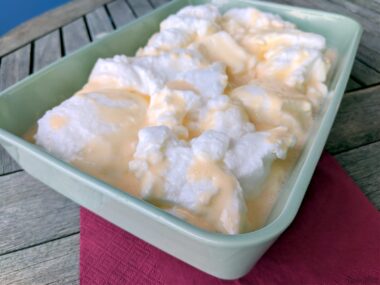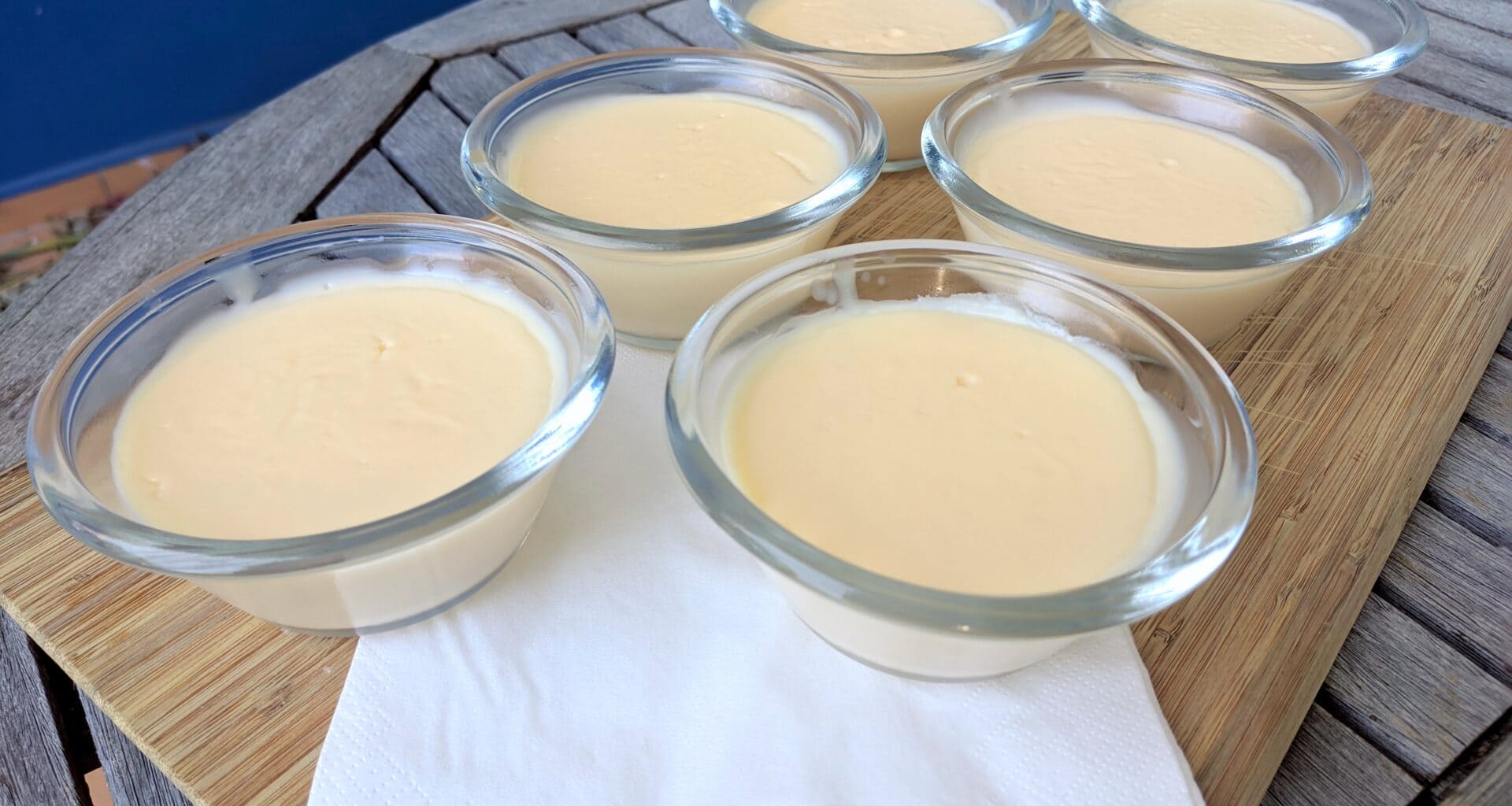

The traditional Portuguese leite creme only needs eggs, sugar and milk, but there’s a more modern version that uses cornstarch, which is what we call “maizena” in Portugal (maizena is just a brand of cornstarch that stuck, like Kleenex for tissues). Since cornstarch thickens as it cooks, it takes over part of the eggs job, so you need fewer yolks and the texture ends up a little denser, almost halfway to a pudding.
Of course, in terms of flavor a custard made only with eggs is richer and more intense, while the cornstarch one tastes more of milk, especially if you use whole milk. It’s not better or worse, just two different versions, plenty of versions to choose from! ;D
Oh, and also cornstarch is a lot more forgiving than eggs. Everybody knows eggs can curdle in this kind of desserts, so if this is your first time making “leite creme”, the cornstarch version is probably the best place to start, because it’s much easier to end up with a fantastic creamy sweet without the risk of scrambling the eggs. Let’s get to the recipe!
Creamy Portuguese Milk Custard Cream with Lemon and Cinnamon
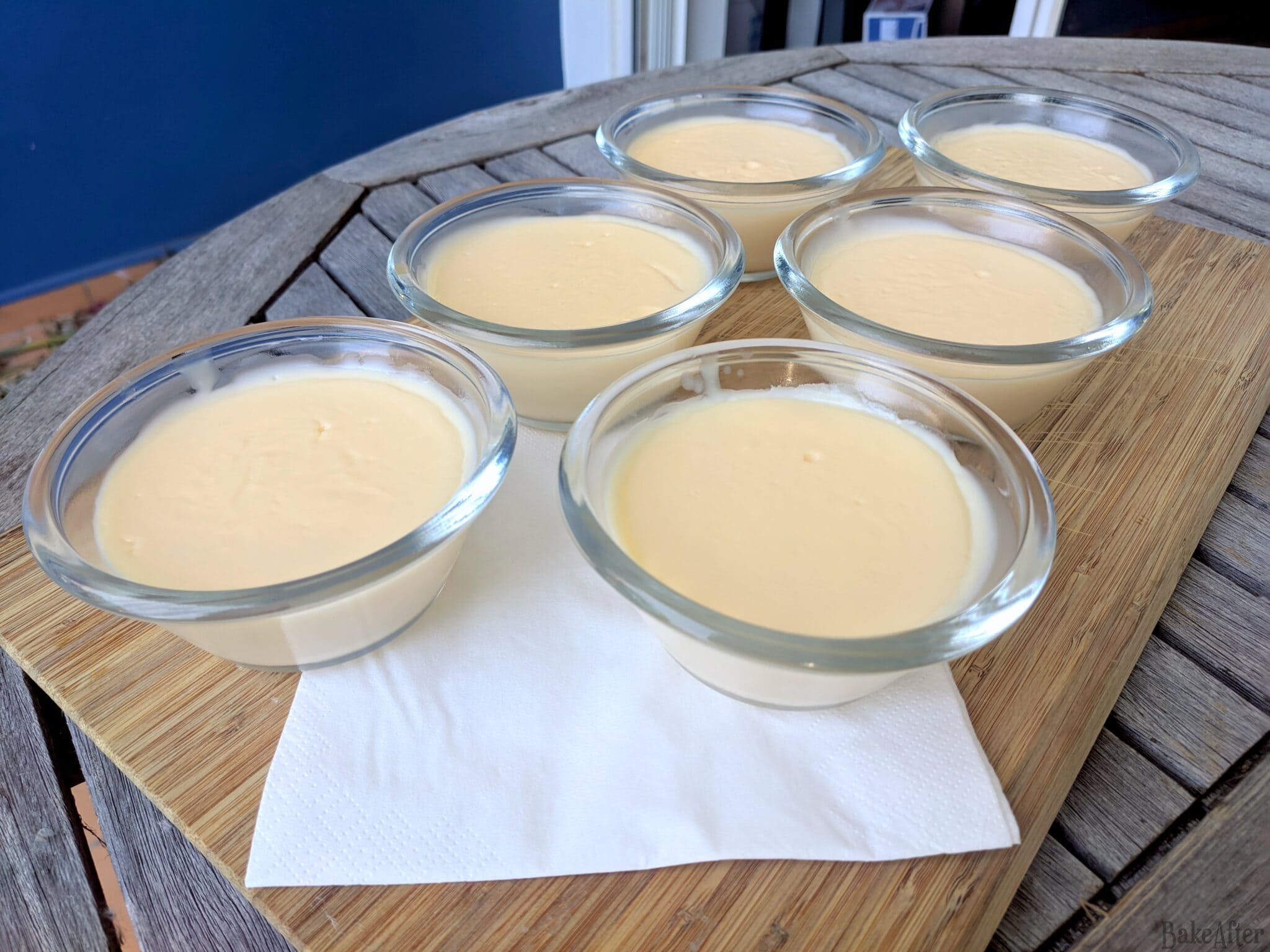
There are plenty of different milk puddings and milk custards in Portugal, The good thing about this one is that it’s a bit cheaper and easier to make, because we’re basically trading egg yolks for cornstarch. That means a slightly less eggy flavor, but it’s still ends up being super creamy and delicious.
Ingredients
- Milk – 1 litre
- Egg yolks – 3
- Cornstarch – 40 g (Approx. 4 tablespoons)
- Sugar – 75 g (Approx. 6 tablespoons)
- Lemon – 1 Peel
- Cinnamon – 1 Stick
Directions
- Place 800ml of milk in a small saucepan along with the sugar, lemon peel, and cinnamon stick over medium heat, bring to a boil (but don’t let it boil, just very hot), then remove from the heat.
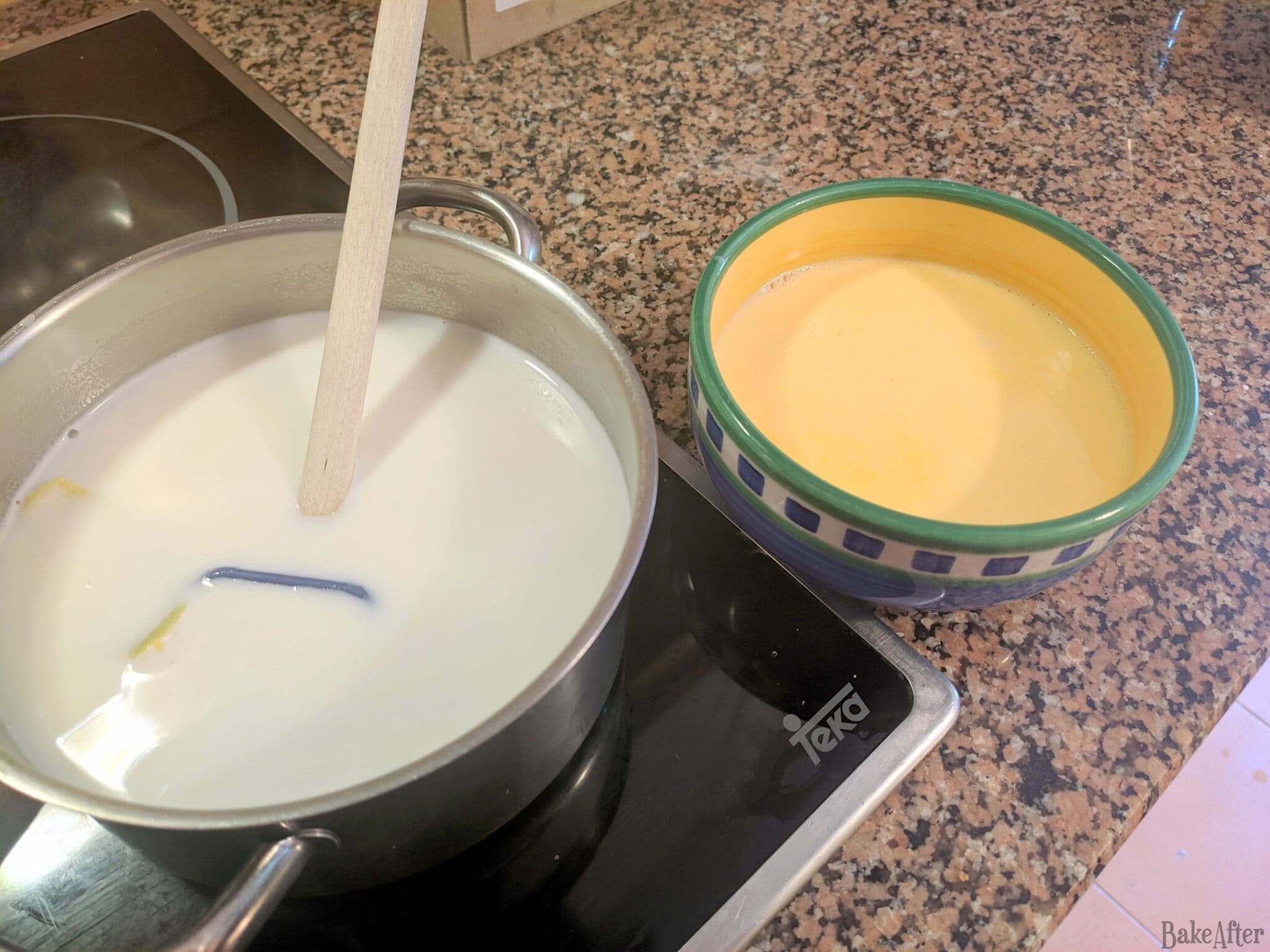
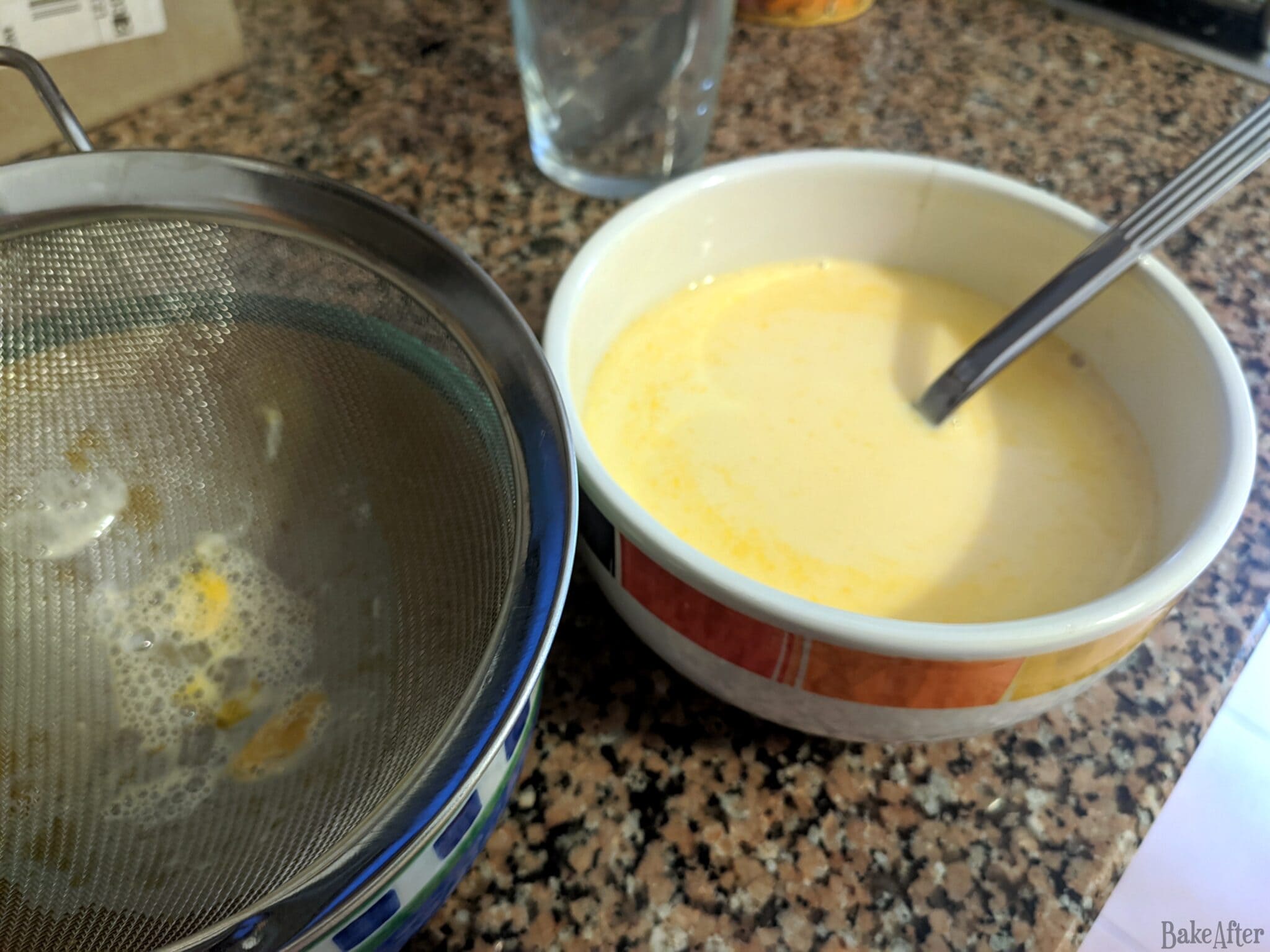
- While the milk is heating, combine the remaining milk in a bowl with the egg yolks and cornstarch, mixing well until thoroughly blended.
- Once the milk is hot, add a few spoonfuls of the hot milk to the bowl containing the egg yolks, stirring constantly, repeat this process until the milk, cornstarch, and egg yolk mixture is thoroughly warmed.
- Next, pour the milk and cornstarch mixture back into the saucepan with the rest of the milk. It is best to use a strainer to ensure the custard is smooth and free of lumps, pour it in a steady stream while stirring continuously.
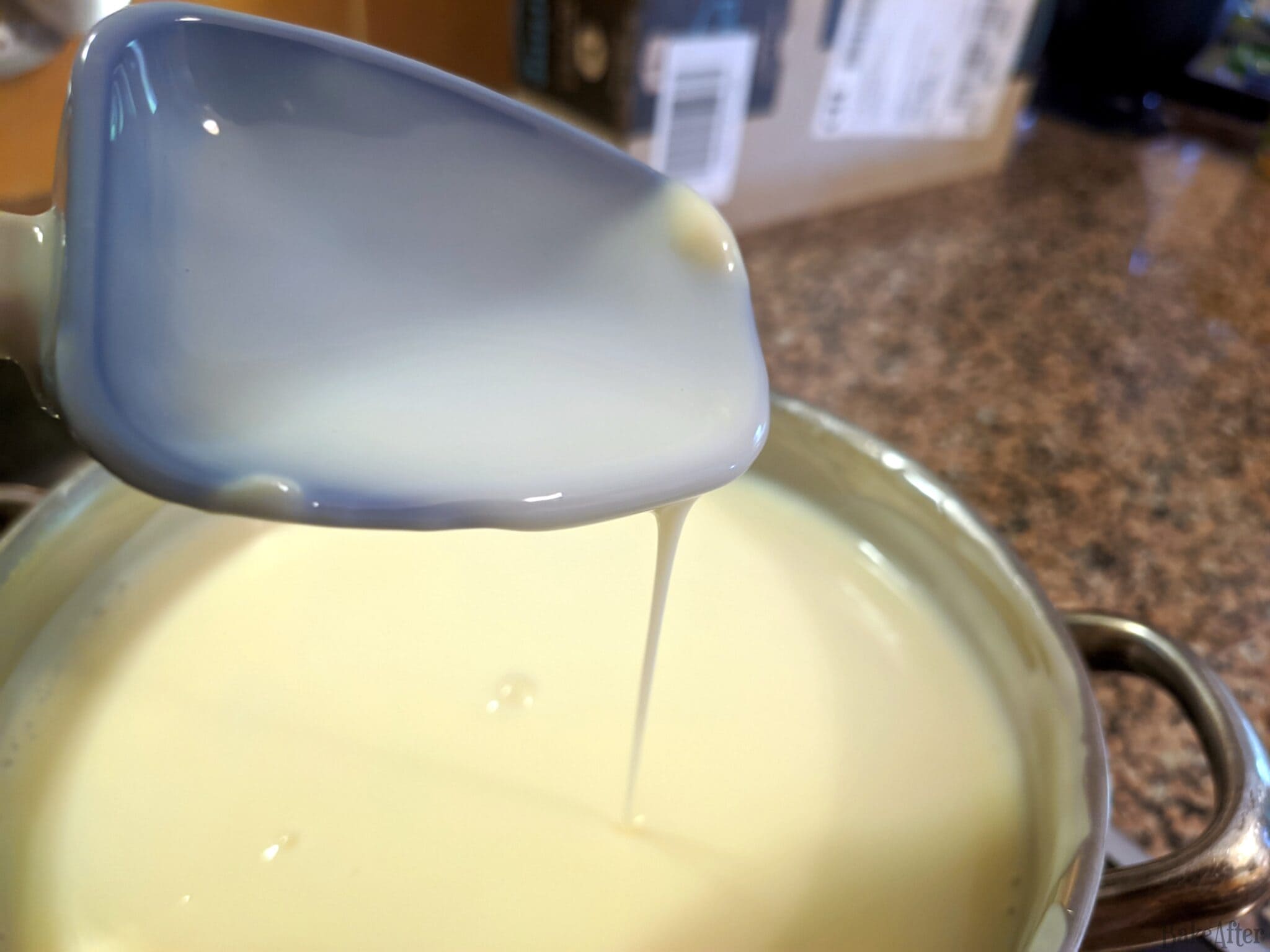
- Now return the saucepan to medium-low heat, stirring constantly. You will notice it gradually beginning to thicken, this usually takes a few minutes.
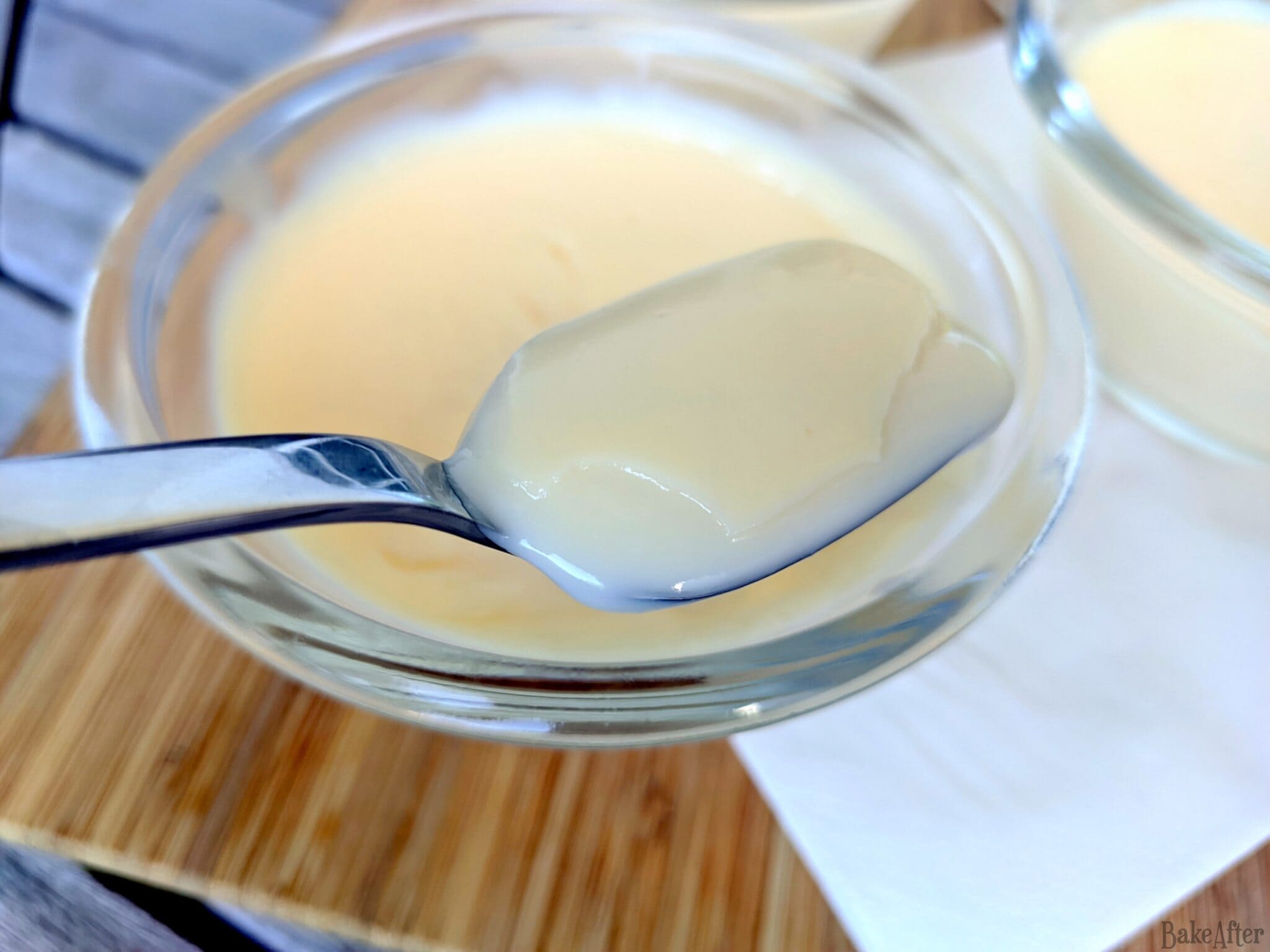
- Allow it to become nice and creamy. (To test if it is ready, dip a tablespoon into the custard and turn it over, if the custard coats and sticks to the back of the spoon, it is done.)
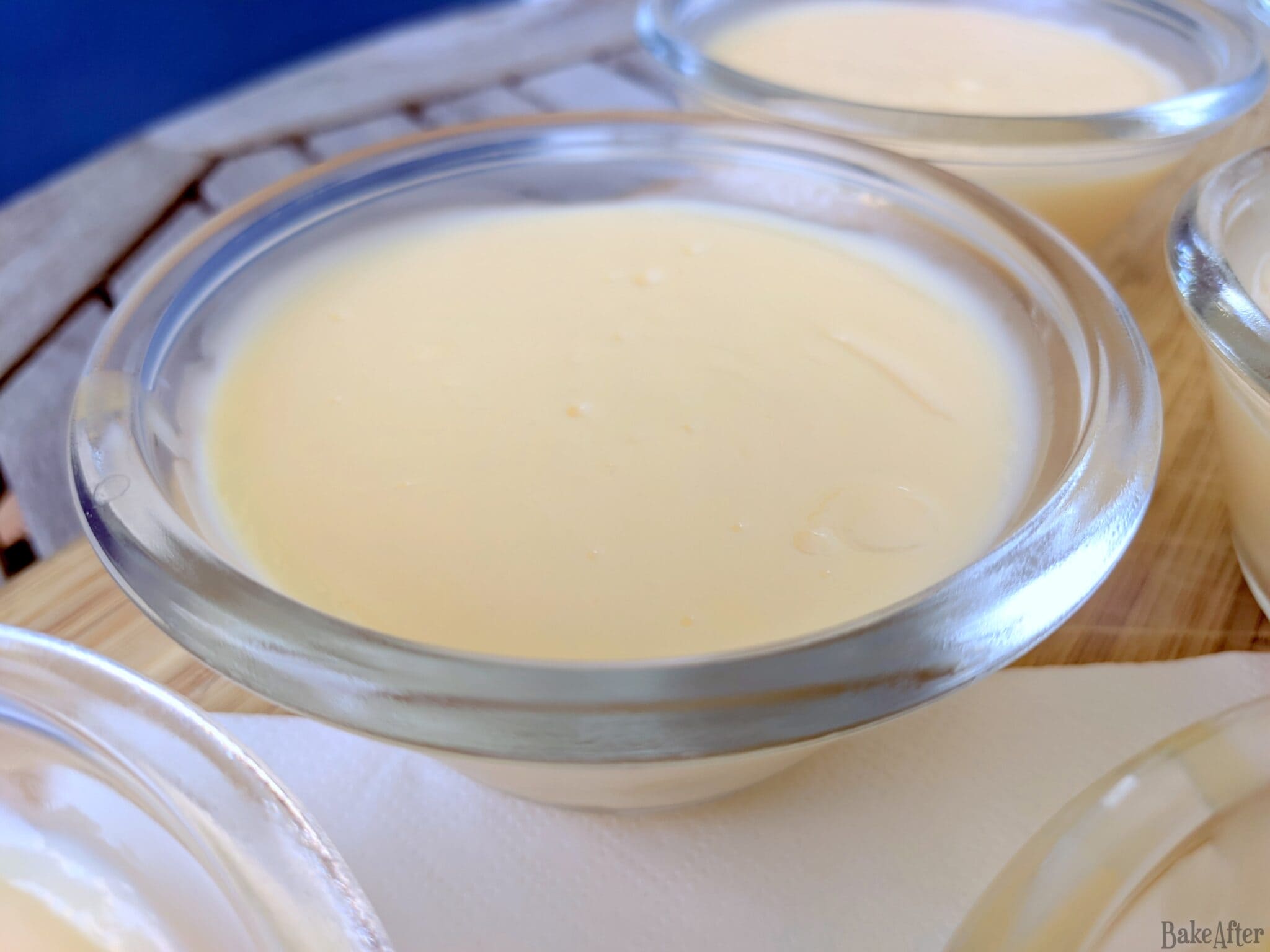
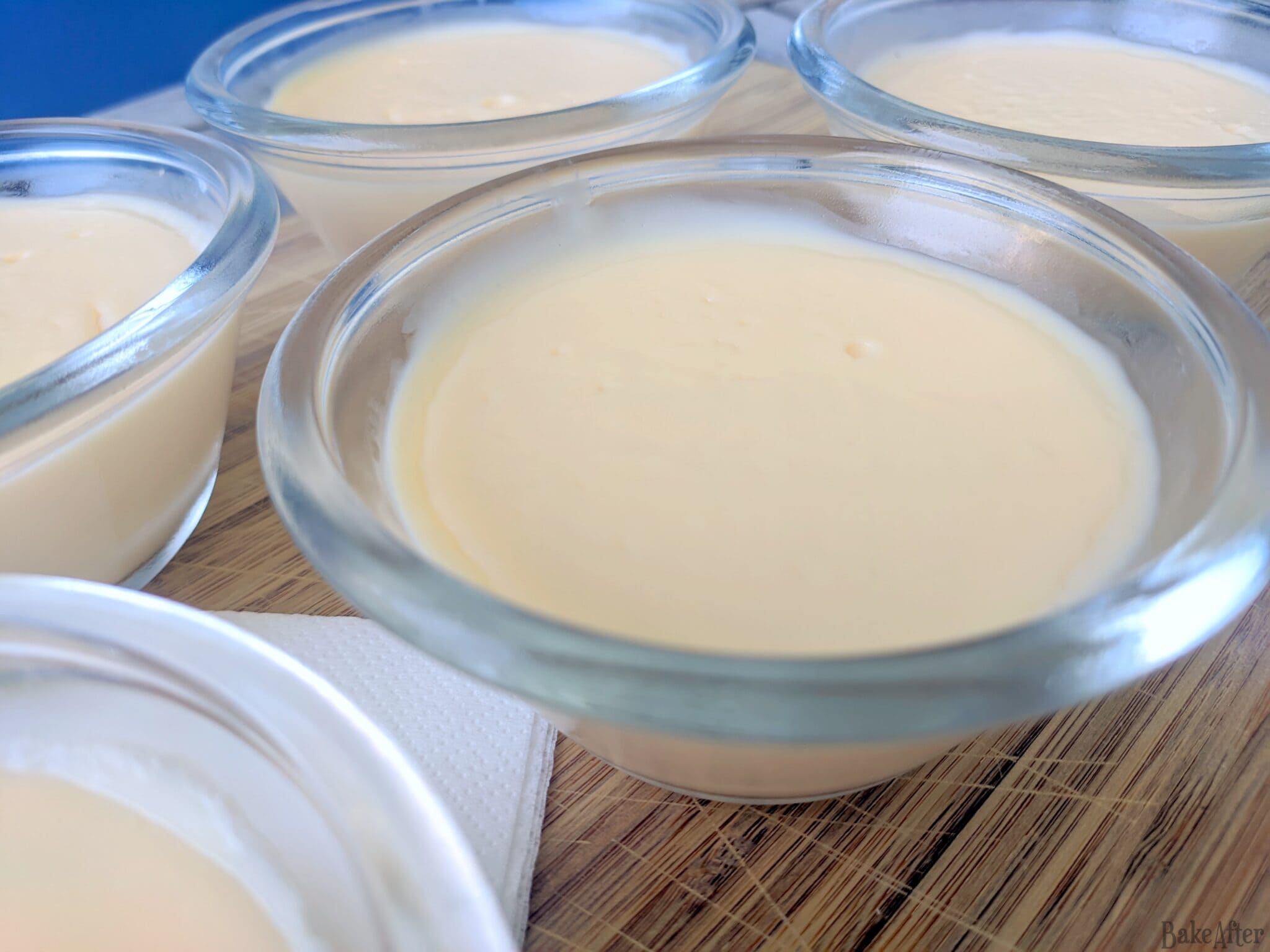
- Transfer the mixture into small individual bowls and place them in the refrigerator to set. (At home, I like to leave the cinnamon stick and lemon peel in a couple of the bowls, it’s like a little surprise, but if you are serving guests, it is better to remove them.) You can serve it plain, with a sprinkle of cinnamon sprinkled on top or with caramelized sugar. Enjoy!
If you want a variation, add chocolate milk (instead of part of the milk) or vanilla. Or change the plain sugar to brown sugar for a more caramelised taste.
Use a vegetable peeler for the lemon peel and try to avoid the white pith, because that’s where the bitterness lives.
Cornstarch needs a little heat to do its job. After you add it to the flavoured milk, let it cook on medium/low heat until you see a few lazy bubbles, around 203°F (95°C), then let it cook for about a minute. Don’t let it boil hard, or the yolks may start to scramble, they start to firm up around 185°F (85°C).
Don’t skip the strainer. Even if you think there are no lumps, it only takes a second and the texture is worth it.
Temper the yolks slowly, with one spoonful of hot milk at a time. Rushing this step is the number one way to end up with scrambled eggs.
If the custard still looks a bit lumpy, give it a quick whisk or a pass through the strainer before pouring into the cups.
Let it chill for at least 3 to 4 hours in the fridge, and cover the surface with plastic wrap if you don’t want a skin to form.
For a crème brûlée style dessert, sprinkle a thin layer of sugar on top and caramelize it with a kitchen torch right before serving.
Ohhh and the leftover egg whites? Perfect excuse to make meringues, baked pavlovas or a small egg whites omelet.
This recipe for Creamy Portuguese Milk Custard Cream with Lemon and Cinnamon was originally created on BakeAfter. Esta receita de Leite Creme de Maizena foi publicada em português no Iguaria.
Nutrition
Per Serving: 152 calories; 4.8 g fat; 20.2 g carbohydrates; 5 g protein.Did you try this recipe?
Let me know how it turned out for you! What is your favorite type of custard? You can leave a comment below ;D
Discover more from BakeAfter
Subscribe to get the latest posts sent to your email.