
If there’s one thing I want you to take away from this article, it’s a healthy, deep suspicion of any commercial product, both its packaging and its label. Not everything is what it looks like, and even when brands are technically telling the truth, that truth is often taken out of context or cleverly twisted. I always think twice before buying any industrial product these days, and I think you should too.
In the EU, manufacturers are legally required to tell the truth, but that doesn’t stop them from “beautifying” things. So let’s talk about the tricks they use, the things to watch out for, and how to cut through all the noise and actually read what matters.
The Abuse of “Official” Seals and Certifications
There’s a pretty recent and telling example in Portugal, where one of the biggest chicken producers had “Animal Welfare” seals plastered all over their packaging. When it came out that conditions at several of their chicken farms were likely the opposite of what that seal implies, people started asking: where did that seal come from? Who is this entity that certifies this?
The answer? A private company, with criteria entirely of its own choosing. Were inspections ever done? How often? At all farms? Did they give advance warning? Or did they just take the producer’s word that their internal processes were good enough? These are questions no one can easily answer, and that’s exactly the problem, that seal looked official, but wasn’t a government seal of quality and protection that was a pure branding exercise!
Unless a seal is an officially regulated designation, like a D.O.P. (Protected Designation of Origin) or I.G.P. (Protected Geographical Indication), with transparent, legally binding rules that apply equally to everyone, those seals are worth very little. It mostly serves to distort competition and mislead shoppers. Technically, anyone could start a company tomorrow and sell a “Most Planet Friendly” seal. Because why not, right?
“Natural” Doesn’t Mean Anything
“Natural,” “100% natural,” “only natural preservatives,” “natural aroma.” All of it is, to put it gently, is noise. There is no regulated definition of the word natural. The last time I checked, both petroleum and cyanide are natural products, and neither does you any favors health-wise.
These claims are usually meant to suggest that a product is less processed, but I’ve seen products with 30 ingredients confidently advertising themselves as natural or having natural ingredients. Industrial sliced white bread doesn’t fall out of a tree, but here we are.
As an exception, in the European Union, using the term ‘Natural Flavoring’ or Aroma Natural is legally regulated. If the label says that, it means at least 95% of the flavor must come from the actual, real ingredient. But! BUT that doesn’t mean the other ingredients are now magically healthy, or that the food itself is any better for you.
“Without” Claims Are Usually Hiding Something
“No added sugar.” “Gluten-free.” “No artificial preservatives.” “No lactose.” “Zero calories.” “No artificial flavors.” These kinds of labels are almost always used to draw your attention away from something else that’s going on in the product.
“No added sugar” typically means the product already has plenty of sugar of its own. “Gluten-free” or “lactose-free” versions of products that normally contain those things most of the times are already naturally “gluten-free” or “lactose-free” or worse, have been so heavily modified and additivized to achieve that status that they end up being inferior to the original. That’s a lot of processing just to remove one ingredient.
There’s a difference between an informative label and a marketing label. If a bread is labeled gluten-free and bread normally contains gluten, that’s genuinely useful information for someone with let’s say celiac disease. But if a product puts a “no added MSG” sticker on something that normally doesn’t contain MSG to begin with, that’s just noise meant to make you feel better about buying it. It’s like putting a sticker on a banana that says “naturally enriched with potassium, magnesium, vitamin C with no added sugars.”
A Loud Label Is Often Hiding a Bad Product
Look at something like a bag of Ruffles Double Crunch chips. You’ve got “New,” “2X Crunch,” a flavor name, and a nutritional seal displayed in the same color as the bag itself, showing values only for a 30g serving in a 120g bag. Has anyone in the history of humanity eaten only 30 grams of potato chips? That’s barely a handful.
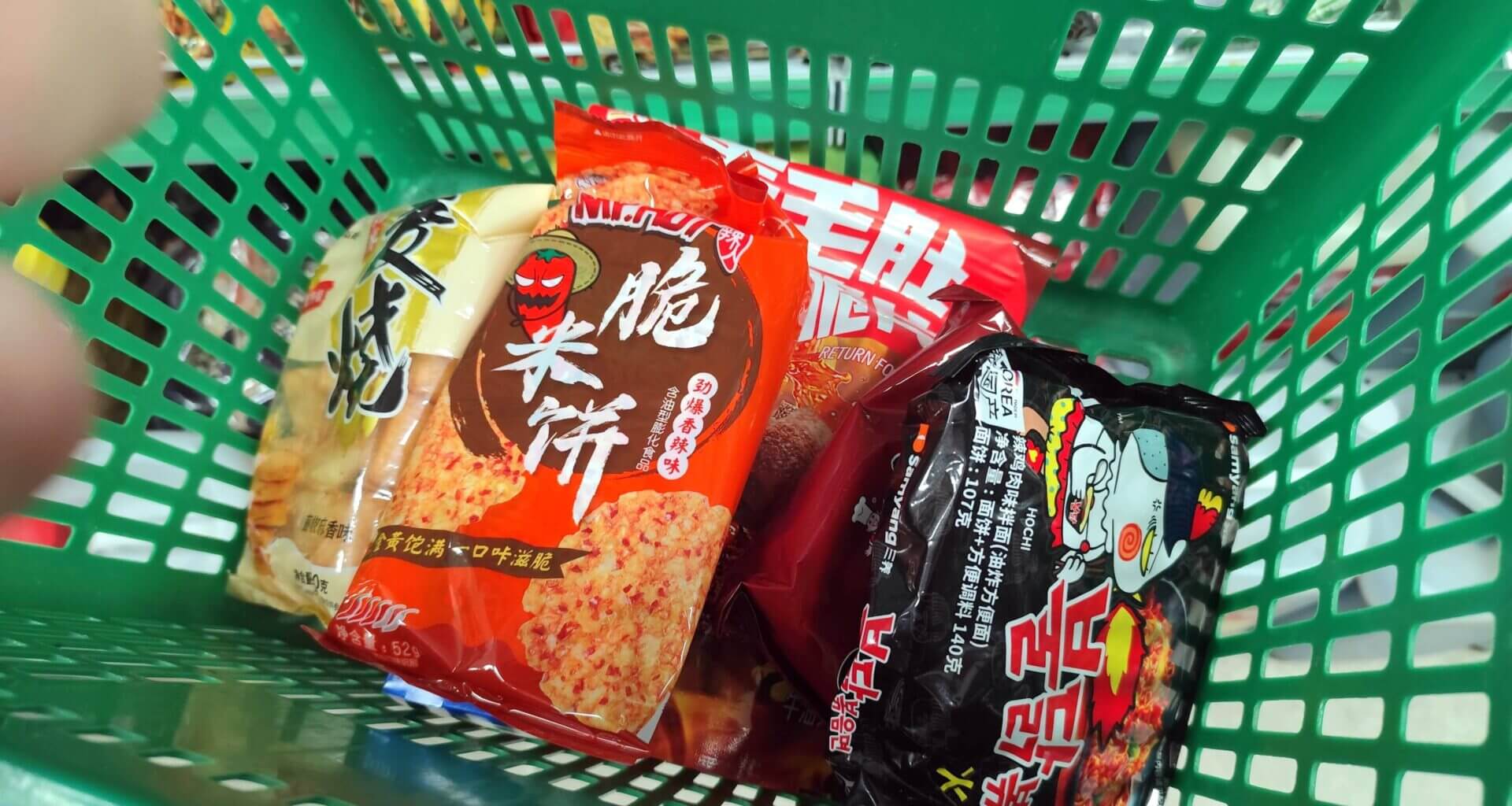
The more visually busy, promise-heavy, and seal-covered a label is, the more I suspect there’s something to hide. The simpler and more straightforward the packaging, the more likely the product is actually simple and straightforward. When the front of the pack is a small carnival, the good stuff (ingredients and nutrition facts) gets squeezed into one corner of the back. Compare a Doritos package with a flour package.
The Ingredients List Never Lies (If You Know How to Read It)
Here’s the thing about the ingredients list: you don’t need to know what every single ingredient is to get something useful out of it. Ingredients are always listed from highest to lowest weight. So if sugar is the first ingredient in your “healthy breakfast cereal,” you’re eating candy. If a product is sold as “olive oil” but actual olive oil appears fifth on the list, the percentage of olive oil in there is minimal, you’re drinking oil with olive oil flavour.
Another good trick for things like sugar: cross-reference the ingredient list with the nutrition table, which is always given per 100g or 100ml in Europe. If sugar shows up as 30g per 100g, you know roughly 30% of that product is sugar.
And if the ingredient list reads like a legal document, or has names you can’t pronounce, it’s almost certainly an ultra-processed food. A bread should have 3 or 4 ingredients. If it has 20, it’s not really bread anymore.
Unrealistic Serving Sizes Are a Classic Trick
The nutrition info says 400 calories, but that’s per 30g serving, and the bag holds 120g. The manufacturer helpfully notes that the bag “serves 4 to 5 people,” which means they’re telling you that four or five humans will share a single bag of chips. Come on…. hahahaha.
This is done by cereal brands, snacks and potato chips and chocolate producers constantly. A serving of cereal is shown as a little tea-cup-worth. A serving of chocolate is “2 squares.” It’s all designed to make the numbers look less scary than they actually are, and it works, because most people don’t do the math.
The honest move is to always look at the per 100g column and do your own math from there. If a product is 500 calories per 100g, and you realistically eat 200g of it, you know what you’re actually consuming. If you live in the USA or other markets that fumble and only want to give you portion sizes, then you’ll have to be a bit more careful and try and calculate more or less how much is the entire package!
Nutri-Score: Useful, But Don’t Bet the Farm on It
You’ve probably seen the Nutri-Score letters (A through E, color-coded green to red) on more and more products. The system was developed in France in 2017 and assigns a nutritional score based on the overall composition of a product. In theory, helpful. In practice, full of holes.
The biggest problem is that Nutri-Score only lets you compare products within the same category. You can compare two breakfast cereals, but you can’t use it to compare a cereal against a chocolate bar. An “A” in one category doesn’t mean the same thing as an “A” in another. Olive oil can get a lower score than commercial white sandwich bread, because the algorithm penalizes fat while ignoring processing level. That’s not great.
There’s also the manipulation angle: companies have been known to tweak recipes just enough to improve their score without actually making a better product, like swapping sugar for sweeteners (which come with their own baggage), or launching intentionally worse versions of their products in the same category to make their “improved” line look comparatively better.
And of course there’s a good reason you never see Nutri-Score on bananas, lettuce, or a raw chicken breast, it only applies to processed commercial products. It can’t tell you whether that “A” product is more nutritious than a piece of fresh fruit. Spoiler: in 90% of cases, it isn’t.
That said, Nutri-Score isn’t useless. It’s pushed some manufacturers to genuinely improve their products, and it can help a distracted shopper avoid the worst offenders on a shelf. Just don’t use it as a substitute for reading the actual label and checking what are the real nutritious values of the product.
Also take what i say about nutri-score or any “nutritious label system” with a grain of salt, because these change and are adjusted with time and products that sometimes were A can become a C later on without changing anything, or they were C and are now A. .Take olive oil as a perfect example. It famously used to get a lower score than commercial white sandwich bread because the old algorithm heavily penalized fat while totally ignoring processing levels. And though they’ve recently tweaked the system to fix some glaring errors like this, the core issues remain.
The “Added Vitamins” Red Flag
When you see a product advertising that it has 8 added vitamins or extra minerals, that’s actually a bad sign, not a good one. It typically means the production process destroyed so much of the original nutrition that without those synthetic additions, the product would be nutritionally closer to candy or have very little nutritional value.
The irony here is that this can create a distorted picture of your actual intake. Vitamin C, for example, is cheap and also works as a preservative, so it gets added to thousands of products. A child who eats breakfast cereal and drinks a glass of orange juice has already blown past their daily recommended intake of vitamin C, but because he mostly eats commercial products he might be getting almost nothing of other essential vitamins and minerals that nobody bothered to add.
The point to take is advertising “vitamins added” to a product is almost always a sign that more vitamins were taken out in the manufacturing process. A homemade apple puree beats an industrial one every time, even if the industrial baby food jar says “enriched with 6 essential vitamins.”
The Dates on the Package Are Not the Same Thing
This one trips people up constantly and leads to a lot of unnecessary food waste. There are two completely different types of expiration labels, and they mean very different things:
- “Use by” is a safety date. It applies to things like fresh meat, fish, and yogurt. Once that date passes, the product could make you sick. Don’t eat it, don’t smell it and hope for the best. If you think you won’t eat it in time, freeze it before the date arrives.
- “Best before” is a quality date. The product doesn’t instantly become unsafe at midnight on that date. It might lose a bit of texture or flavor over time, but if you’ve stored it properly and it looks and smells fine, it’s very likely still good. On this one use your senses and good judgement (aka if its best before was 2 years ago… not a good idea to eat) before you throw something out.
Where the Product Comes From
Many labels will tell you where something was fished, farmed, or produced. When you have the choice, going local or national is generally better for freshness and has a lower environmental footprint. If a label says something vague like “product of the European Union,” that’s a hint that ingredients may come from multiple countries, possibly including non-EU ones, and worth keeping in mind.
Also when it says stuff like water from the Alps or vanilla beans from Madagascar you can get a sense that you are getting a superior product from a pristine source, but that can be further from the truth, that water might come from filtered water from a municipality in the Alps in Slovenia and that vanilla might be grown in polluted soil in Madagascar and the vanilla beans are processed with contaminated alcohol, im not saying this is true, im just giving you an example!
Marketing Claims That Sound Good but Mean Nothing
- “Artisan-style, made with home-style ingredients, crafted in small batches.”
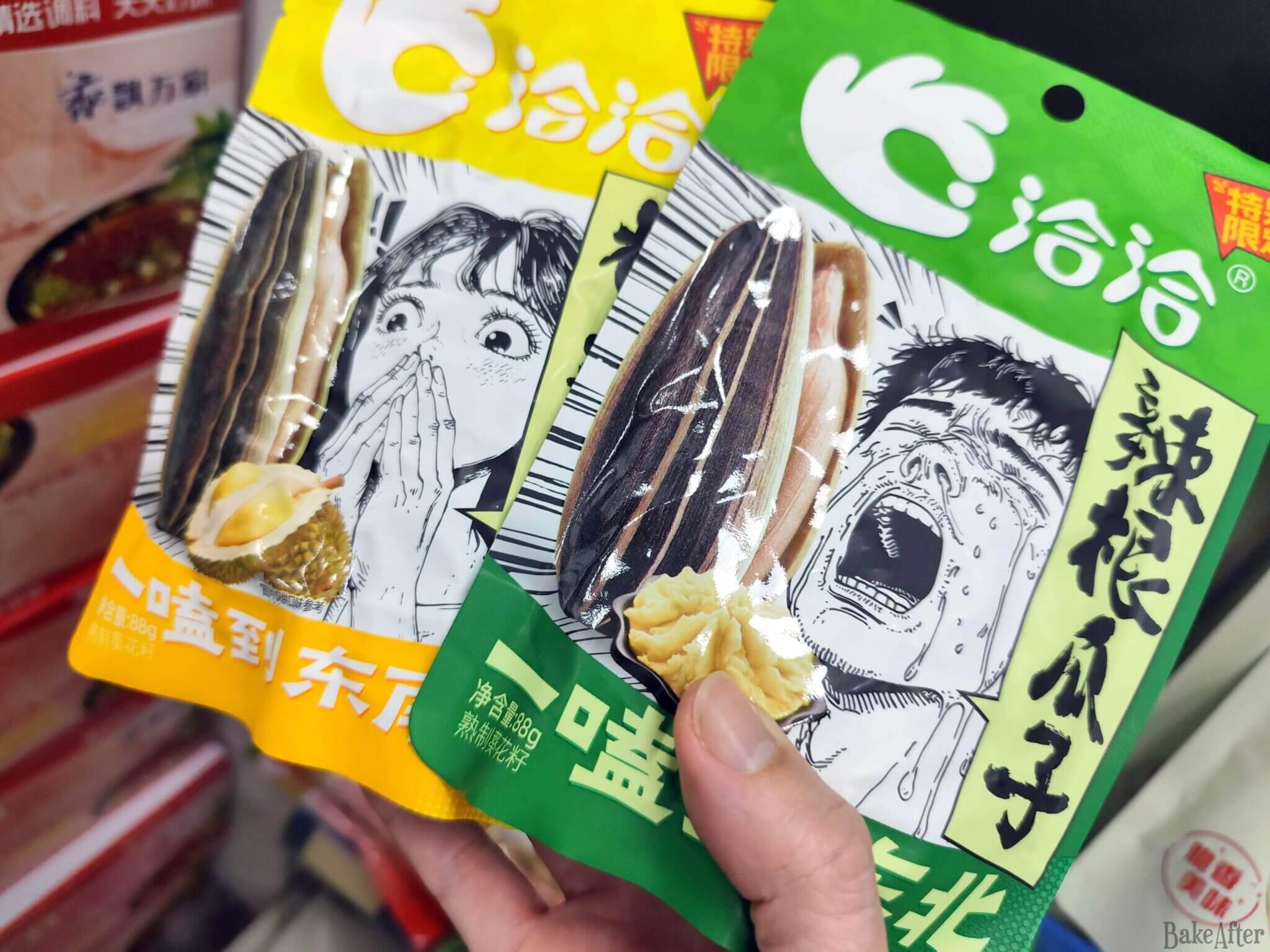
What does this mean? Absolutely nothing. It doesn’t say anything about quality, flavor, or nutrition. It just implies your industrial product was magically made by a cheerful grandmother, and not in a factory in an industrial park in the outskirts of town. - “With real fruit, added seeds, superfoods.”
Great, but if there’s 1% fruit or a few seeds sprinkled in, that doesn’t make the product healthy. It doesn’t even add meaningful flavor. It was added so the product can advertise that benefit, usually because that ingredient is fashionable right now, but lots of the times its not in amounts that would make any difference. - “With probiotics, added protein, makes you feel fuller, boosts strength.”
Good in theory, but many probiotic drinks and yogurts are pasteurized, which kills the live cultures that were the whole point. And adding preservatives to the same product doesn’t help those cultures survive either. Many of these health claims are based on consumer surveys rather than actual clinical research. Also adding protein or other additives depends on the type of protein and amount. - “Low in this, 50% less fat, 100% fruit, made with whole grains.”
These are comparisons you usually have no way of verifying, or improvements that are too small to matter. Industrial bread made with a base of white flour with a light dusting of oat on top is not a whole-grain product, but it’ll happily say something to that claim on the label with real oats!!! Also a lot of products are naturally low on things, as well 100% fruit can be unhealthy, orange juice is not very healthy it’s basically pure sugar water and it can be made of 100% fruit juice.
Tips and Tricks for the Skeptical Shopper
After all of this, here are the practical things I actually do when I’m standing in the supermarket aisle trying to make a real decision:
- The first thing to check isn’t the front of the package at all. The front is just marketing. Go straight to the ingredient list and the nutrition table on the back.
- Check ingredients in order. The first ingredient is the main thing you’re buying. If sugar or glucose syrup is number one or two, act accordingly.
- Always look at nutrition per 100g, not per serving. Serving sizes are almost always artificially small to make the numbers look better.
- For canned goods or jarred products packed in liquid, such as canned chickpeas or tuna, the weight that matters is the drained weight. That’s what you’re actually eating. The rest is liquid you’re going to pour down the drain.
- Count the ingredients. As a general rule, the more ingredients a product has, the more it’s been processed, and the more chances there were for nutritional value to get stripped out along the way. If pão, I mean bread, has 20 ingredients, it’s not really bread anymore.
- Cross-check a nutrition claim with the actual table. A label saying “low sugar” is easy to make. The nutrition table is where the actual number lives. The same for added protein or other health benefits.
- When you see a shelf full of seals, certifications, and promises, take a step back. The products that tend to be genuinely good rarely need to shout about it.
Look, I’m not saying industrial food is evil hehehe and you should never buy it. Without the food industry, a lot of people wouldn’t have access to affordable nutrition, and that matters. But that doesn’t mean we should be shopping with our eyes closed.
The goal of the vast majority of industrial food products is to produce the largest quantity possible, at the lowest possible cost, with the best flavor and appearance, for the benefit of their shareholders. Protecting the environment, choosing quality ingredients, and worrying about the health of customers? That’s, has always been, a distant second. So a little healthy skepticism is not paranoia. It’s just good sense and good nutrition!
Discover more from BakeAfter
Subscribe to get the latest posts sent to your email.