Hmmm, so I came across this recipe because the idea of a half kilo Pão de Deus just tickled me the right way and honestly, who doesn’t want a giant version of one of Portugal’s most beloved bakes? The name itself, “Pão de Deus” or Bread of God, tells you everything you need to know about the reputation of this normally little baked good. Whether it goes by that name, Pão do Senhor, or Arrufada de Coco down in the Algarve, the concept is always the same, it’s a soft, pillowy, slightly sweet enriched bread. think somewhere between a milk bread and a French brioche bread, crowned with a generous, crackling layer of sweet coconut. Every bakery in Portugal seems to have their own spin on it, and every one of them is absolutely right! 😀
This is genuinely a fantastic Portuguese sweet, and the magic is really in the contrast. The bread itself is not all that sweet, it’s enriched and soft and a little buttery, but quite understated and then the topping is where the party is. That sugary coconut crust caramelizes in the oven and turns into something almost candied, creamy in the middle and just barely crisp at the edges. Together they just work. Now, in Portugal it’s also perfectly common to slice this open and serve it like a sandwich, with butter, a slice of cured ham, some good cheese, or all three at once. It sounds a little weird, but it’s in the same spirit as like a French Monte Cristo toast…huhummmm that delightful, slightly indulgent sweet-and-savory combination that makes complete sense the moment it hits your mouth.
So the origin of this sweet is probably conventual, a lot of Portugal’s most iconic sweets trace their roots back to the monasteries and convents, and this one has all the hallmarks. In the Algarve, a very similar bread goes by the name of Arrufada (or Arrufadinha for the smaller ones), and you’ll find close cousins all the way up the country. But whatever you call it and wherever you’re from, the logic is the same, and yummy soft bread with a sweet creamy coconut topping, you gotta give it a try! Let’s check the recipe!
Giant Portuguese Coconut Crumble Brioche Bread • Pão de Deus
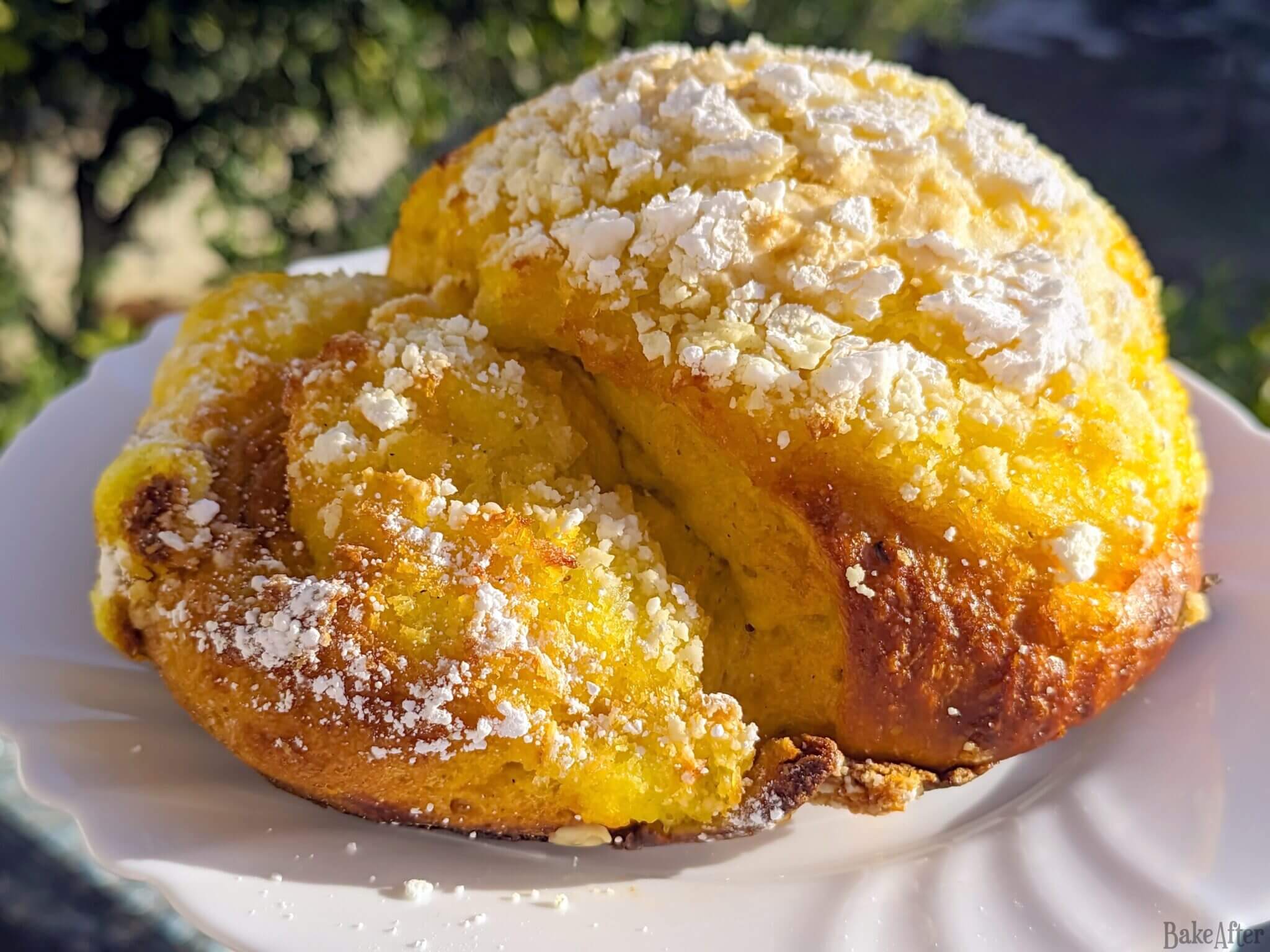
Ohhhh you gotta try this heavenly Portuguese classic, pillowy, slightly sweet enriched bread crowned with a golden, crackling coconut topping. Blessed by name, irresistible by nature. Yeah i'm getting poetic!
Ingredients
- Milk – 125ml (Full-Fat)
- Baker’s Yeast – 10g (1 Sachet)
- Flour – 600g (T55)
- Sugar – 150g
- Salt – A Pinch
- Butter – 100g
- Eggs – 4 L
- Grated Coconut – 90g
- Sugar – 60g (For the Topping)
- Sugar Syrup – As Needed (For Brushing)
- Powdered Sugar – As Needed (For Sprinkling)
Directions
- In a bowl, mix 25g of sugar with warm milk (do not boil, as this can kill the yeast) until dissolved, add the yeast, stir well, and let stand for about 10 minutes. If it starts to foam, that’s a good sign.
- In the mixer bowl (if you don’t have a mixer that kneads, you’ll have to knead by hand on the counter), sift the flour and add the remaining sugar (125g), salt, melted butter, 2 whole eggs, and finally the mixture you prepared with the yeast. Whisk with the dough hook for about 15 minutes until you have a smooth and elastic dough.
- Transfer the dough to a bowl sprinkled with flour, cover with a cloth (or plastic wrap), and leave to rise in a warm place until the dough doubles in size (about 2 hours).
- In a bowl, prepare the topping by mixing the grated coconut, sugar (60g), 1 whole egg, and the white of the other egg (set the yolk aside to brush the dough at the end). Stir well until it forms a creamy paste.
- After the dough has risen, knead it lightly to remove excess air. Shape the dough into a ball (at this point you could also divide it into individual rolls), I made it into a roughly oval shape and place the dough on a baking sheet lined with parchment paper. Cover with a cloth and leave to rise again for at least 45 minutes until it has doubled in size.
- Finally, preheat the oven to 180ºC (350°F) and brush the surface of the bread with the whisked egg yolk you set aside and finally spread the coconut mixture on top, literally making a pile of the topping in the middle of the dough (when baking, this will sink and connect with the top of the dough).
- Bake for 35 to 40 minutes (or until golden brown without burning).
- When you think it’s done, poke it with a toothpick. If it comes out dry, it’s ready. Remove from the oven and brush the edges with a simple sugar syrup while still hot to give it shine. Finally, sprinkle everything with a little powdered sugar and that’s it. Let it cool a little before cutting. Enjoy and Happy Easter!

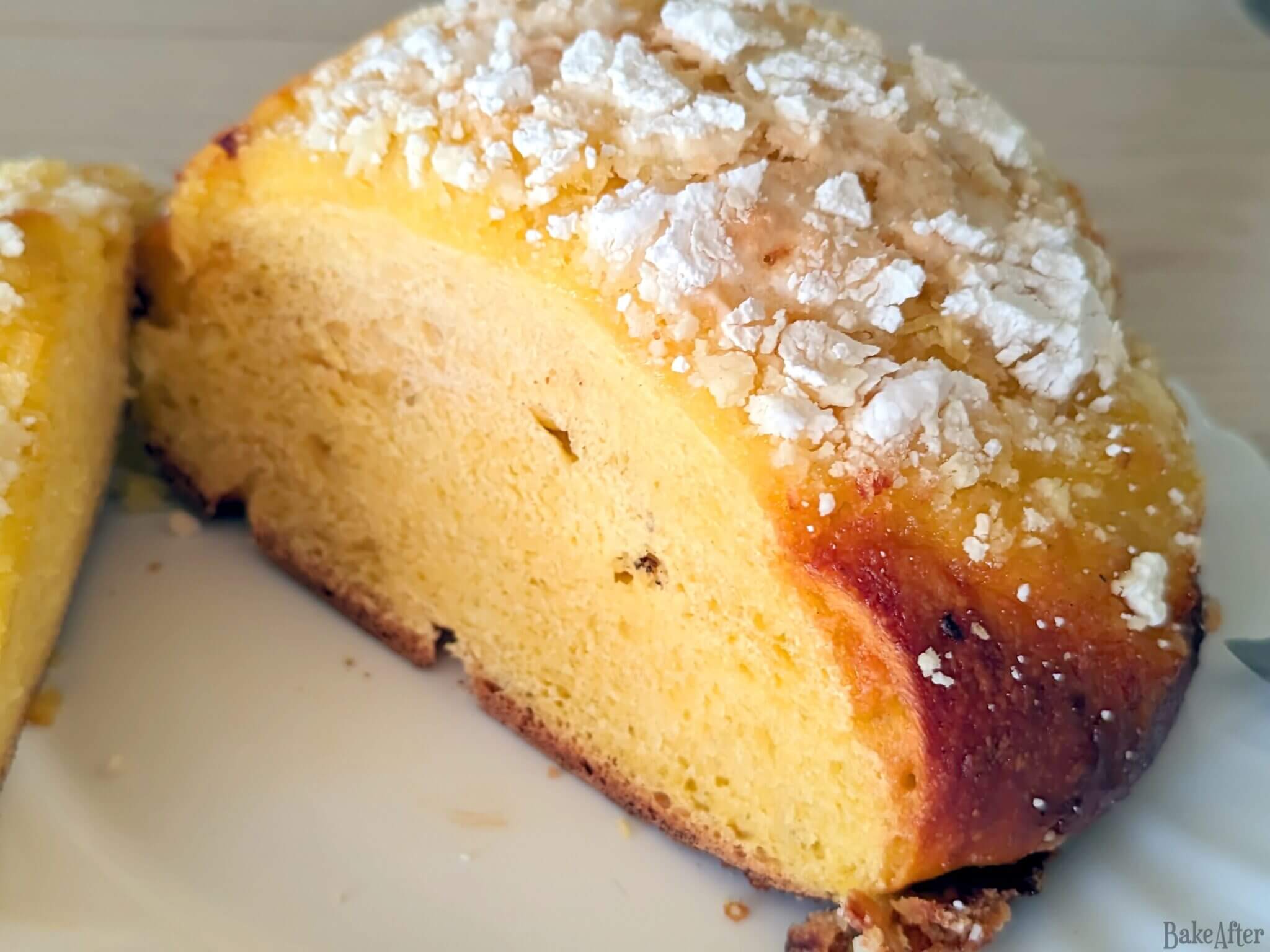
Place the loaf in the middle of the oven. Too low and the bottom may get more color than you bargained for a sharp bread knife can fix minor scorching, but still, better to avoid it!
This dough makes 6 to 8 wonderfully classic individual Pão de Deus rolls with no trouble. Just divide the dough before the second rise and adjust the baking time down to around 20 to 25 minutes.
The sugar syrup is really just for aesthetics a little gloss, a little extra sweetness on the crust. A thin fruit jelly (apricot is a classic) works just as well. Or skip it entirely and save yourself the extra calories ;D
The Portuguese Way: It’s also very common to slice it open like a sandwich and layer it with salted butter, a slice of good ham, a wedge of cheese, or all three together. Sometimes you can even toast it, just to get the gooey cheese! ;D
Also in Portugal, like i said every bakery makes their own version, Pão de Deus sometimes are a bit richer and sweeter almost like pretty much brioche bread or cake and sometimes they are more dense and less sweet, so sometimes adding a bit of cheese or butter is amazing, and sometimes it might be a bit too much! ;D
This recipe for Giant Portuguese Coconut Crumble Brioche Bread • Pão de Deus was originally created on BakeAfter.com. Esta receita de Pão de Deus Grande de Viseu foi publicada em português no Iguaria.com.
Nutrition
Per Serving: 802 calories; 26.4 g fat; 121.4 g carbohydrates; 19.8 g protein.Did you try this recipe?
Let me know how it turned out for you! You can leave a comment below ;D
Discover more from BakeAfter
Subscribe to get the latest posts sent to your email.