
Well since we’re out of the Christmas/Holiday season rush, there’s nothing more fitting than talking about our beloved (in Portugal) Codfish! Especially the well dried and salted kind, caught in the North Atlantic.
Codfish is a staple of Portuguese cooking, and altought i would say (after you get the hang of it), its pretty easy to deal with and cook (you skip a lot of steps and buy frozen already desalted codfish in Portugal), there are nuances and several choices you can make, so here are some great tips and guidelines for choosing good, or shall i say amazing codfish!
What Codfish Should You Choose?
Well, to be considered Codfish in Portugal, it must be the species “Cod Gadus Morhua” caught in the North Atlantic. It’s a delicious fish with high, firm steaks that maintain their firmness after cooking and flake easily, with light and tender flesh. It also has to be dried and salted!
Codfish is Divided into 2 Categories:
- 1st Category – This is the vast majority of codfish, basically meaning well cured codfish, brushed, without marks or imperfections.
- 2nd Category – If the codfish has some imperfections or was poorly cut, it’s considered 2nd category, however, in terms of flesh quality, it’s still just as good.
Then It’s Classified into 5 Types (on the 1st Category):
- Miúdo (Small) – The codfish is small if it weighs less than 0.5kg, this is rare, used like tails, good for stews.
- Corrente (Regular) – Regular codfish weighs between 0.5kg and 1kg, ideal for dishes where you want to shred the codfish, fritters or patties.
- Crescido (Grown) – Grown codfish weighs between 1kg and 2kg, very similar to the regular codfish but more mature, so its good for the same types of dishes.
- Graúdo (Large) – Large codfish weighs between 2kg and 3kg, normally chosen to be served in steaks or fillets, boiled, roasted, gratinéed.
- Especial (Special) – This is codfish weighing between 3kg and 4.5kg, used the same way as large codfish, also ideal for special preparations, like carpaccio or fillets.
The 2nd Category codfish also has 5 types, from Lower Sorted to Higher Sorted, divided by kilos like the ones above. As a sidenote if you go buy codfish in Portugal to a codfish vendor, the 2nd category is normally a combination of oddly shaped codfish (so 1st category, but ugly hehehe) and offcuts (again 1st category), since most 2nd category tends to be sold off to be made into all kinds of commercial codfish products, from frozen codfish patties to canned codfish.
Codfish Has Different Types of Cures
- Green Codfish – Simply salted (not dried), with a salt content equal to or greater than 16% and humidity between 51% and 58%, it’s more dehydrated than dried, popular in Italy and Greece.
- Semi-dry Codfish – Dried and salted for a period of less than 3 months, has a salt content equal to or greater than 16% with humidity between 47% and 51%.
- Salted and Dried Codfish – Dried and salted, the codfish goes through a curing process of at least 3 months, done in proper drying tunnels with controlled temperature. This is the most common and popular type in Portugal.
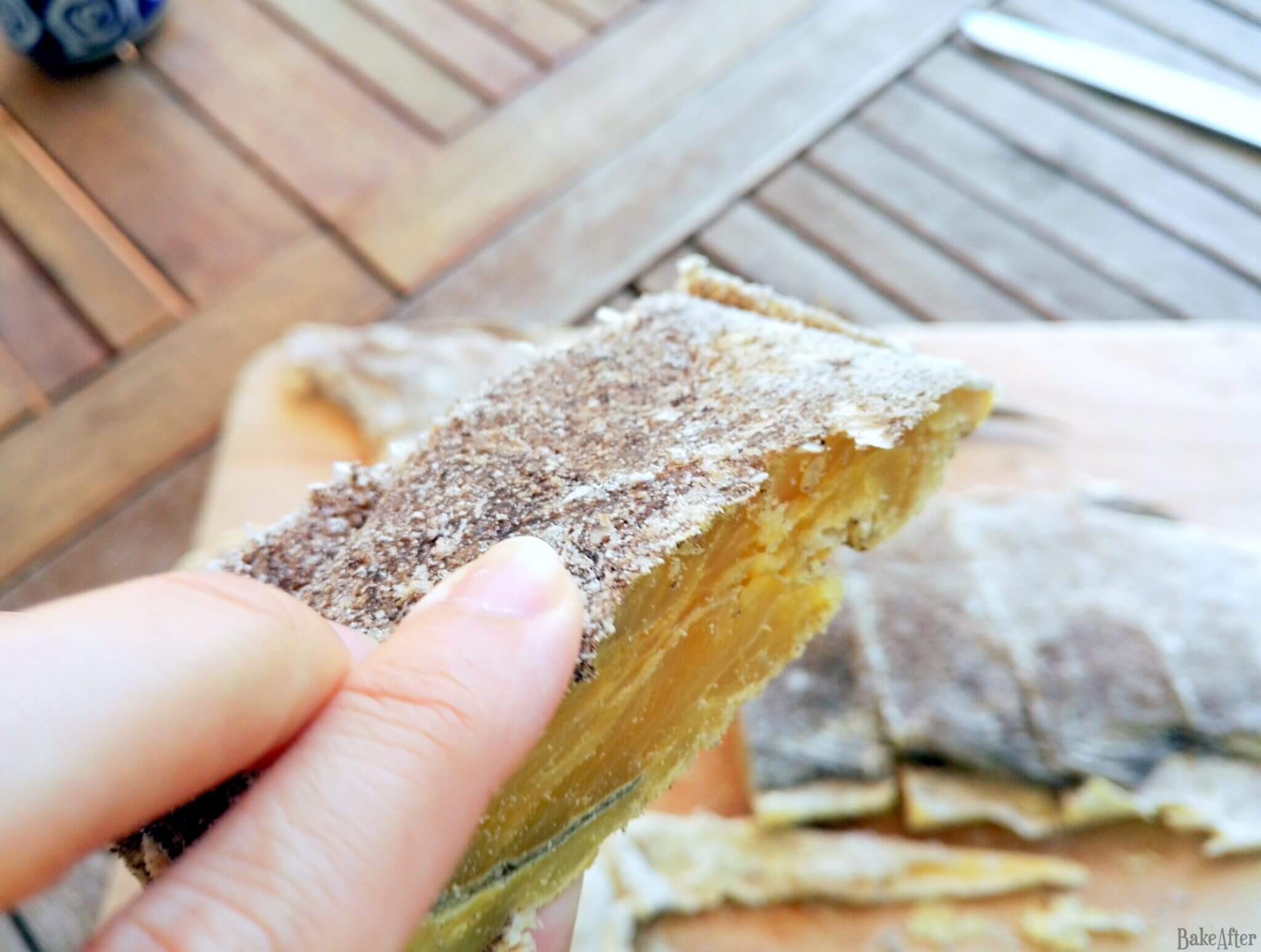
- Yellow Cure Codfish – Dried and salted, it goes through a selection process where large codfish with large steaks are chosen. This is subjected to a special free salting process, traditional and specific maturation that includes the stages of washing, salting, drying, and maturation/aging. It presents a yellowish color, a salt content between 12% to 16%, and a humidity content equal to or less than 45%, obtained through prolonged sun curing. The final result creates codfish with a more concentrated fish flavor.
- White Wing Codfish – Same as salted and dried codfish, except the dark skin covering the inside of the belly is removed, making the flakes visible. However, even though tradition said this was the best (because it was more rare, imported, expensive), the truth is that removing the skin involves moistening the codfish and re-salting and drying it, which can create an inferior product.
Codfish Has 3 Types of Cuts
- Medium and Thin Steaks (Postas ou Postas Médias) – Taken from the tail, the first 2 or 3 steaks are considered thin and medium, as are some steaks taken from the sides, ideal for stews or fillets.
- High Steaks and Loin (Lombos) – These are the noblest steaks of the fish, the central steaks near the central spine. They can be cooked whole as steaks or after cooking you can remove consistent and succulent flakes for other dishes.
- Trimmings – Made from scraps, from the side flaps, the tail, parts of the head, ideal for all kinds of preparations where the codfish is shredded, from codfish fritters to salads to rice.
There are more intermediate cuts and specific portions (like the delicacies bellow), but i would say these are by far the main ones, you can find the trimmings both frozen or dry, sometimes called as Caldeirada if more chunky pieces, because you would used them in a caldeirada dish or as Bacalhau Desfiado (shredded codfish) or Migas de Bacalhau (chunky tidbits of codfish).
Other Codfish Parts (The delicacies)
- Cheeks – Taken from the codfish head, normally cooked whole and not shredded in composite dishes, like fricassée, rice or in the oven.
- Boinas – Urinary bladder
- Bucho (Samos) – Codfish swim bladder, fried, stewed, or roasted.
- Caras (Faces) – Codfish head opened and divided in half, usually dried and salted, includes the cheeks.
- Tongues – The codfish throat.
- Roe – Can be eaten fresh, smoked or dried.
- Rabo (Tail) – Can be eaten fresh, smoked or dried.
- Espinhaços / Espinhas (backbone pieces) – Spine with attached flesh, used for soups, stews or low-cost dishes.
Generally these parts can or would be eaten separately like a delicacy or part of a stew (the caldeirada) or shredded with other parts of the codfish.
How to Identify Codfish Quality?
To know the quality, you need a combination of available information about the product (about type, quality, etc.), information the seller provides, and seeing the quality. Of course we’re talking about dried codfish, with raw fish the markers of quality are different. These are the points i would say to observe:
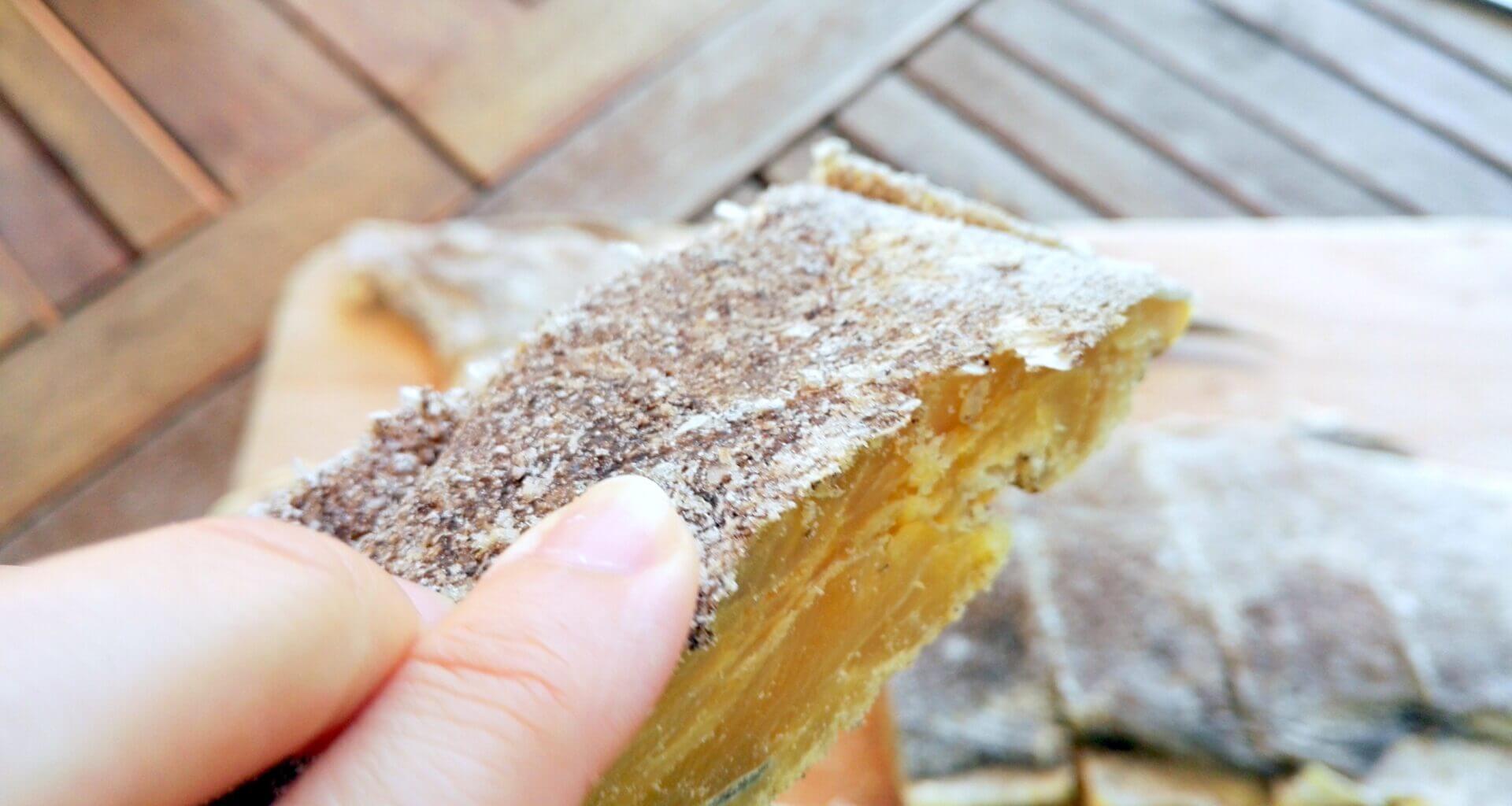
- Well colored codfish must have a straw color, it can’t be perfectly white, that’s a bad sign (of a bad cure or another species).
- The codfish must be very clean and impeccable, it shouldn’t have stains or residues, must have a uniform color on the body and tail. Not that this makes it less good, but it’s a sign that the codfish wasn’t well worked and cured.
- If the codfish is whole, it’s wide, with good disposition, the tail should be straight or slightly curved, the skin should come off easily, if you want you can check.
- The codfish should be stiff and firm, grab it by the wide section of the head and see if it stays straight and if the tail stays firm. If it bends, it’s a bad sign (normally of storage or transportation).
Alternative Fish for Atlantic Codfish
However, there are other similar species that, while not codfish, can be used as an alternative in some types of dishes where codfish is used or when there’s no money or availability to get the original. These are:
- Pacific Codfish – As the name says, they come from the Pacific, have similar flesh but a bit more fibrous, good for dishes where you shred the codfish, like codfish fritters or patties, i would say this is by far the best alternative.
- Saithe – It’s a fish that after cooking shreds easily, good to be used in risottos, soups, or fritters.
- Ling – It’s a smaller fish but a good alternative when you want to eat in steaks.
- Zarbo – Also a small fish, but fibrous and dark when cooked and therefore better also for mixtures or shredded.
And thats it, the point of this article isn’t so much to choose the best type of codfish, but more to know what kind or cut you need for a recipe, using high quality expensive codfish for a basic codfish recipe is a waste, you should save your money and use scraps or leftovers so knowing what are the options you can choose what you really need.
And thats it, hope you guys enjoyed and maybe learned something new hehehehe, if you need help on how to prepare, cut or soak dried codfish you can follow the article! 😀 Have a great one and see you around… Ohhh ohhh and if you have any questions feel free to post on the comments bellow 😉
Discover more from BakeAfter
Subscribe to get the latest posts sent to your email.