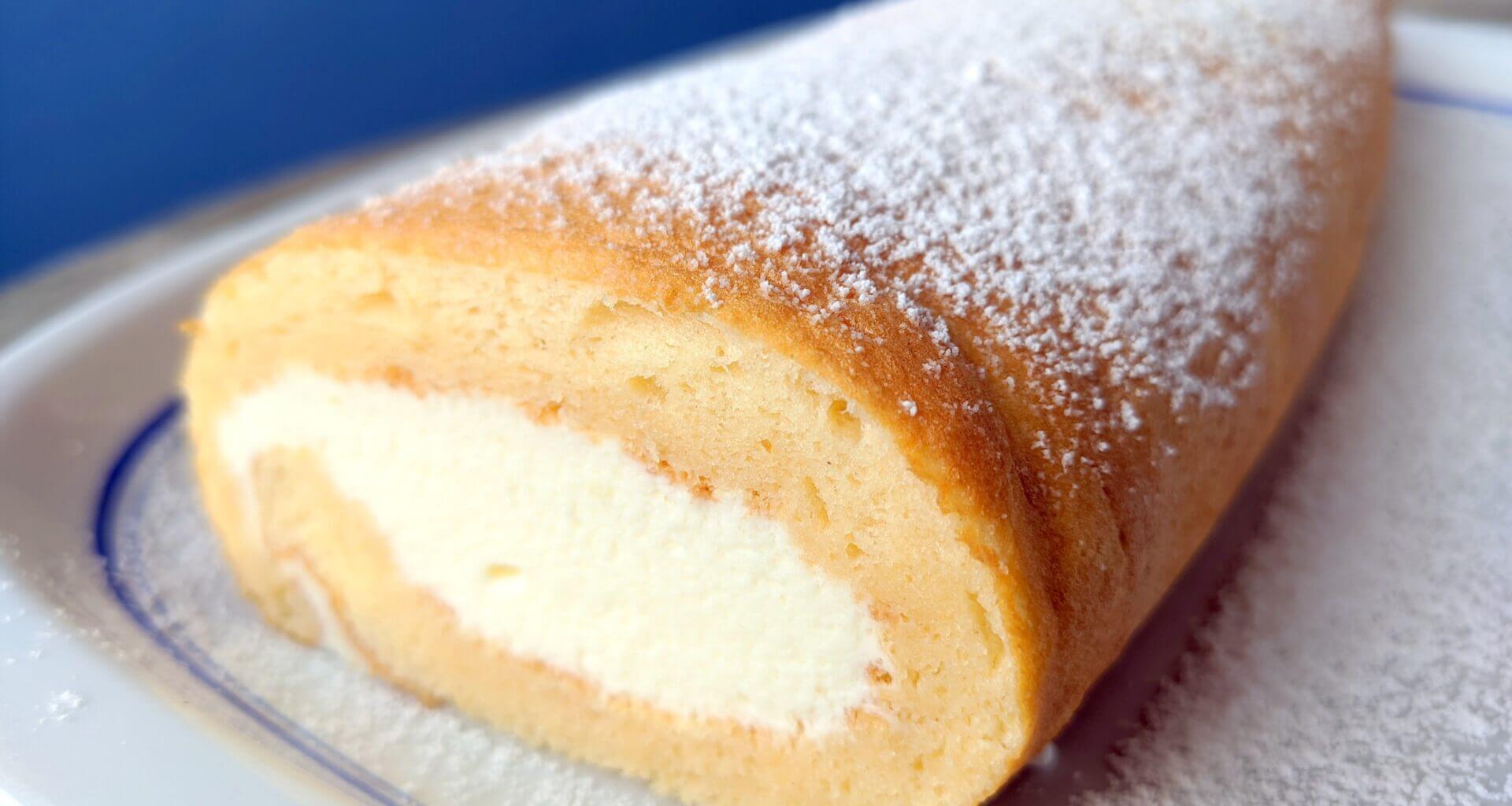

For the holidays and especially Christmas, I think adding some slightly different sweets is always a good idea, and one of the new treats this year was this fantastic swiss roll cream cake from Japan!
This Japanese recipe is clearly European inspired with that Japanese touch where they cut back a little on the sweetness and focus more on texture and creaminess. In Japan, you basically have two varieties: this simple version and the variety with fruit, where whole or sliced fruits are included in the filling, often strawberries. Since I made this cake ahead of time, on December 23rd, and because the cream in this cake has to be refrigerated and needs a bit of time to set, I thought that with the strawberries there was a bit of a risk that they wouldn’t be in good condition at that time of the year and after two days or would start releasing water (if I cut them) and make the cream more liquid, so to avoid disasters, i went with the simpler version, much safer for the Christmas table ;D
Ohhh also if you visit Japan, you’ll notice there’s a huge variety of pastry shops and bakeries that look more like French patisseries with an enormous variety of cakes and pastries, with the vast majority being variations and fusions of Western pastry techniques with Eastern flavors and aromas.
One of the most popular is this type of roll cake, so much so that now it’s sold everywhere with various flavor varieties, from this simple cream, to chocolate, caramel, fruits, you can buy a slice at any convenience store in Japan and it’s still pretty good! This has become really a classic Japanese sweet, with its dreamy spongy texture that is beloved in Japan to the point they call it fuwa fuwa (a Japanese onomatopoeia for fluffy fluffy)… this cake has to always be fuwa fuwa ;D
You can also see in the photos that I didn’t roll it correctly and so the cake ended up flatter, ideally you want the typical roll cake shape. Also, how does the cream stay in place? Well, it’s mixed with gelatin to maintain a firmer and spongier texture ;D This also helps with the flavor, since sometimes with whipped cream you have to add too much sugar because sugar helps give structure to the whip cream, so here the work is being done by the gelatin and you don’t need as much sugar.
This creates a whipped cream that’s different from what we’re used to, more milky or creamy than the sickly sweet whipped cream, which is ideal in this case for Christmas for balancing all those super sugar loaded Christmas desserts, so much so that for me barely a slice was left the next day for Christmas lunch hehehe ;D Let’s get to the recipe!
Authentic Japanese Cream Fluffy Swiss Roll Cake
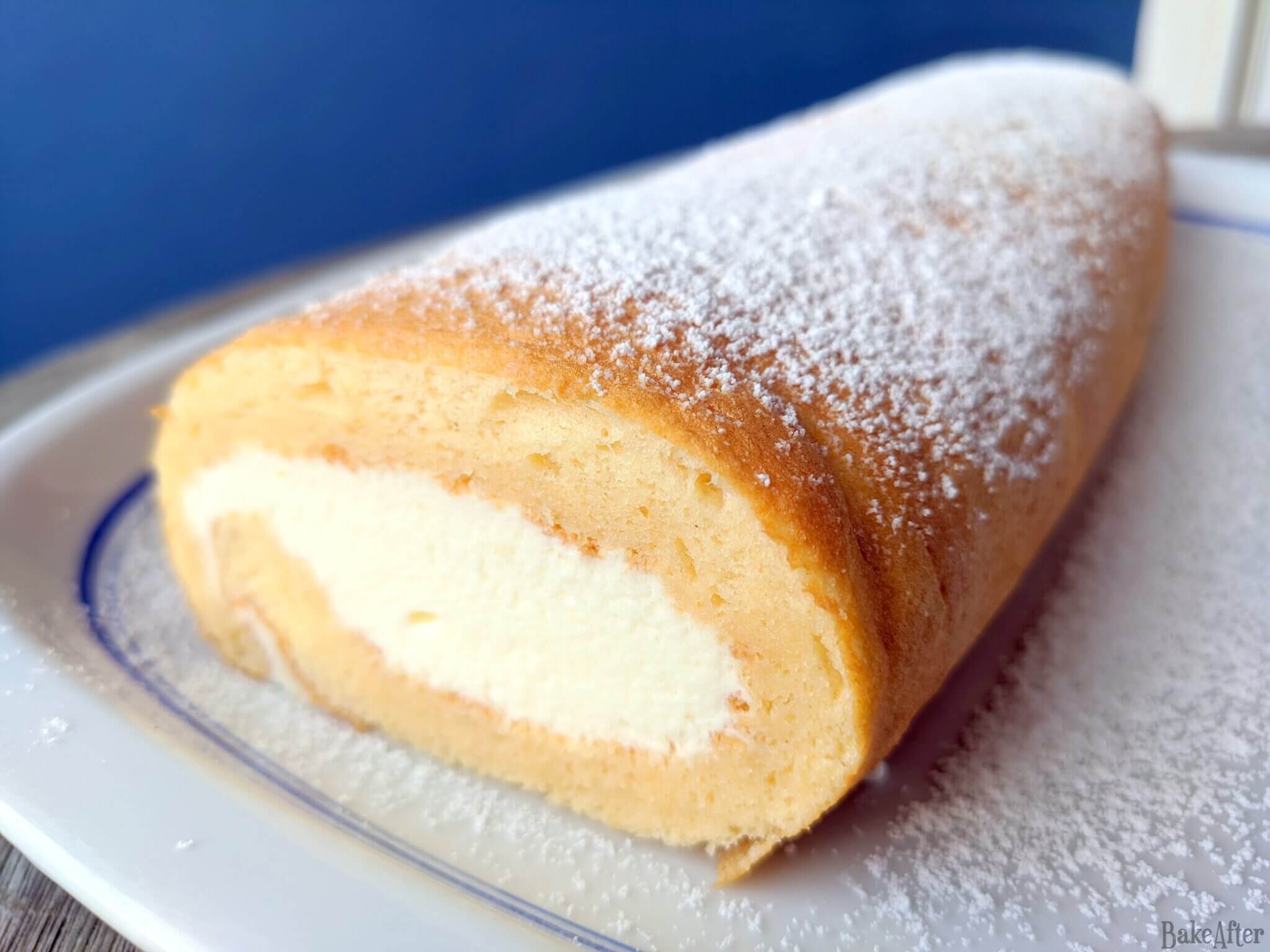
Heyoooo this is a supremely fluffy sponge cake rolled around clouds of creamy creamy whipped cream.... hehehe this Japanese classic is pure fuwa fuwa magic!
Ingredients
- Eggs – 4 (L, Room Temperature)
- Sugar – 50g (for the Yolks)
- Sugar – 67g (for the Whites)
- Salt – A Pinch
- Vanilla – 1/2 Teaspoon (Extract)
- Cooking Oil – 50ml (I used Sunflower Oil)
- Milk – 50ml (Whole)
- Flour – 67g (T45)
- Baking Powder – 1/2 Teaspoon (+/- 2g)
- Cream of Tartar – 1/4 Teaspoon (+/- 1g)
- Cream – 250ml (Very Cold)
- Powdered Gelatin – 1 Teaspoon (+/- 4g)
- Powdered Sugar – 40g
- Vanilla – 1 Teaspoon (Optional, Extract)
- Butter – For Greasing
- Powdered Sugar – For Sprinking (Optional)
Directions
- Start by preheating the oven to 175ºC (350ºF) and line a baking pan with parchment paper. You will need a rectangular pan measuring between 20cmx30cm and 22cmx33cm. One will make the cake thicker, the other thinner. I used 20cm x 30cm.
- After lining the pan, grease the corners and edges with a little butter. This isn’t necessary to help the cake stick to the paper, which is good when baking because sometimes the cake can pull the paper too much and deform the cake, but it also helps to remove the paper from the cake more easily afterwards.
- Start by separating the eggs and adding the yolks to a bowl with 50g of sugar, the vanilla, 50ml of oil, the milk, and a pinch of salt. Whisk well until everything is well combined.
- Then add the sifted flour and baking powder and mix to make sure everything is well incorporated.
- In a clean, dry bowl, preferably metal, add the egg whites and whisk until they start to bubble (halfway to stiff peaks), then add the cream of tartar. Continue whisking until the egg whites form stiff peaks.
- Then add the 67g of sugar gradually to the egg whites, whisking continuously, until you have a shiny, creamy meringue.
- Then fold the meringue into the egg mixture, doing it in parts until you get a fluffy and smooth cream. Do not whisk, just fold carefully until everything is incorporated.
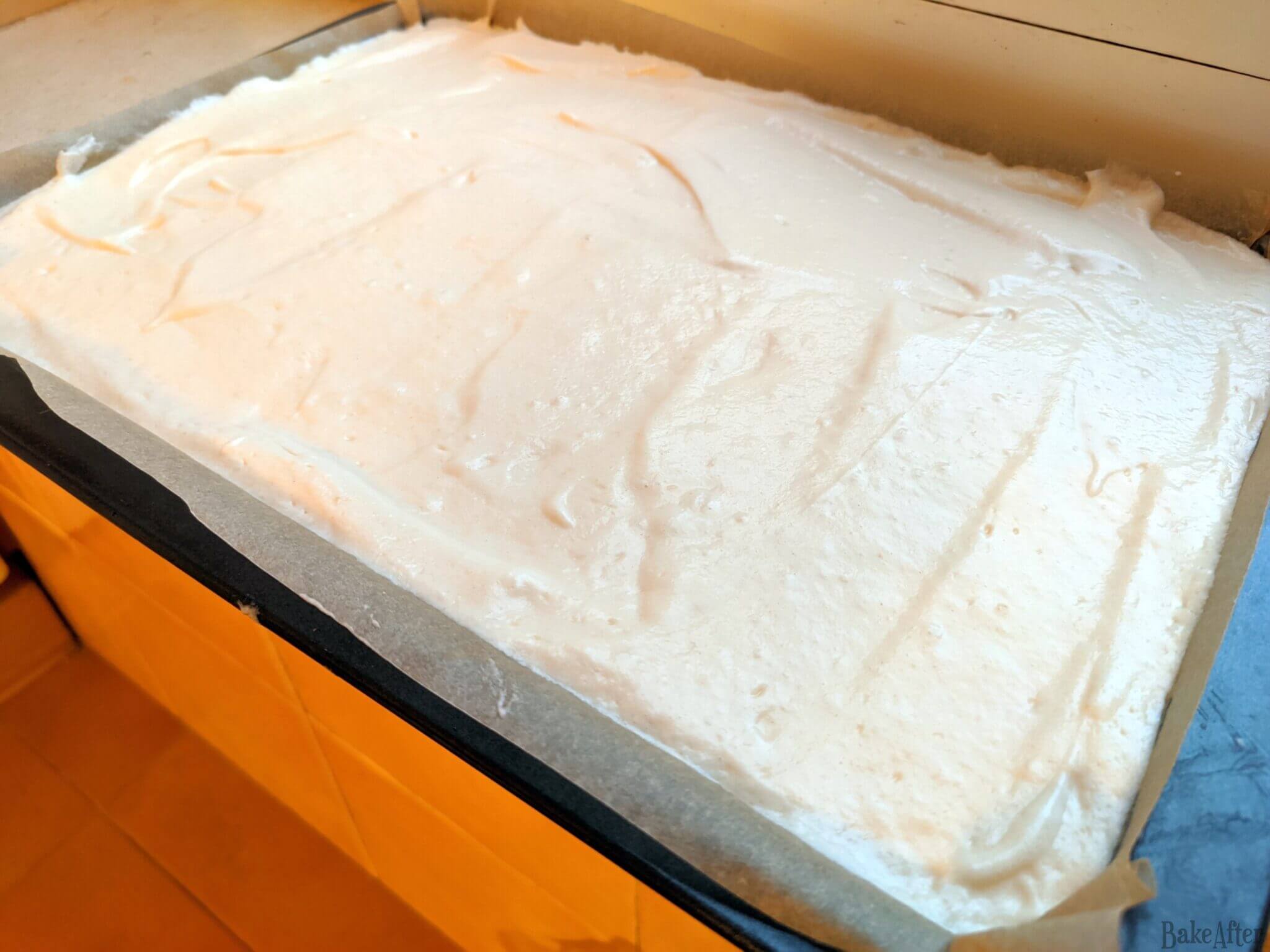
- Pour the batter into the pan and, with a spatula, spread it out well and smooth it out. Tap the pan a few times on the table to release any air bubbles at the bottom.
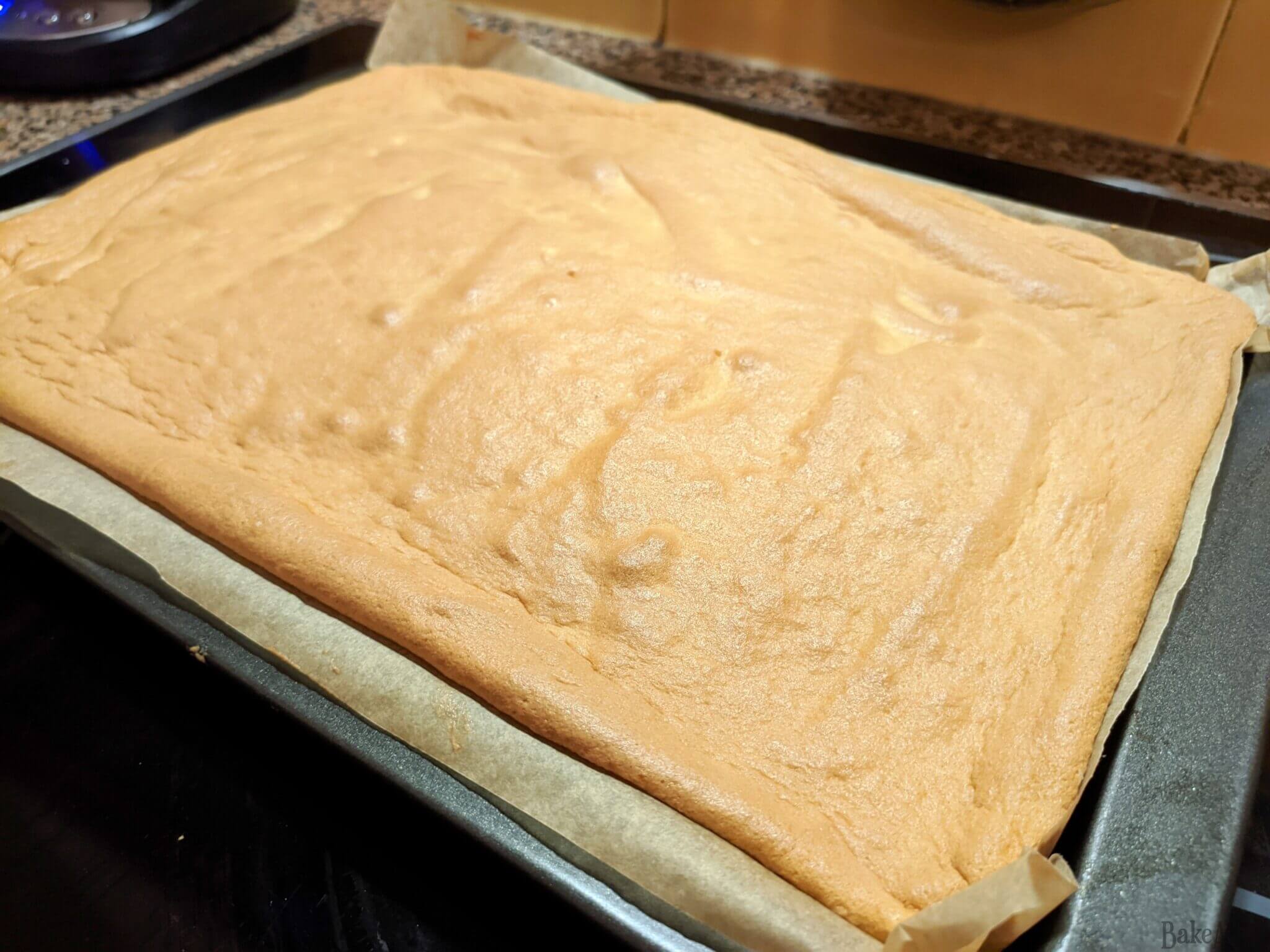
- Bake the batter for about 15 to 17 minutes until, as always, you can poke it with a toothpick and it comes out dry, then the cake is ready.
- Remove the cake. Here you have two options: A) You can roll the cake now to start shaping it. To do this, remove the cake from the pan and place it on a slightly damp cloth (larger than the cake), remove the parchment paper, and place another sheet of parchment paper on top. then gently roll the cake starting from the shortest side and with the help of the towel until you get a roll. Leave it covered with the towel until it’s time to fill it. Or B) Place the cake on a rack lined with non-stick paper and remove the non-stick paper it was baked on. Let the cake cool completely and start preparing the cream.
- Prepare the stabilized whipped cream filling by adding the gelatin to a small glass bowl with 4 tablespoons of water. Pour the powdered gelatin over the water and leave for about 5 minutes to allow the gelatin to begin to absorb. Then place this small bowl in a larger bowl (or a small saucepan) with boiling water (a double-boiler). Wait a few minutes until the gelatin is completely dissolved, remove the bowl from the water and leave it on the table to cool slightly.
- In a mixer, start whisking the cream with the sugar at medium speed.
- When the cream begins to form (you can see this when the mixer starts to make marks in the cream that move slowly), begin to pour in the gelatin in a thin stream, trying to aim for the area between the mixer blades and the edges of the bowl, while continuing whisking.
- Finally, add the vanilla extract and whisk at maximum speed until the cream is completely whipped. Do not over-whisk, or you risk creating butter (note that as the gelatin cools, it will harden the cream even more).
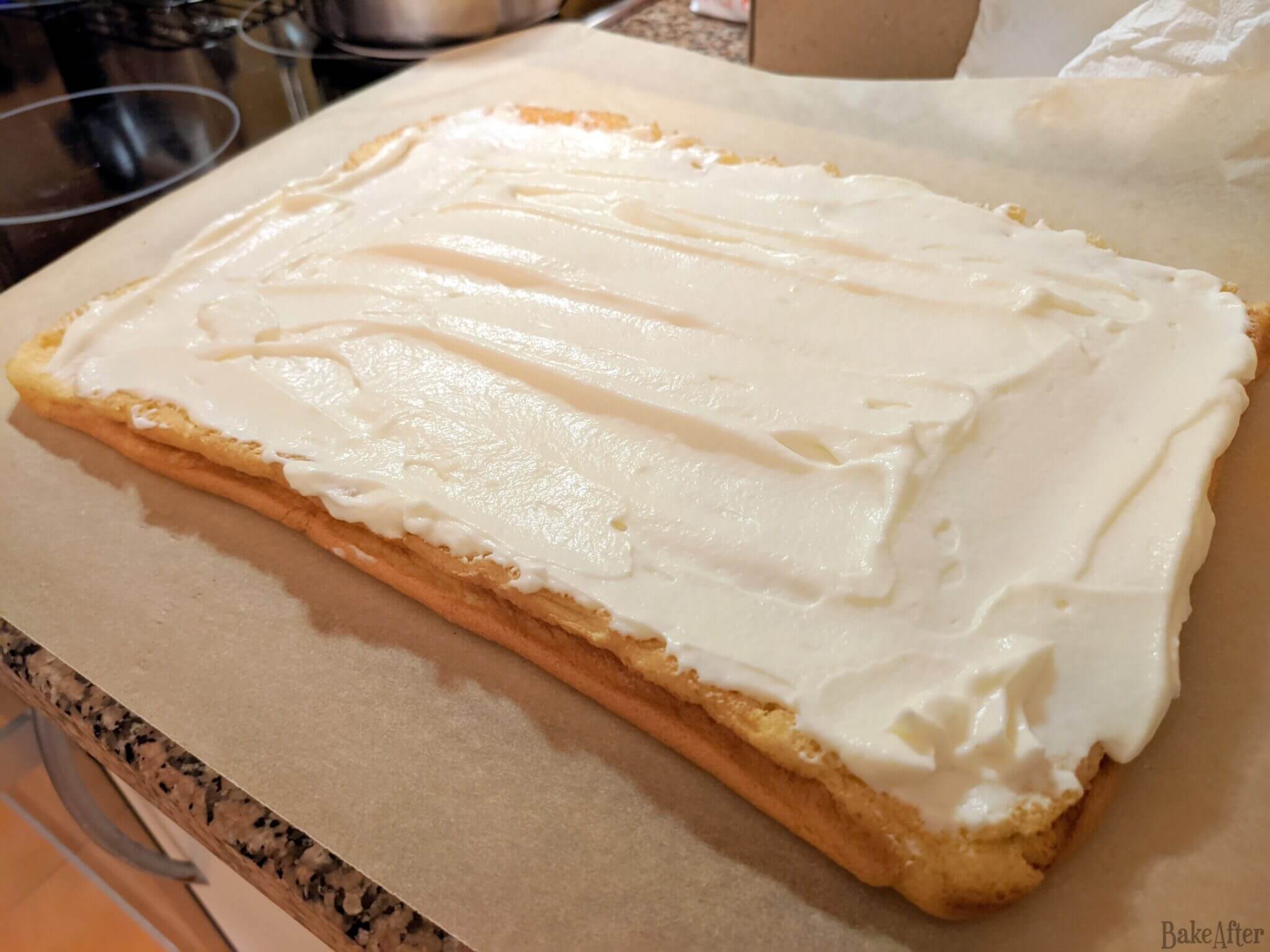
- Then spread the cream on the cake (note that you want the toasted part of the cake on the outside and the pale part on the inside). If you rolled the cake, unroll it, then pour the whipped cream on top, leaving a small border around the cake (because when you roll it, you will naturally start to squeeze the cream out, so the edge gives you room to adjust without spilling all the cream outside), adding a little extra cream on the shorter side where you will start rolling. Note that this side is most likely to break, so firmly but gently, start rolling, using the nonstick paper or towel to help with the rolling process.
- When you have the roll, make a large square of cling film and roll it up on top of the film, taking the opportunity to gently adjust the shape if it is not perfect. Continue rolling until the cake has one or two layers of cling film, and then take it to the fridge and refrigerate for at least 12 hours.
- When it’s time to serve, unwrap it onto a platter, dust with powdered sugar and cut off the ends for a clean and beautiful presentation! This cake will keep well in an airtight container in the refrigerator for about 2 or 3 days. Bon appétit and Merry Christmas!
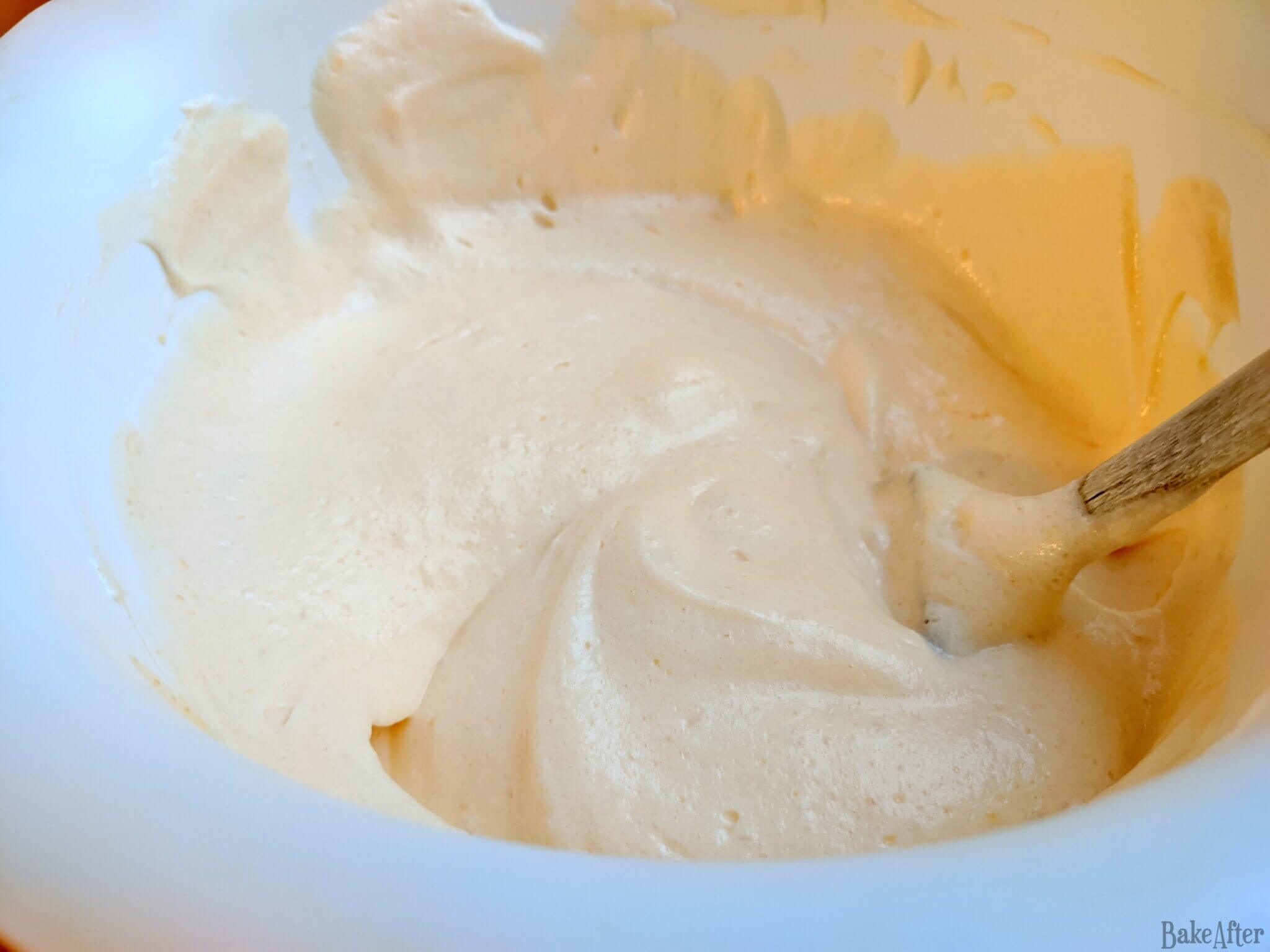
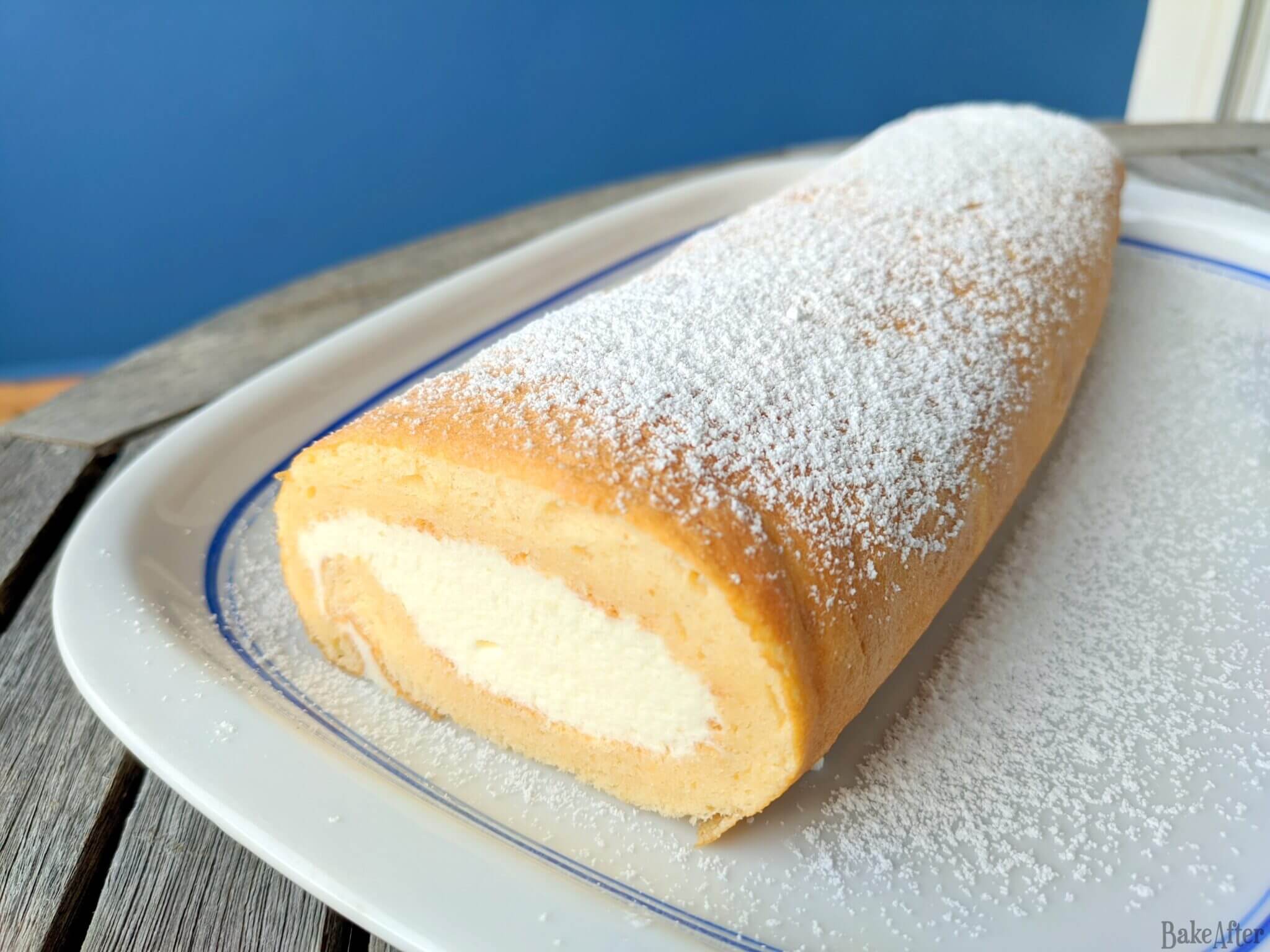
Yes, you can dust with sugar or cover with chocolate or whatever you fancy, even this cake plain and simple is already delicious.
If the cake cracked, usually the reasons are that the cake was overcooked, so it was drier and less flexible, or you weren’t careful in the process of rolling the cake. Both aren’t the end of the world. As I said above, even after making rolls, occasionally one or another will crack. If it’s for here on BakeAfter hehehe, a party, special occasion, I suggest making another cake, you can always use the cake that broke for other things. If it’s to eat at home, just because, for friends, then broken it doesn’t matter, still tastes good, no problem at all, next time you’ll do better! ;D
As I said above, this cake is also often served with strawberries in the filling, so if you want, before spreading, cut some strawberries into pieces and pat them dry! on paper towels (the drier they are, the better the cream will hold up). Then spread over the cake and arrange all the strawberries and then start the rolling process.
The key to that dreamy Japanese texture is in the gentle folding technique and not overmixing. The meringue needs to stay airy, and the gelatin-stabilized cream keeps everything light and cloud-like. Don’t rush the refrigeration time, those 12 hours are when the magic happens and everything sets into that perfect fuwa fuwa texture!
This recipe for Authentic Japanese Cream Fluffy Swiss Roll Cake was originally created on BakeAfter.com. Esta receita de Torta de Creme Japonesa Roll Cake foi publicada em português no Iguaria.com.
Nutrition
Per Serving: 162 calories; 10.5 g fat; 14.6 g carbohydrates; 2.6 g protein.Did you try this recipe?
Let me know how it turned out for you! Leave a comment below ;D
Discover more from BakeAfter
Subscribe to get the latest posts sent to your email.