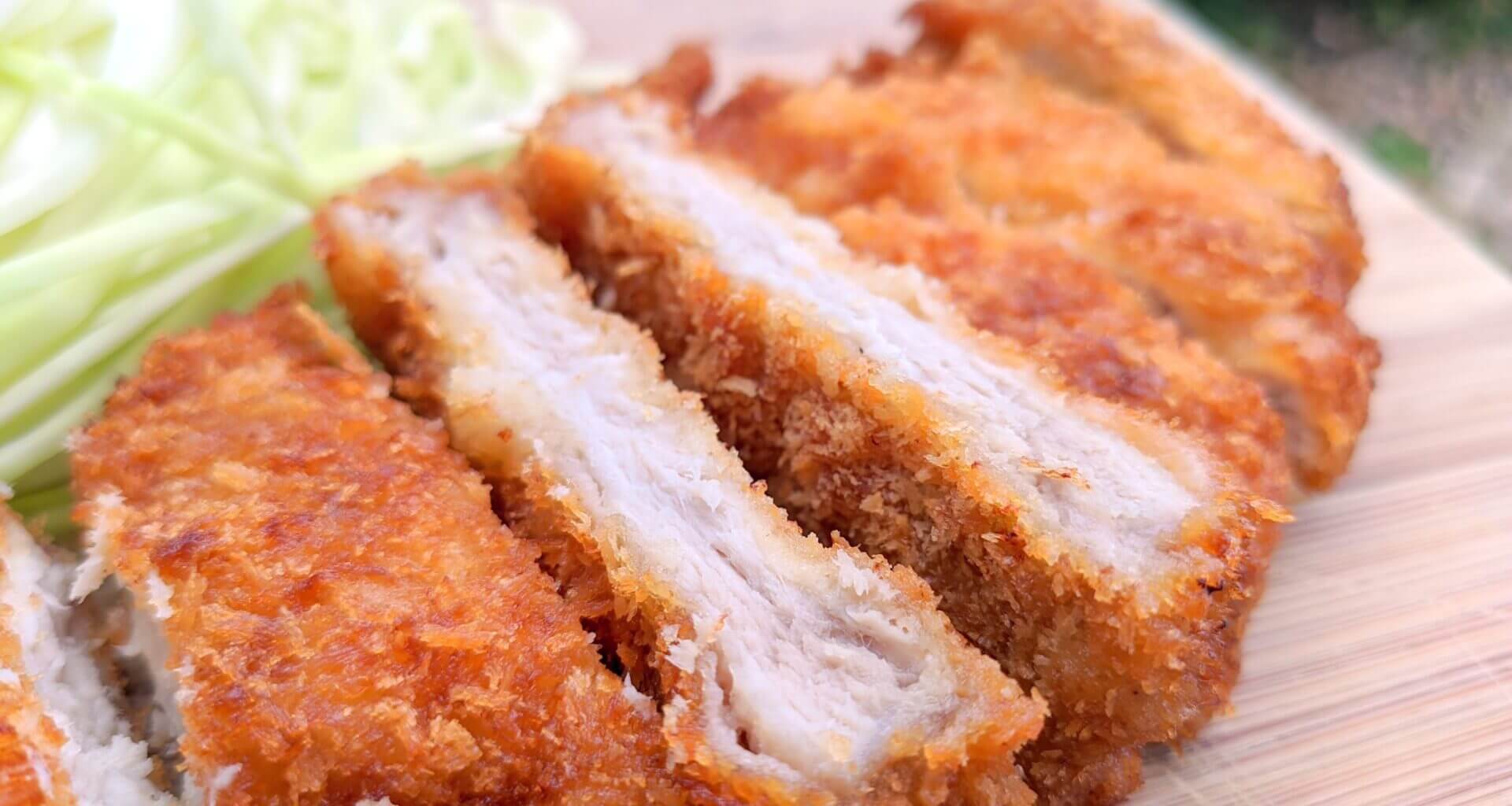

For today we have tonkatsu, another very traditional Japanese recipe. Tonkatsu might seem super complicated but it’s actually super simple, it’s basically a breaded pork cutlet. The only difference is that the pork cut is thicker than usual and it’s breaded with panko bread, a type of white bread that’s dried and chopped into flake like strips. After breading, the panko gets super crunchy with a fantastic texture.
Tonkatsu was originally made with beef, but it became famous and beloved in Japan when pork started being used instead. Today there are several restaurants specialising in tonkatsu, always served fried and accompanied by shredded cabbage. But you can also find cheap tonkatsu sold everywhere, if not as pack, inside sandwiches or other uses in convenience stores, usually with a kind of ground pork for the cheaper versions instead of a pork steak. You’ll also find it as a side dish in Japanese curry shops. Let’s get to the recipe!
Classic Crispy Japanese Tonkatsu • Panko Fried Pork Cutlet
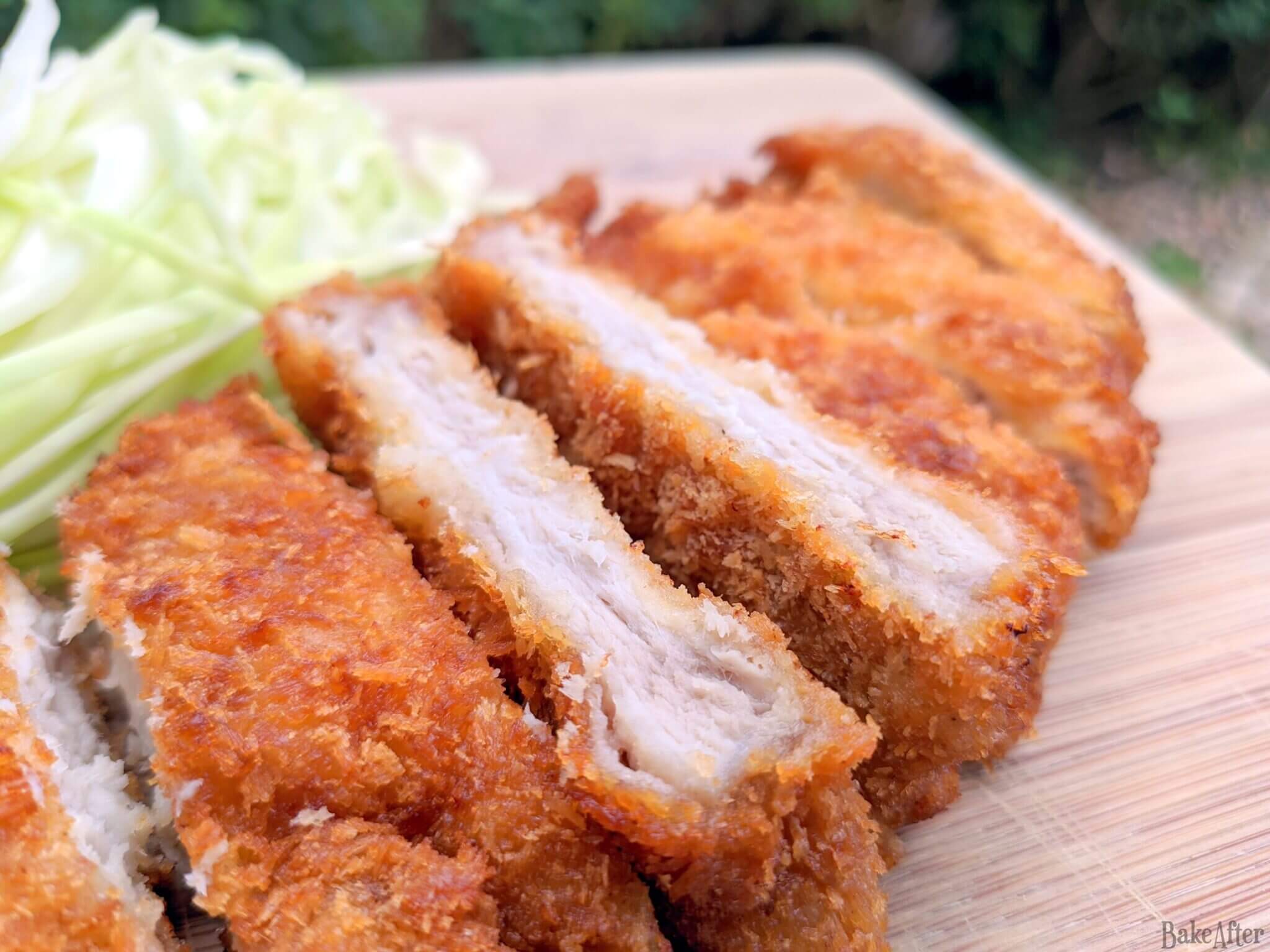
Nothing like a crispy juicy fried pork cutlet, this is a absolute classic in Japan, you can get it with a pork steak or you can get it with minced pork, both are delicious in their own ways.
Ingredients
- Pork – 2 Thick Steaks (2 or 3 Fingers Thick)
- Flour – 2 Tablespoons
- Panko Breadcrumbs – 60g
- Egg – 1 large
- Cabbage – 1/4 (Finely Chopped)
- Sunflower Oil – For Frying
- Pepper – A Pinch
- Salt – A Pinch
Directions
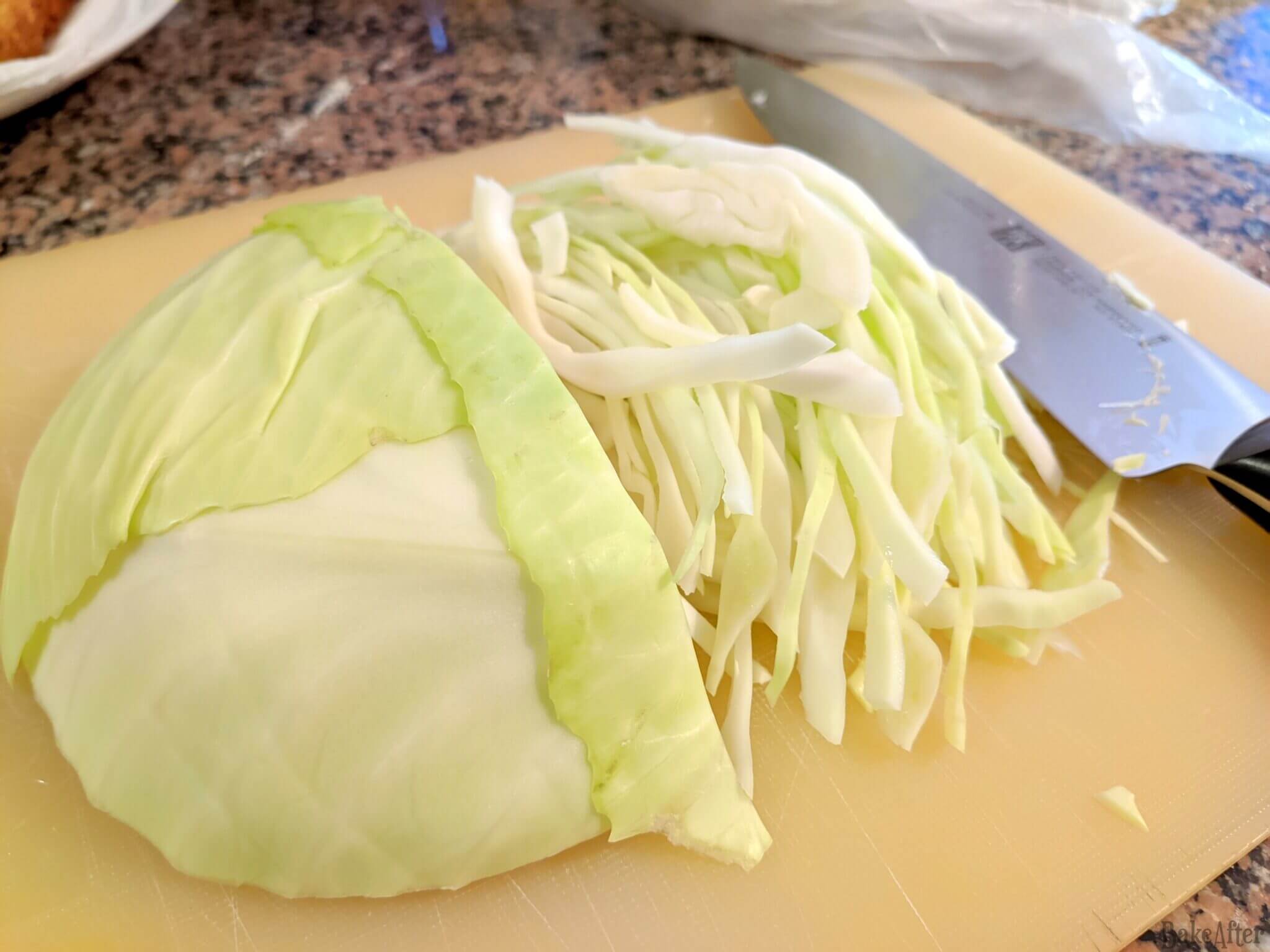
- Start by finely chopping the cabbage into julienne strips or using a mandolin, then set it aside (it’s a good idea to cut it in advance, because this gives the cabbage time to release water and become more tender when it’s time to eat).
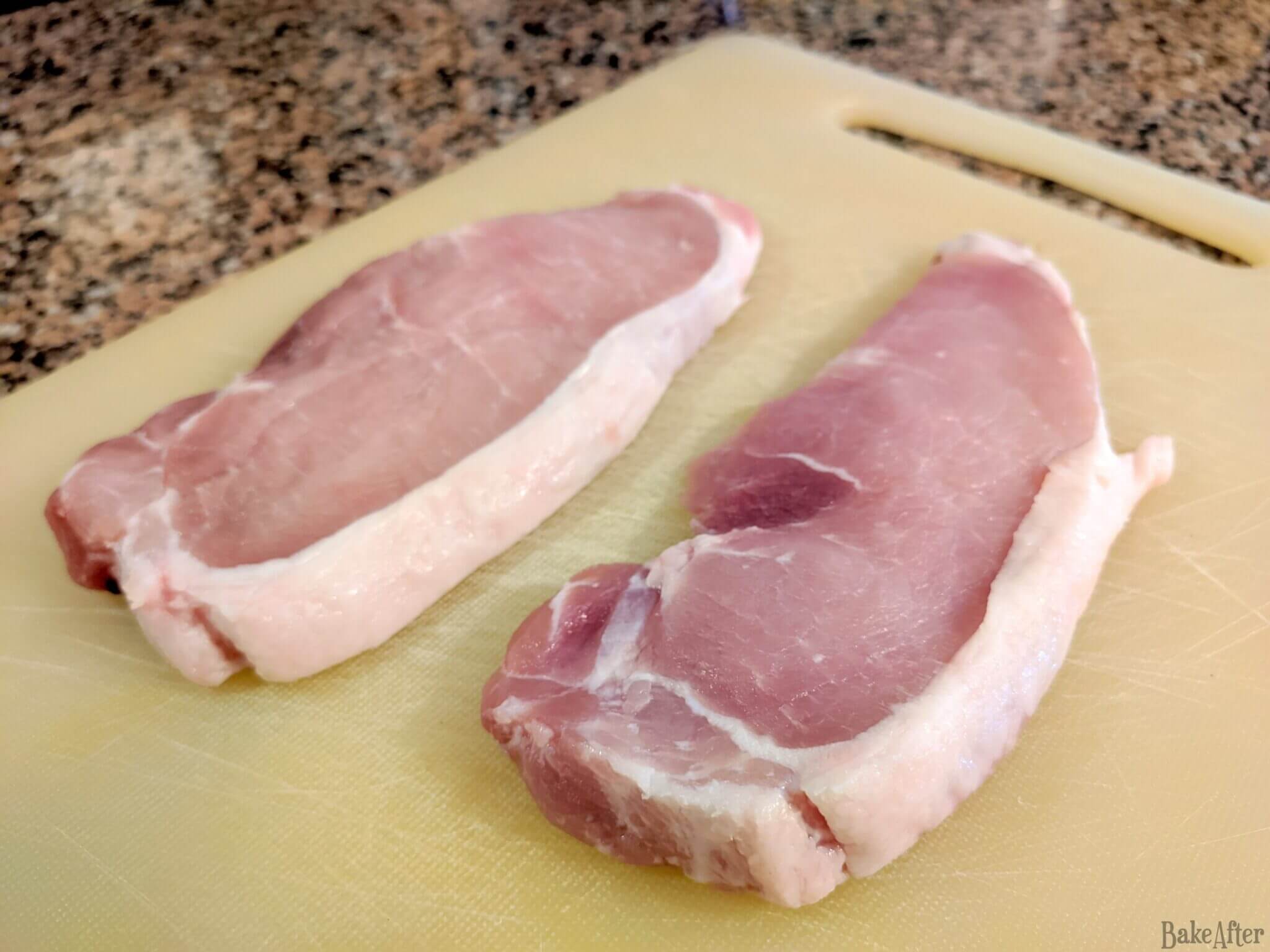
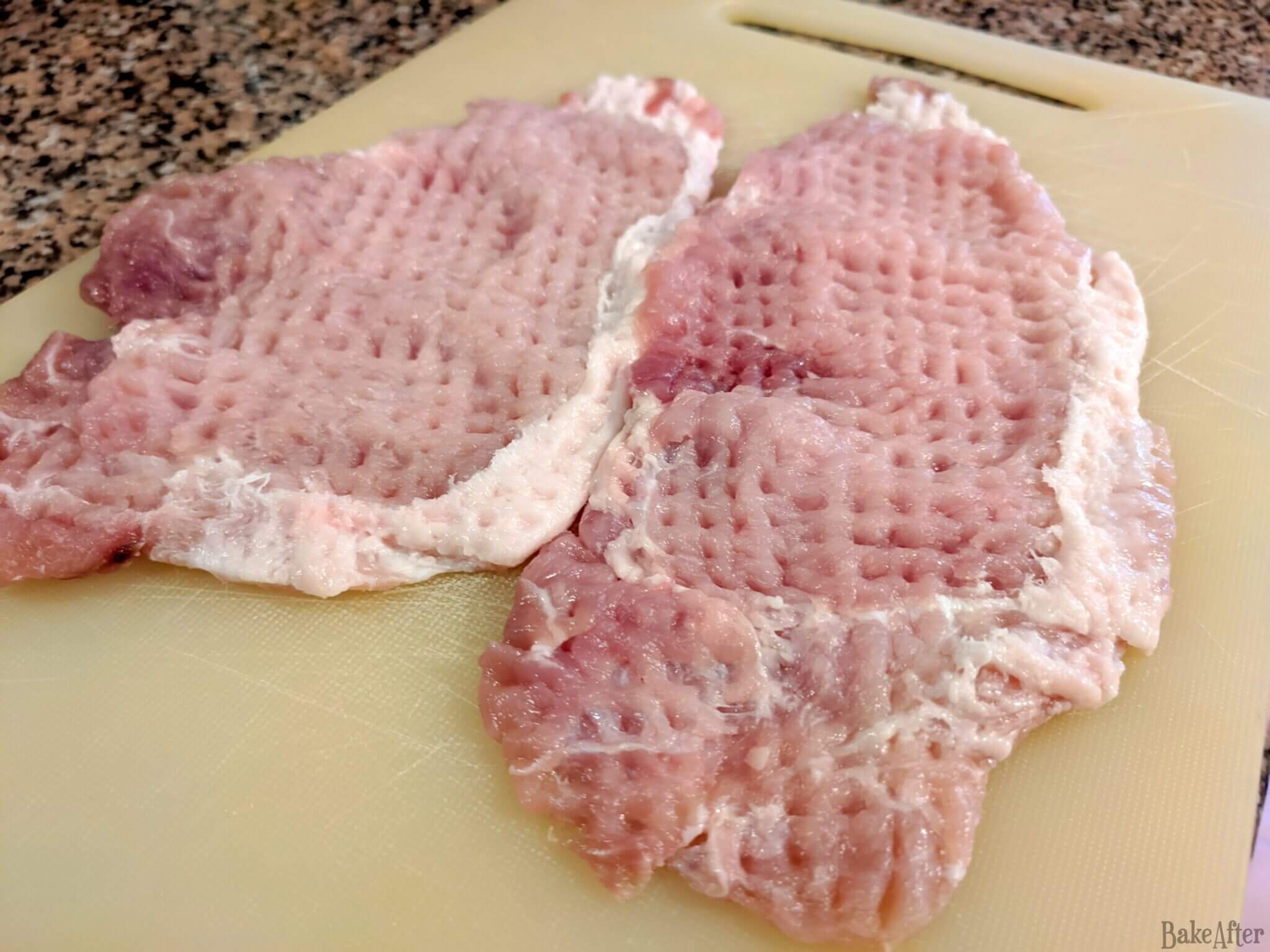
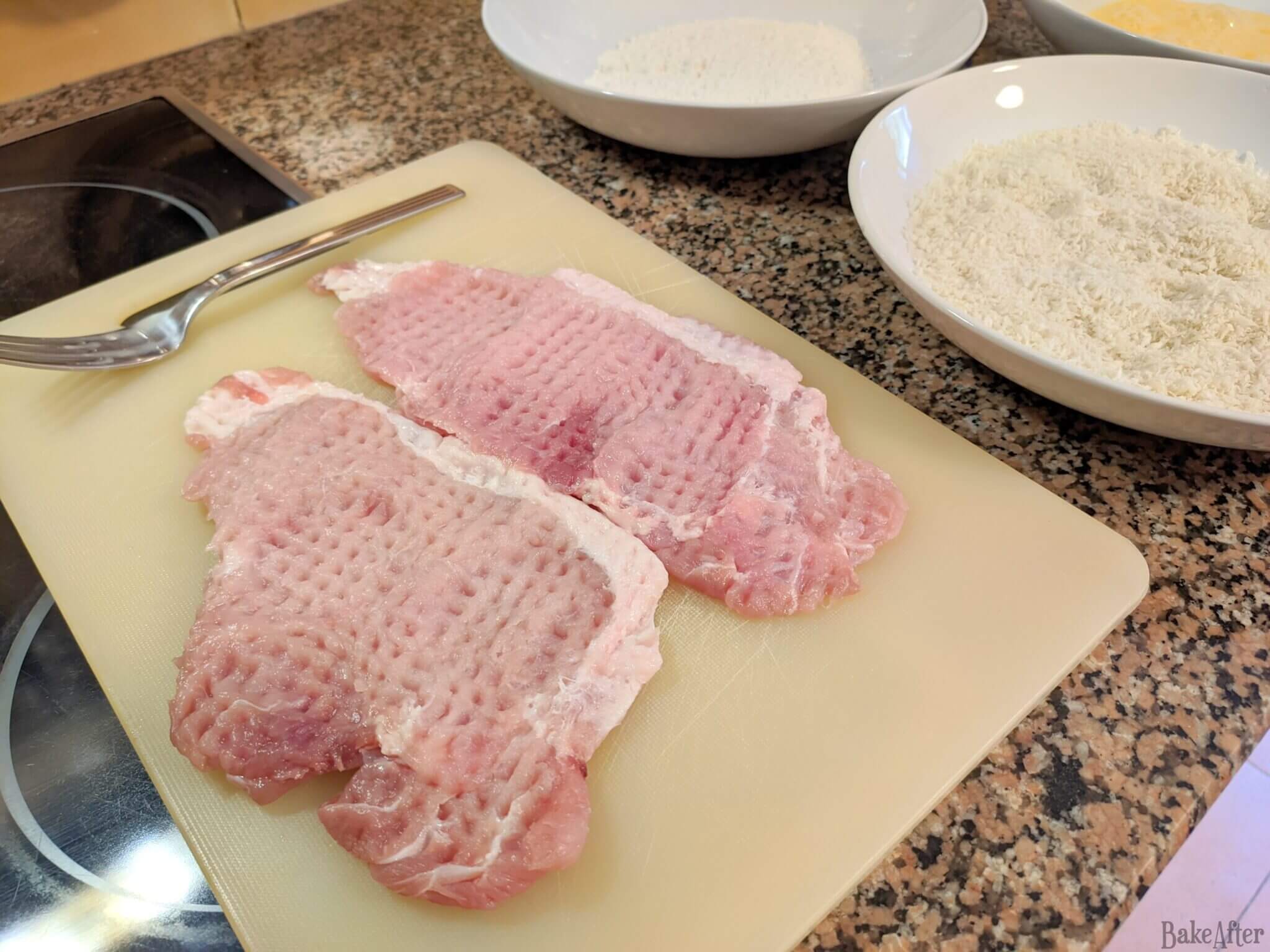
- Prepare the steaks. In Japan, they make cuts on the side of the steak and then do diamond shaped cuts on the surface of the steaks, but I personally think this breaks up the meat too much. I prefer to remove excess fat (but leave a little) and then pound it with a hammer, just once on each side, and then push the steak to try to shape it into a taller form. You don’t want the tonkatsu to be too thin, unlike portuguese breaded pork, it’s better to have it small and tall than short and long.
- Season both sides with salt and pepper and set aside to rest.
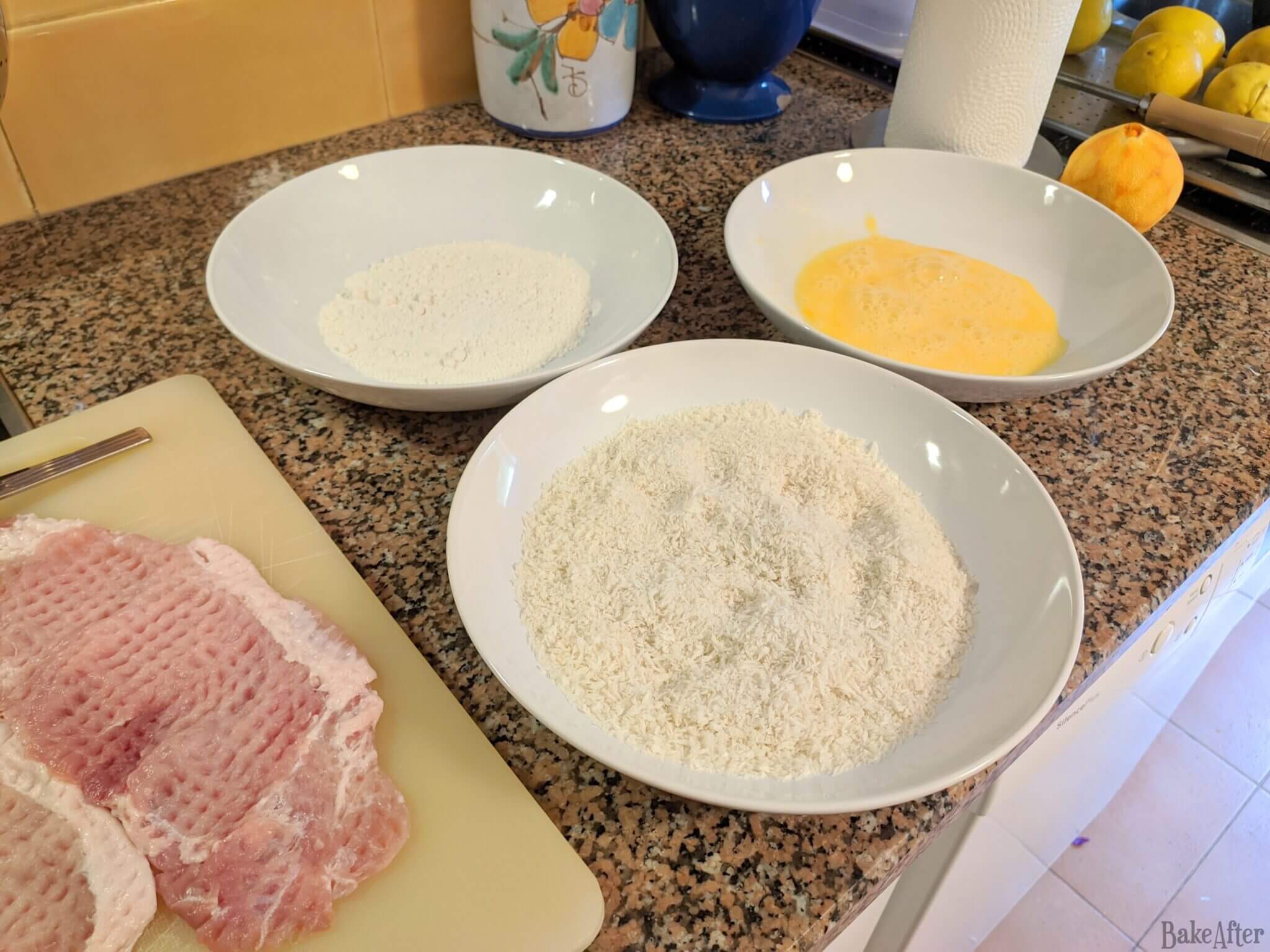
- Prepare three deep plates, one with the panko breadcrumbs. You want to add a little water, usually a few drops sprinkled over the panko breadcrumbs is enough. Mix it together; you just want it to be a little moister so it will stick better and have a better texture.
- In another dish, add the egg and a tablespoon of sunflower oil, whisk the egg well. Finally, a dish with a little flour.
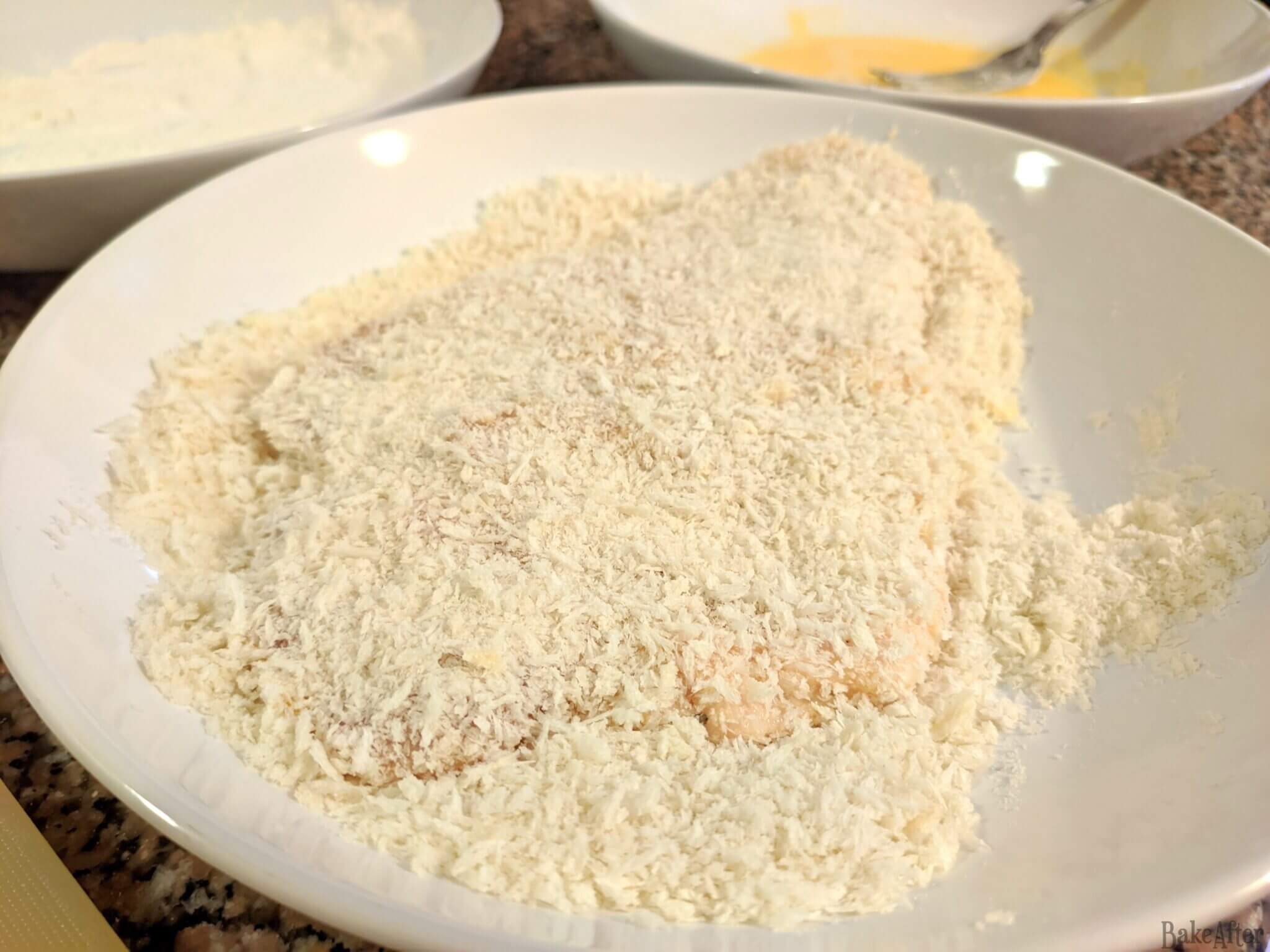
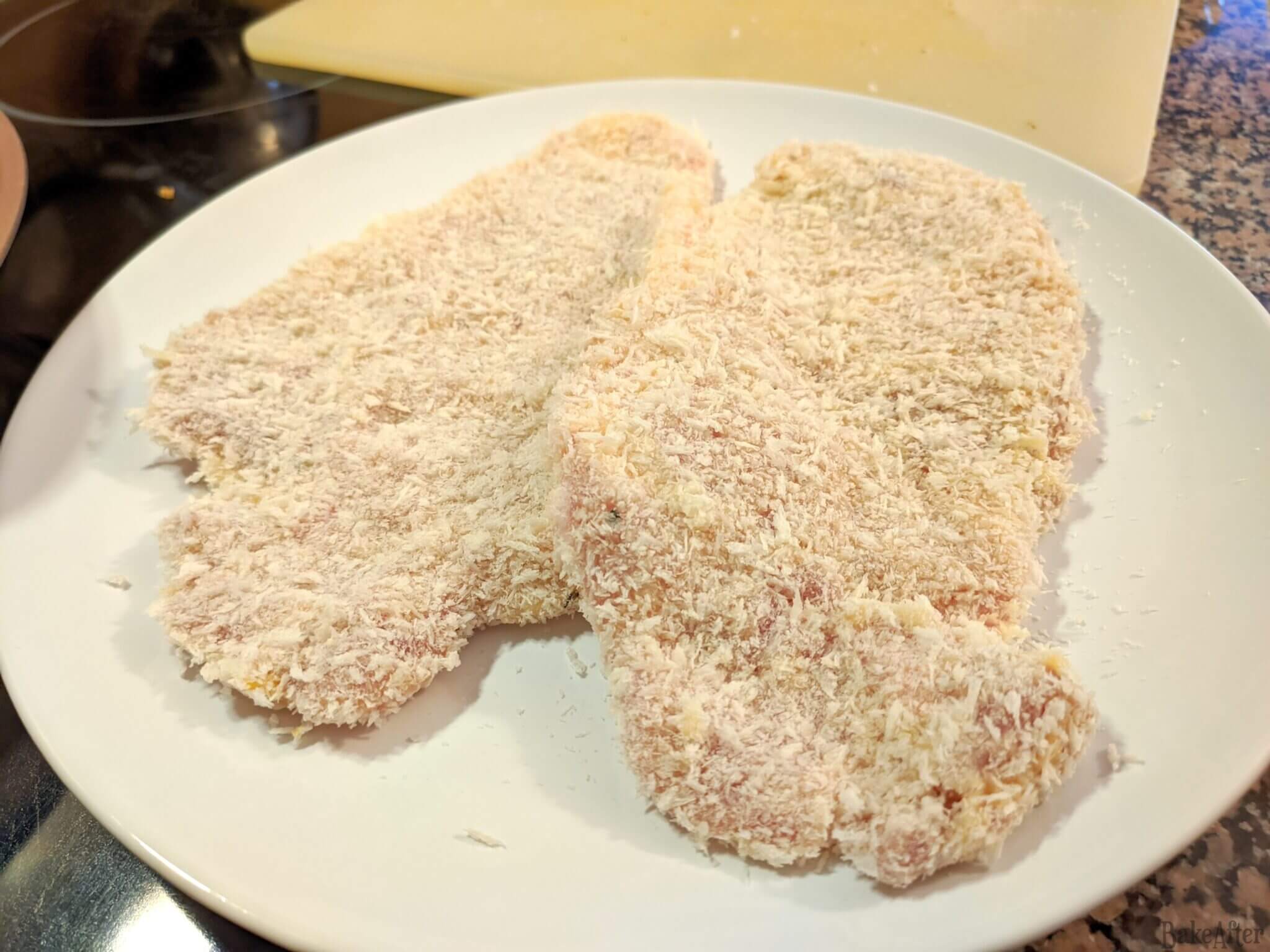
- Coat the steak in the flour, shake off any excess, dip it in the egg, and finally coat it in the panko breadcrumbs. First, coat it in the breadcrumbs, then pile more breadcrumbs on top and press down on the steak. This way, when you shake the panko, it will stick well to the steak and you will have a perfect layer of breadcrumbs. Repeat for the other steak and let both rest for about 10 minutes.
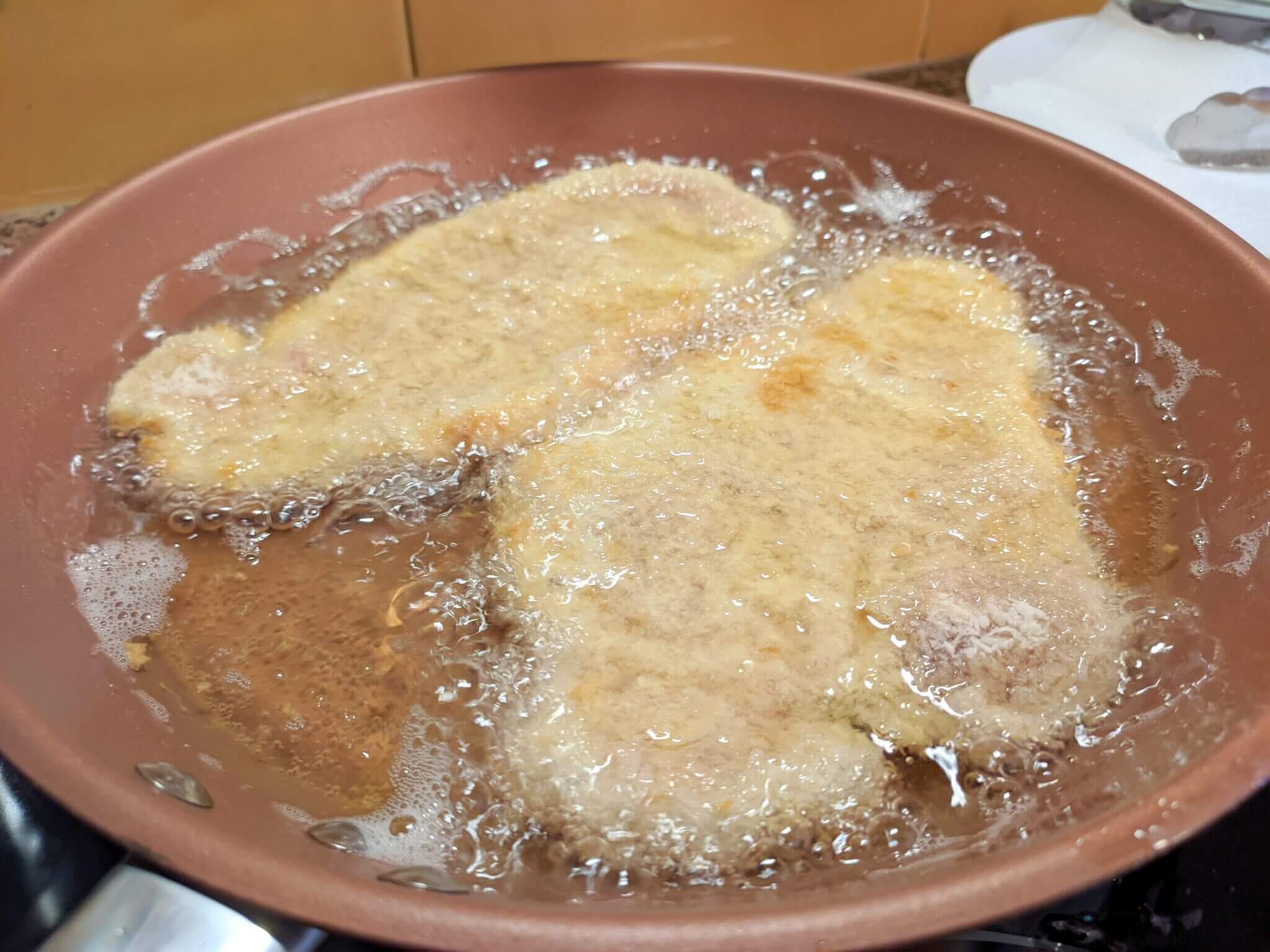
- Now it’s time to fry. You want to fry at a lower temperature, around 338ºF (170°C), the first time. Fry for only about 2 minutes, 1 minute on each side, then remove the tonkatsu and skim the oil with a slotted spoon.
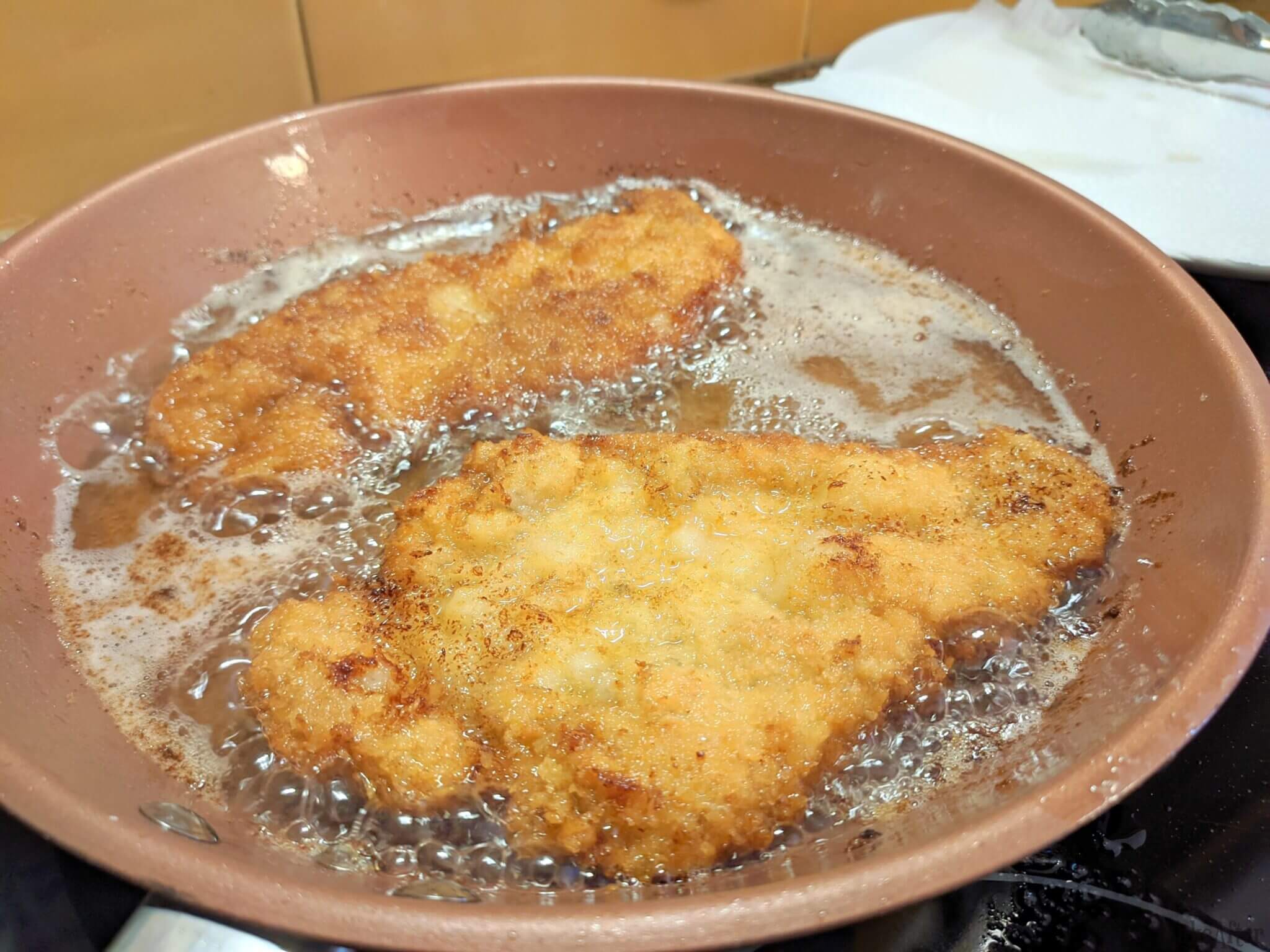
- Increase the oil temperature to about 356ºF (180ºC) and add the tonkatsu back in to fry again, this time for about 1 minute on each side or until golden brown.
- Remove the tonkatsu steak to kitchen paper or, better still, a rack where it can drain.
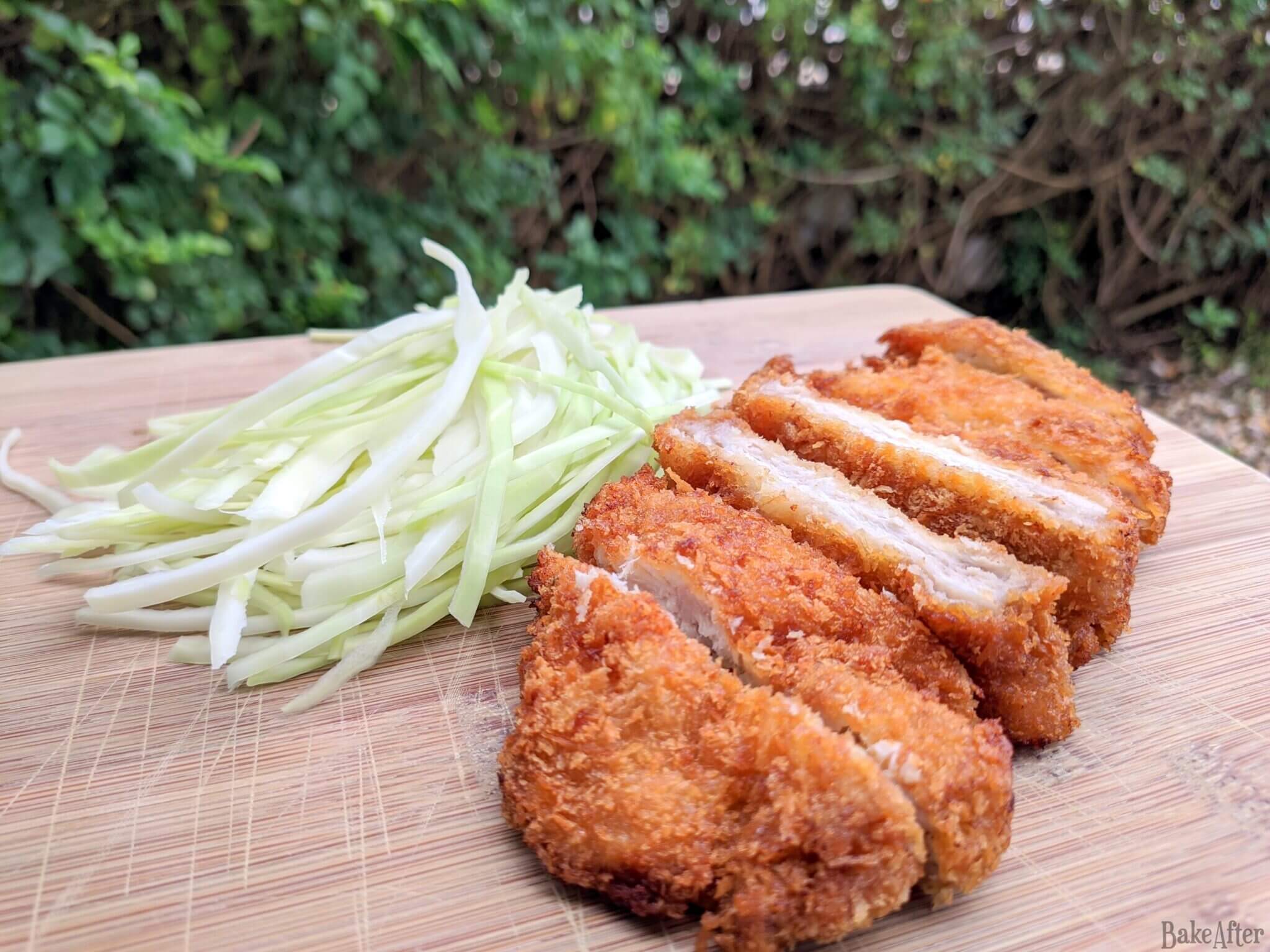
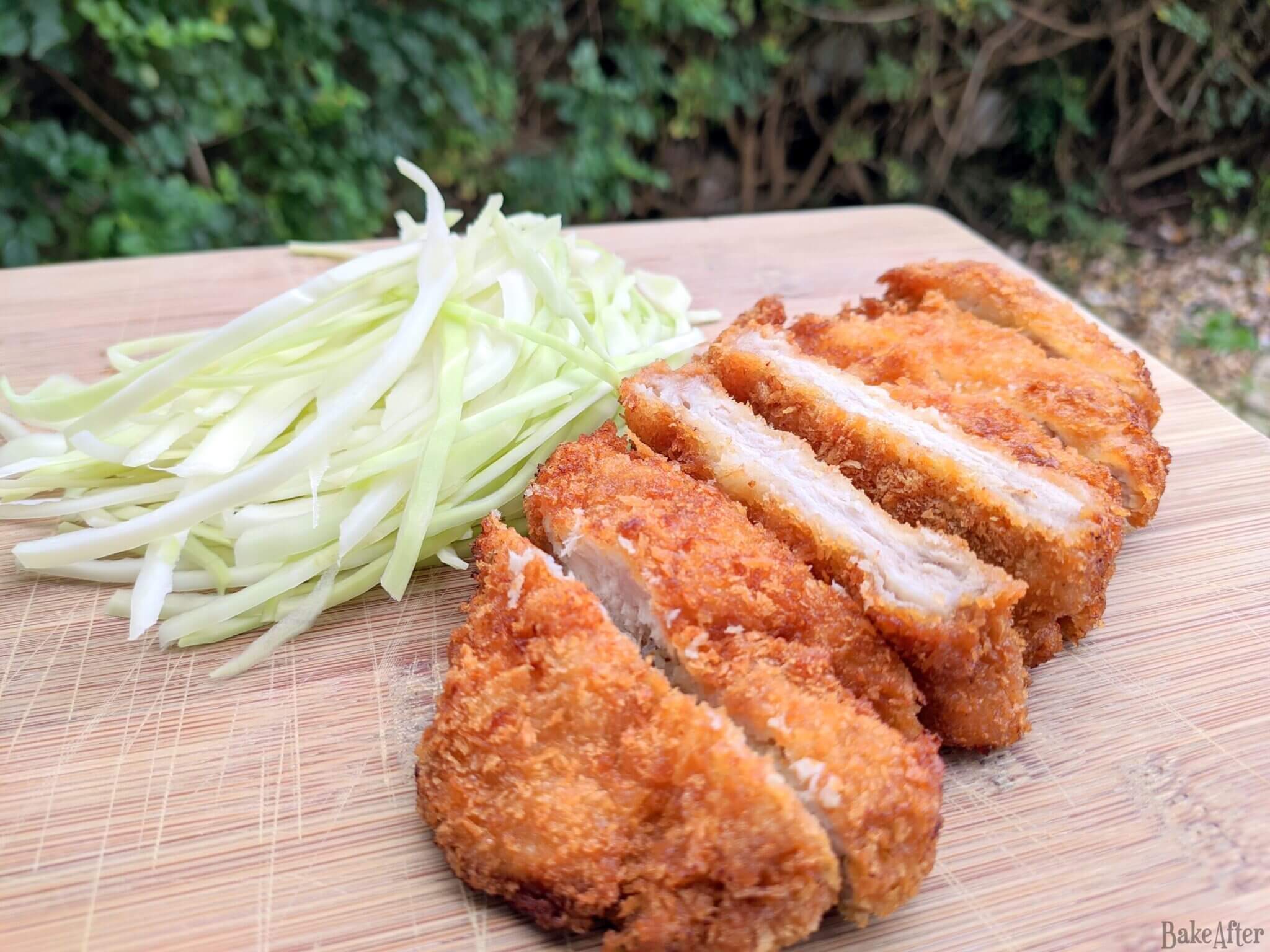
- And that’s it, ready to serve with chopped cabbage. Bon appétit!
Also in the same vein you can make tonkatsu with chicken, beef, cheese, or you can flavor the pork with lemon, miso, curry, etc.
The first fry at lower temperature cooks the pork through, while the second fry at higher temperature creates that signature crispy golden crust. Don’t skip this step!
The 10-minute rest after breading allows the coating to adhere better and results in less coating falling off during frying.
Use a thermometer if possible. Too hot and the outside burns before the inside cooks, too cool and you get greasy, soggy tonkatsu.
Don’t over pound the pork steaks, you want to tenderize slightly while keeping the steak thick enough to stay juicy.
Shredding the cabbage ahead of time and letting it sit makes it more tender and refreshing as a side. You can even soak it in ice water for extra crispness.
You can bread the cutlets up to a few hours ahead and keep them refrigerated until ready to fry.
Traditionally served with tonkatsu sauce, Japanese mustard (karashi), and steamed white rice. Drizzle a bit of sauce over the cabbage too!
If you cant find panko bread or panko breadcrumbs, then you can use just regular breacrumbs, its not the same, but its still delicious! ;D
This recipe for Classic Crispy Japanese Tonkatsu • Panko Fried Pork Cutlet was originally created on BakeAfter.com. Esta receita de Tonkatsu Porco Frito Japonês foi publicada em português no Iguaria.com.
Nutrition
Per Serving: 580 calories; 33 g fat; 50.6 g carbohydrates; 20.3 g protein.Did you try this recipe?
Let me know how it turned out for you! What are your favourite Japanese dishes? You can leave a comment below ;D
Discover more from BakeAfter
Subscribe to get the latest posts sent to your email.