
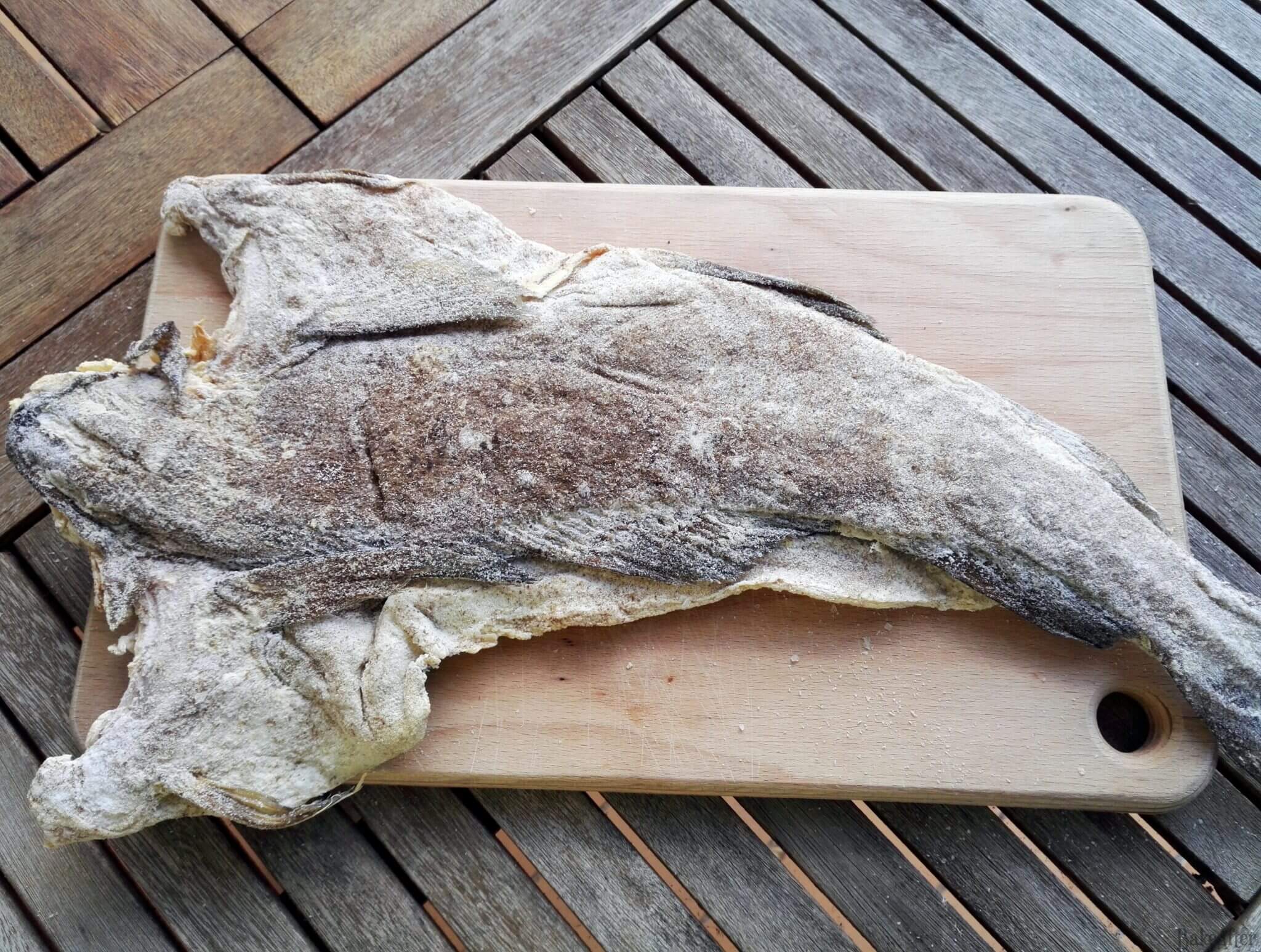
Ah, the beautiful dried codfish! Even though it’s a traditional method, there are alternatives, nowadays, you can buy frozen rehydrated dried codfish, it’s alright in a pinch, but for those who have tasted both dried and fresh codfish, the difference is like night and day. The drying and salting process doesn’t just preserve the codfish, it intensifies the flavour and texture in a way that fresh codfish simply cannot replicate. However, dried codfish needs to be soaked before it can be cooked, since Christmas is coming up and codfish is essential for Christmas, it’s a nice idea to dive into the complete process of preparing this Portuguese treasure in the Portuguese way!
Understanding Dried Codfish
The soaking process involves eliminating excess salt from inside the codfish and rehydrating the dried cells to restore its texture. This happens when the salt concentration inside the fish equals that of the surrounding water. It’s a delicate balance that requires patience and attention to timing.
How to Cut Dried Codfish
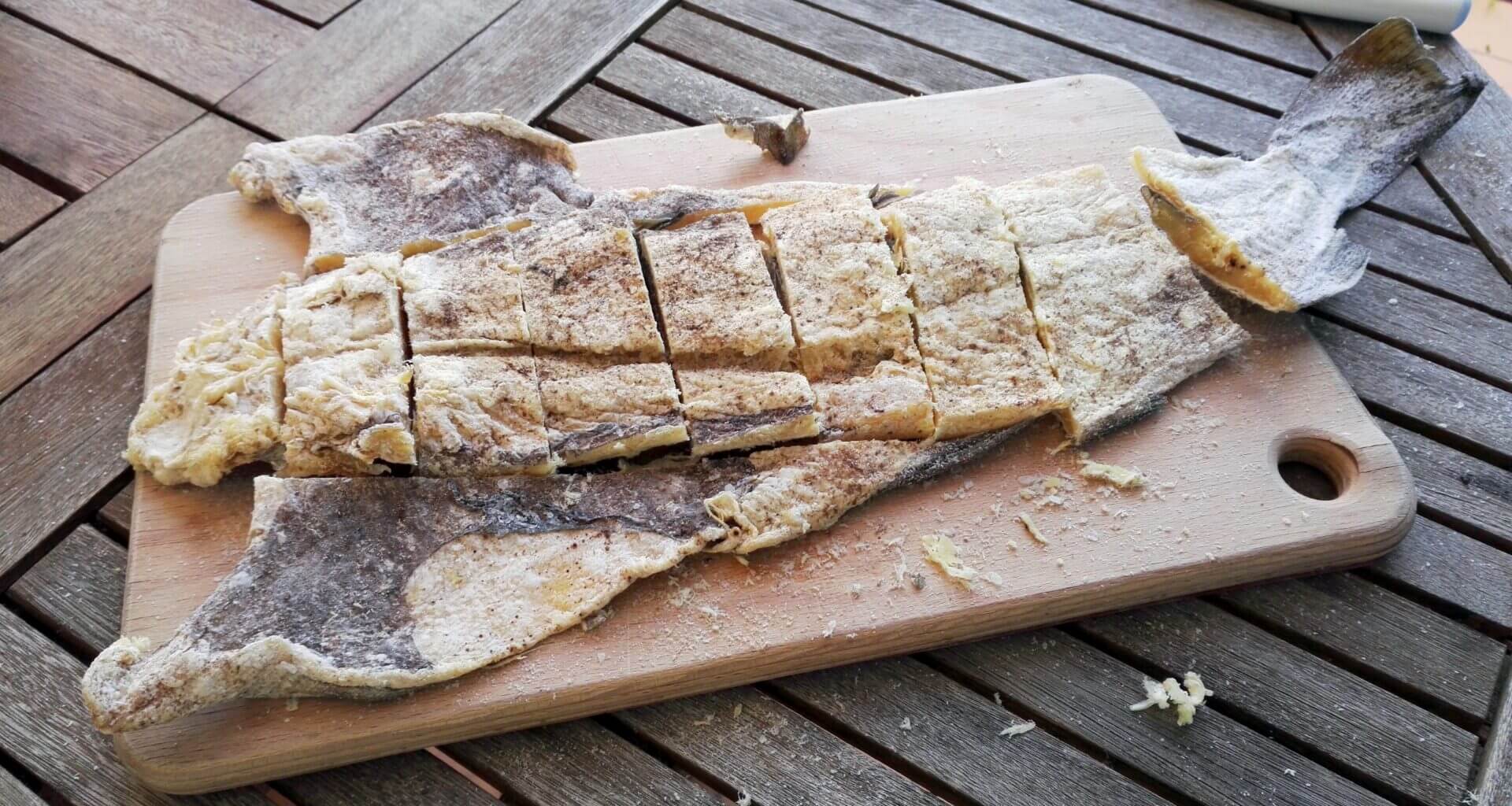
Before soaking, you’ll often need to cut your whole dried codfish into manageable portions. Here’s how to do it properly:
Tools You’ll Need: Use a very sharp knife or a serrated knife for cutting. The meat is dry and the bones are thick, which makes cutting a bit challenging, but the firmness also allows for very precise cuts.
The Basic Rule: In the center of the codfish, you have the loin – this is the part with the most meat and is most commonly used for dishes where you want whole pieces of codfish. Think of it like a steak, and cut it to the size you think one person would want. Cut these into rectangles with the backbone running through the middle.
Sectioning the Fish
- Head section: Before the loin
- Loin: The meaty center section (most versatile)
- Side flaps: Next to the loin
- Tail section: At the end
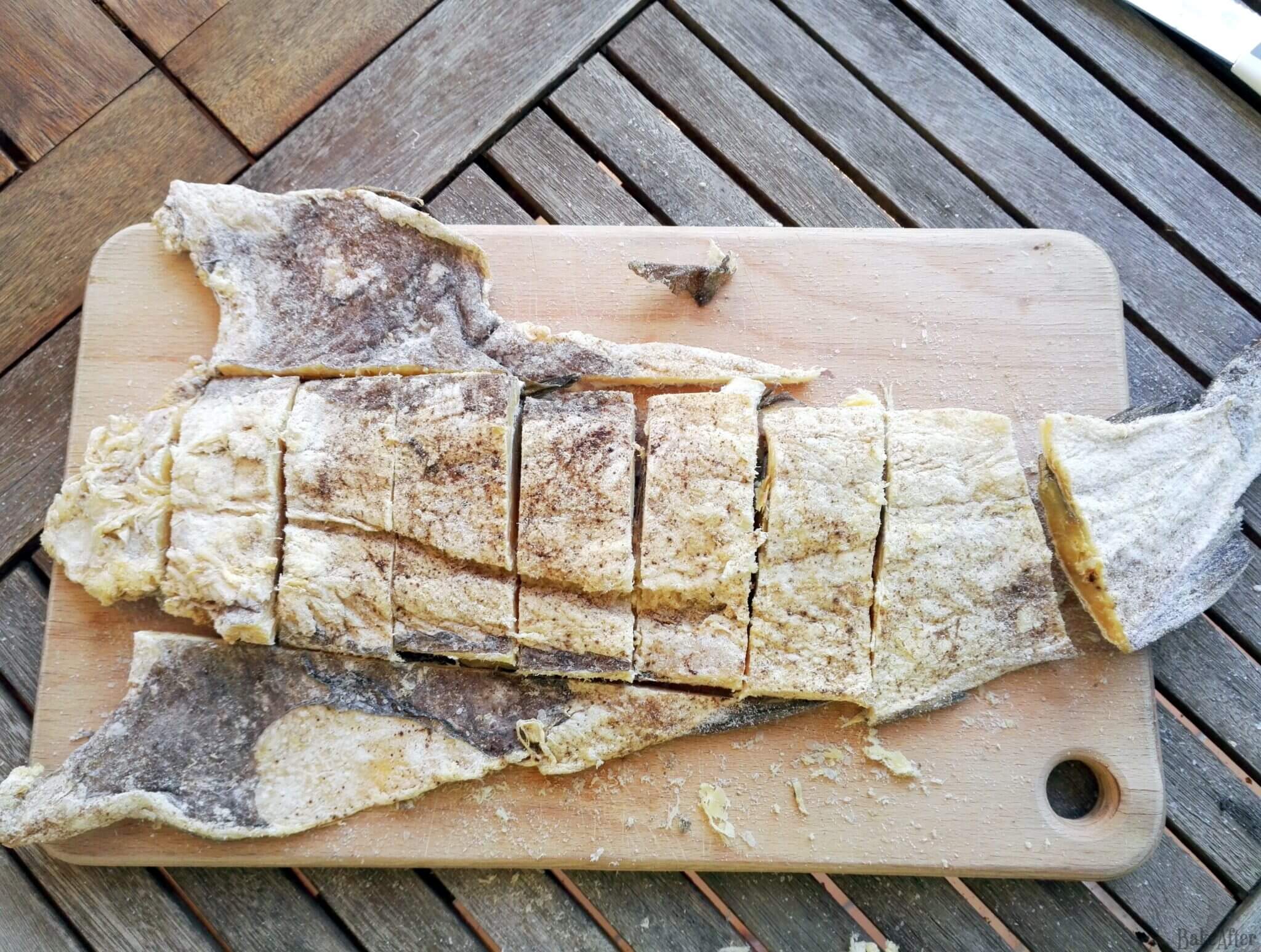
Cut to separate the loins from the rest of the fish. If you’re working with a smaller codfish, it’s more practical to cut the loins together with the side flaps, but this really depends on your preference and intended use.
What to Do with Each Part
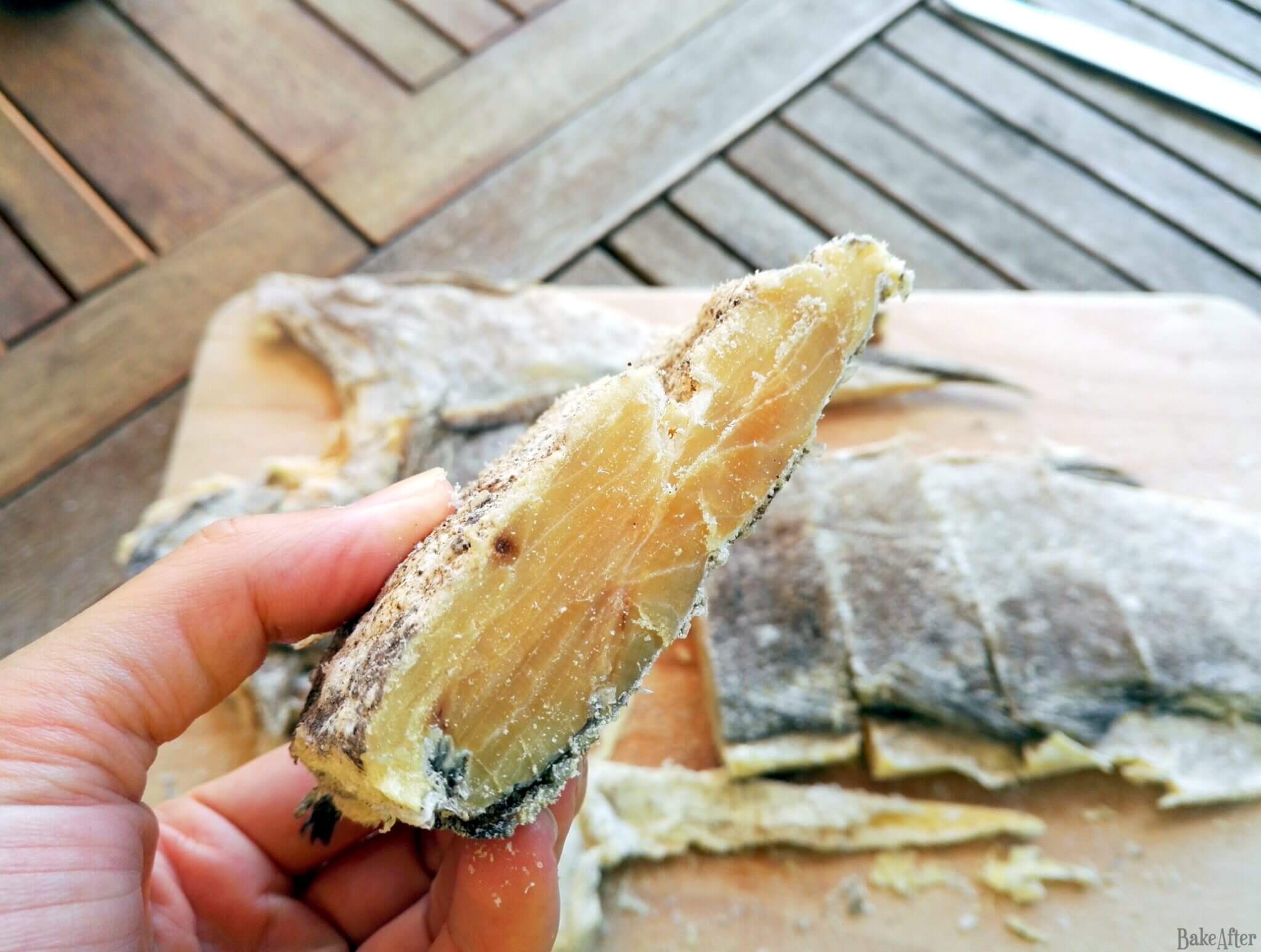
Loins are the most versatile – Perfect for whole piece dishes, some can be cooked immediately, others can be soaked and frozen for later use.
Tail, head, and side flaps – Ideal for soups, broths, or dishes where the fish will be shredded.
Important Storage Tip: If you plan to freeze soaked codfish, make sure it’s completely dry first after it was rehydrated. Pat it thoroughly with paper towels or kitchen towels, wrap it well, and then freeze. If you freeze it while still wet, the expanding water will destroy the fish fibers and cause it to fall apart when you try and cook it later, better to take some time to really take as much water out of it.
How to Soak Dried Codfish
The Setup
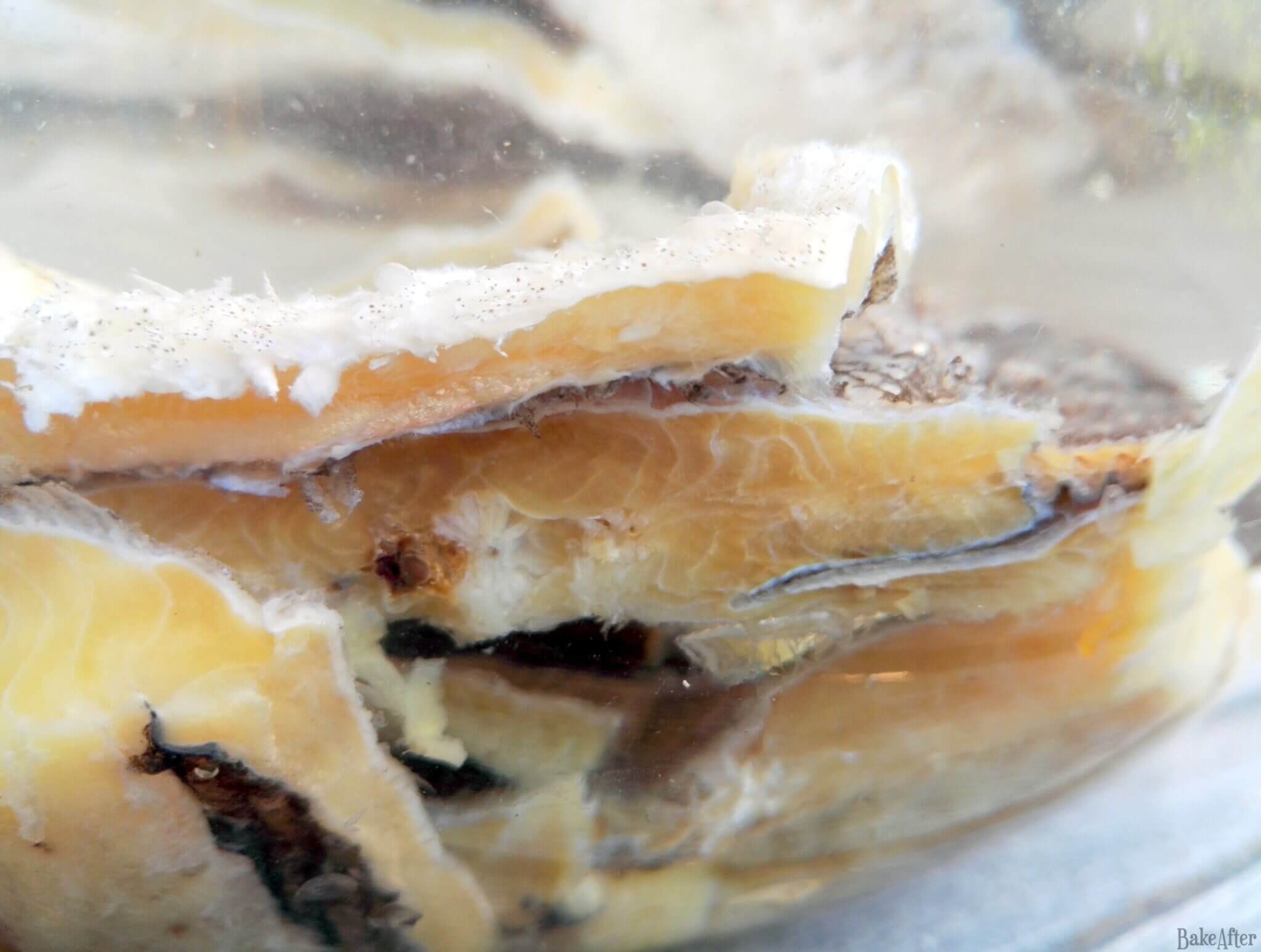
- Place something (like a plate) at the bottom of a large bowl to create space – you don’t want the fish touching the bottom, where salt deposits settle.
- Arrange codfish pieces with skin side facing up (the little fat in codfish is concentrated in the skin, and if it’s facing down, it blocks the salt from leaching out).
- Don’t stack pieces too closely – they need space for water circulation.
- Cover completely with cold water.
- Refrigerate (especially important in summer).
Soaking Times by Fish Size
- Super Special Codfish “Super Especial” (+4 kg): up to 84 hours
- Special Codfish “Especial” (2-3 kg): 48-50 hours, up to 72 hours if very large
- Large Codfish “Graúdo”: 38-44 hours
- Medium or Regular Codfish “Crescido, Médio ou Corrente”: 30-36 hours
Soaking Times by Cut
- Scraps or small pieces: 10 minutes in cold water, or traditionally cooked gently in water until white foam appears.
- Medium and thin pieces: 24-30 hours.
- Thick pieces and loins: 30-48 hours.
The Process
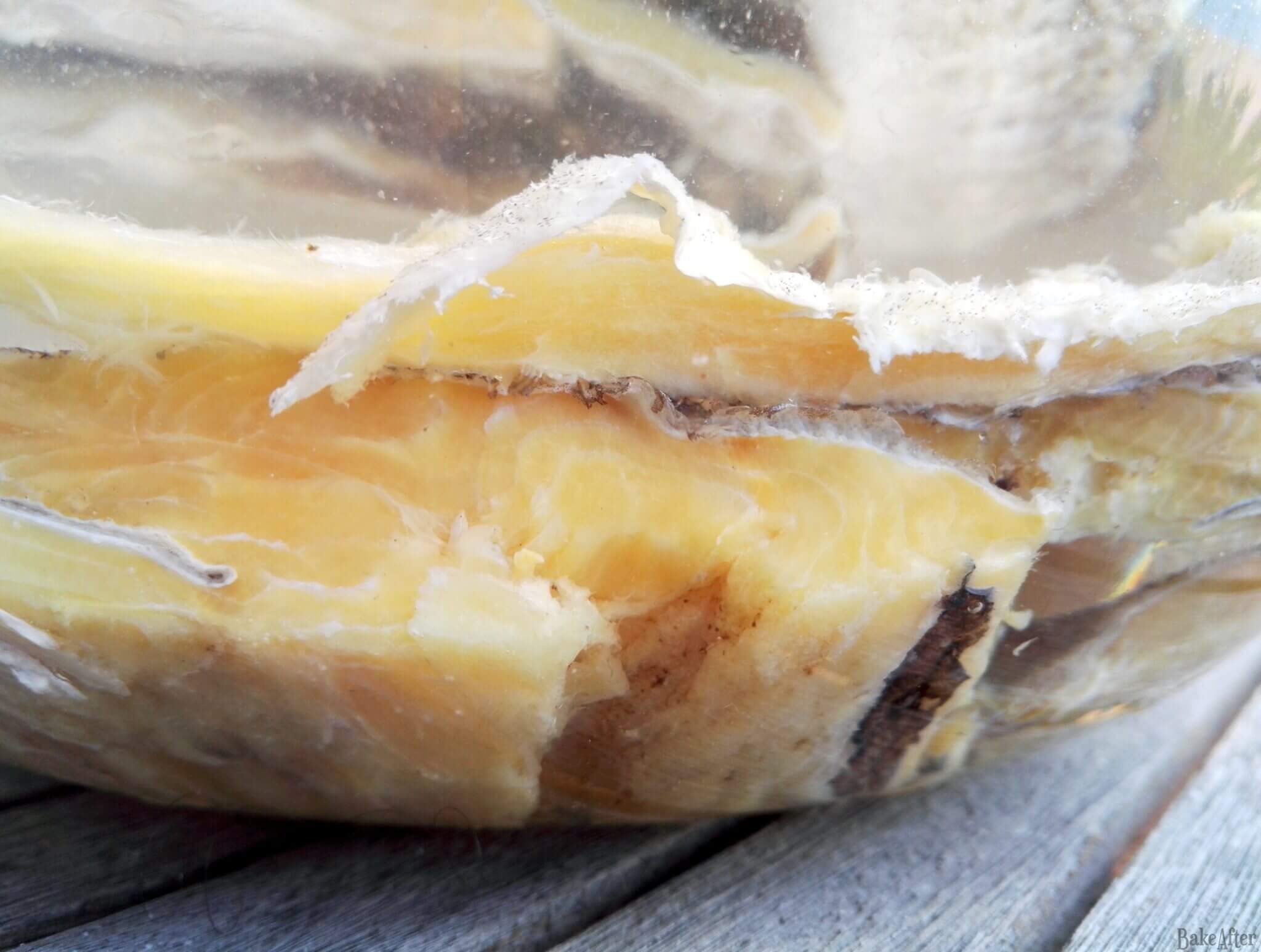
- Start by cleaning and removing any excess salt from the dried codfish by rinsing briefly.
- Set up your soaking container as described above.
- After 2 hours, completely change the water.
- Continue changing the water every 6 hours until you reach the desired soaking time
Important: Don’t remove the water too quickly at the end, if salt and water disappear too rapidly, it can create tough, dried-out codfish.
Essential Tips and Guidelines
- Soak Similar Pieces Together: If you have various types of cuts, thin pieces and thick loins, soak them separately. Loins on one side, thin pieces on the other, because they have different soaking times.
- Respect the Timing: Not taking the soaking times seriously can result in either overly salty codfish or pieces that are completely bland and flavourless.
- Refrigeration is Preferred: While optional, refrigerating during the soaking process slows decomposition and keeps the fish in better condition.
- Test the Progress: You can taste the soaking water to check salt levels – when you change it and when it’s time to change again. If there’s no significant difference in saltiness, you’re getting close to the right point.
- Taste Test: You can even taste a small piece of the raw codfish to check if the salt level is right.
- Save Cooking Water: If you cook the codfish, save the cooking water. Many codfish dishes require this flavourful liquid, or you can use it to cook rice or potatoes, do not save the soaking water!
- Portion Planning: Plan about 250 grams (roughly 1/2 pound) of codfish per person.
Additional Pro Tips and Tricks
- Skin Removal Timing: The best time to remove the skin is when the codfish is still dry, before soaking. However, note that for many recipes, the skin is essential, it helps maintain the firmness of the piece after cooking.
- Milk Treatment: After soaking, you can briefly soak the pieces in milk to add sweetness and make them more tender you can even cook codfish in milk or olive oil (not frying) for a more luxurious version.
- Never Boil: Codfish should never be boiled unless the recipe specifically calls for it. Gentle simmering is the way to go.
- Weight Changes: As an example, a 1.17 kg piece of dried codfish was rehydrated to 1.385 kg after proper soaking. Keep this in mind when buying pre-soaked codfish – you’re paying for water weight and processing, not just the convenience.
- Quality Check: When the soaking water and the fish have similar salt levels, the osmotic process is complete. This is your cue that the fish is ready.
- Storage After Soaking: Properly soaked codfish can be stored in the refrigerator for 2-3 days, but it’s best used immediately for optimal texture and flavour.
- Emergency Quick Soak: If you’re in a hurry, you can speed up the process slightly by using lukewarm (not hot) water and changing it more frequently, but this may affect the final texture, normally I would recommend just buying the frozen already rehydrated dried codfish (please note that this is different from just frozen codfish).
Hope you found this useful, with these techniques mastered, you’ll be able to prepare authentic Portuguese dried codfish that maintains its traditional flavour and texture. The key is patience – good things truly do come to those who wait, and properly prepared dried codfish/bacalhau is definitely worth the time investment!
Discover more from BakeAfter
Subscribe to get the latest posts sent to your email.