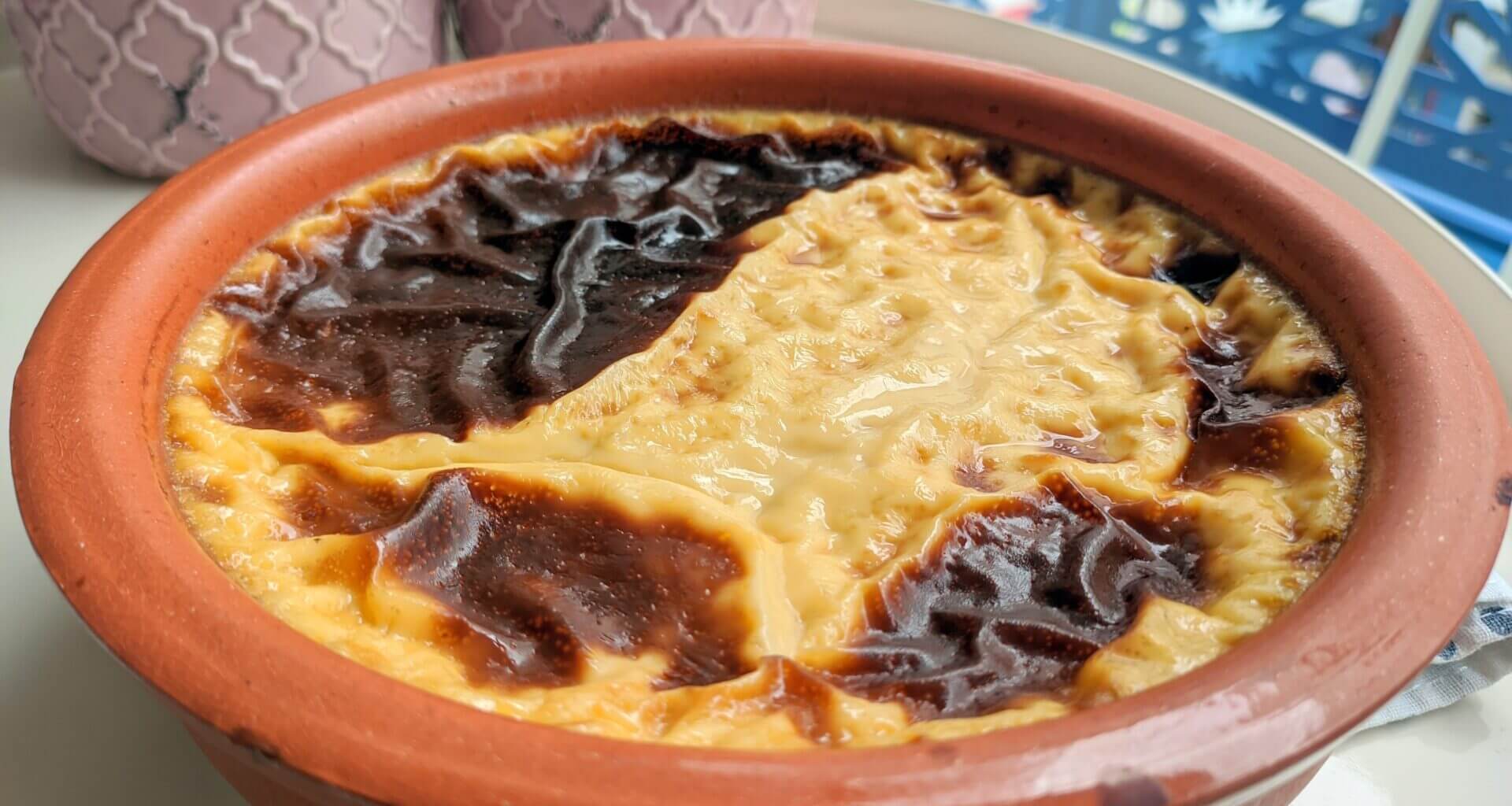

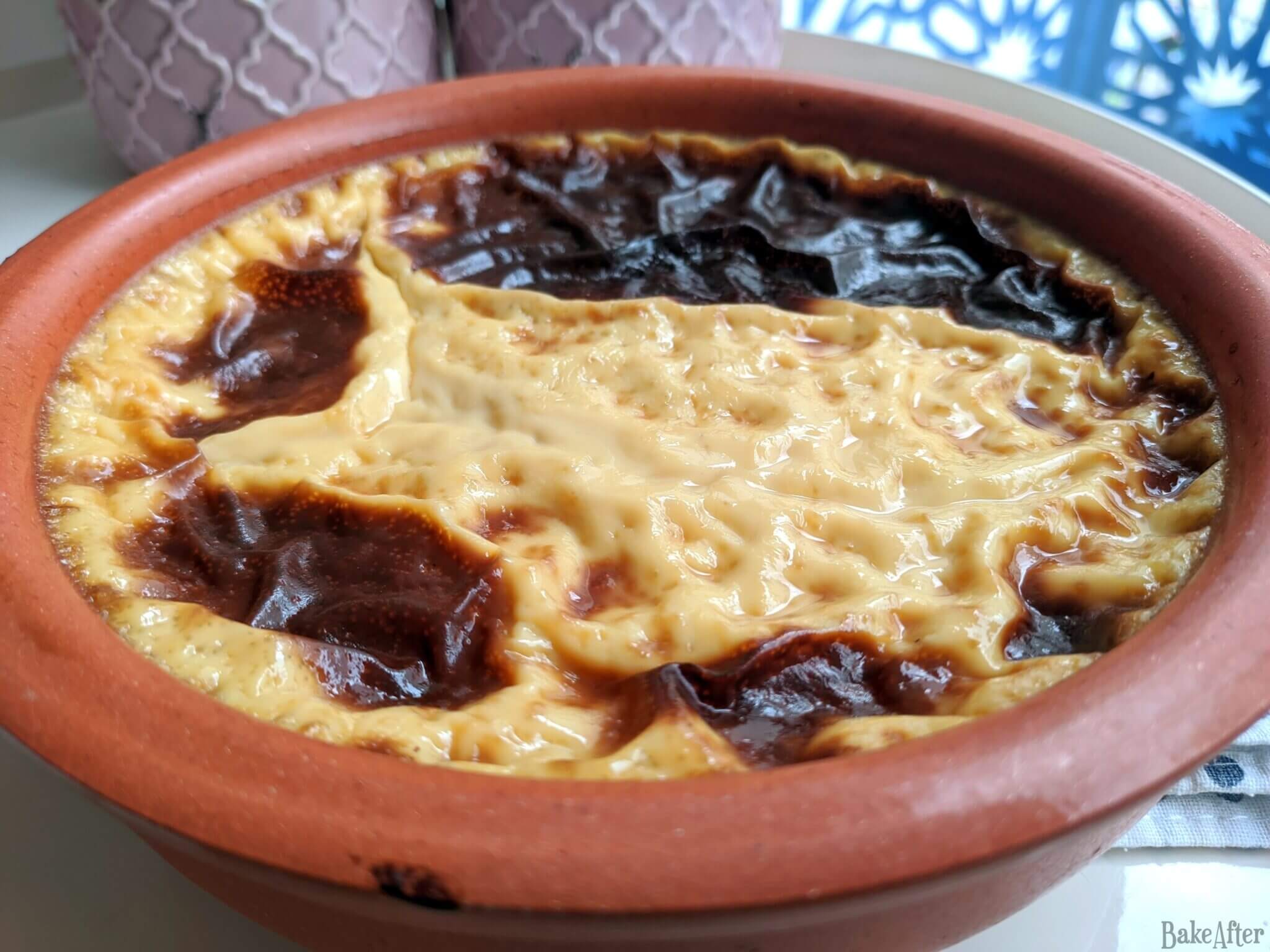
For today we’ve got another truly traditional Portuguese dessert, the classic tigelada de leite (or baked milk custard). This is one of the simplest sweets in Portuguese pastry/sweets making, its basically a type of a baked egg and milk custard. There’s not much to it, but that doesn’t make it any less of a typical treat for celebrations or when you want something sweet but straightforward.
The name of this dessert comes from being prepared and baked in red clay bowls or “tigelas.” This isn’t just done because it looks charming, but also because, much like with an Alentejo’s Sericaia, the clay helps distribute the heat more evenly while also caramelizing the exterior of the dessert. So it’s not just the top that gets beautifully golden, it’s the sides too, however if you don’t have one, just use a baking dish, it’s not perfect but it will work just fine! 🙂
Tigeladas are basically divided into two types: large tigeladas like this one that are typically made at home, and small tigeladas, with the most famous being the tigelada from Abrantes. Note that the Abrantes version includes a bit of flour so the custard caramelizes a little more and has a firmer consistency, also because it’s usually served out of the clay bowl, while the large tigelada tends to be softer and must be served in the clay bowl. Let’s check out the recipe! ;D
Traditional Portuguese Baked Milk Custard • Tigelada de Leite
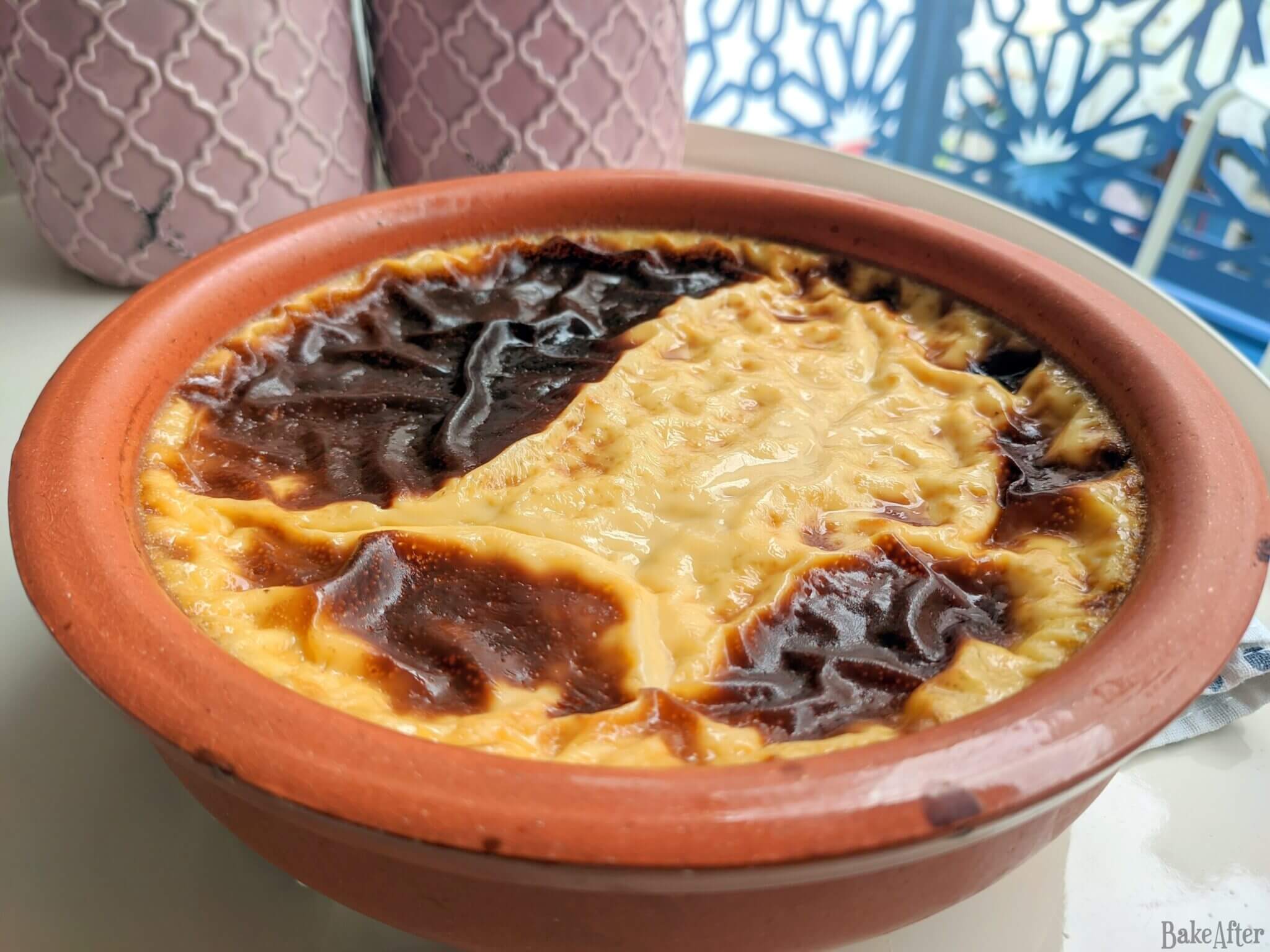
A little caramelized magic never hurt anybody
Ingredients
- Milk – 1 Liter (Whole Milk)
- Sugar – 200g
- Eggs – 5
- Egg Yolks – 2
- Lemon – 1 (Zest Only)
- Cinnamon Stick – 1
Directions
- Preheat the oven to 190ºC (375ºF).
- Start by heating the milk in a large saucepan with the cinnamon stick, noting that you don’t want it to boil (this will cause the fat to separate from the milk), just to get hot.
- Mix the eggs, egg yolks, sugar, and lemon zest in a large bowl until creamy.
- Slowly add the hot milk to the egg and sugar mixture, stirring constantly to heat the mixture slowly (and prevent the eggs from curdling).
- Now pour the mixture into the clay dish and bake for about 50 minutes, until the top is golden brown (if it starts browning too fast put a bit of aluminium foil on top).
- Remove from the oven and allow to cool completely before storing in the refrigerator. Serve The next day fresh from the refrigerator! Bon appétit!
Make sure to add the hot milk slowly to the egg mixture while constantly stirring. This tempering process prevents the eggs from scrambling.
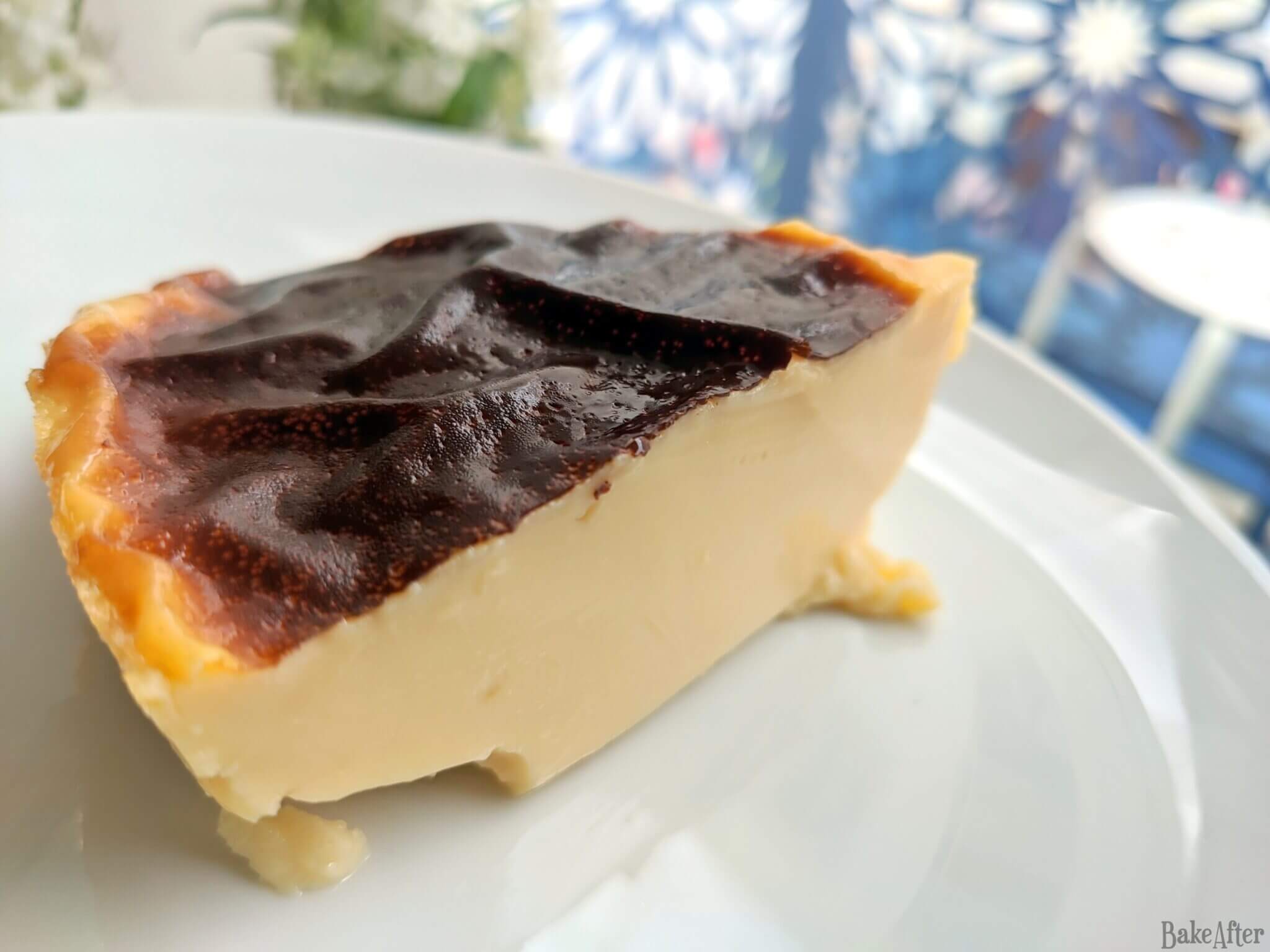
Keep an eye on the custard in the last 10 minutes. You want a golden top, but the center should still have a slight jiggle when you shake the dish gently, it will set as it cools.
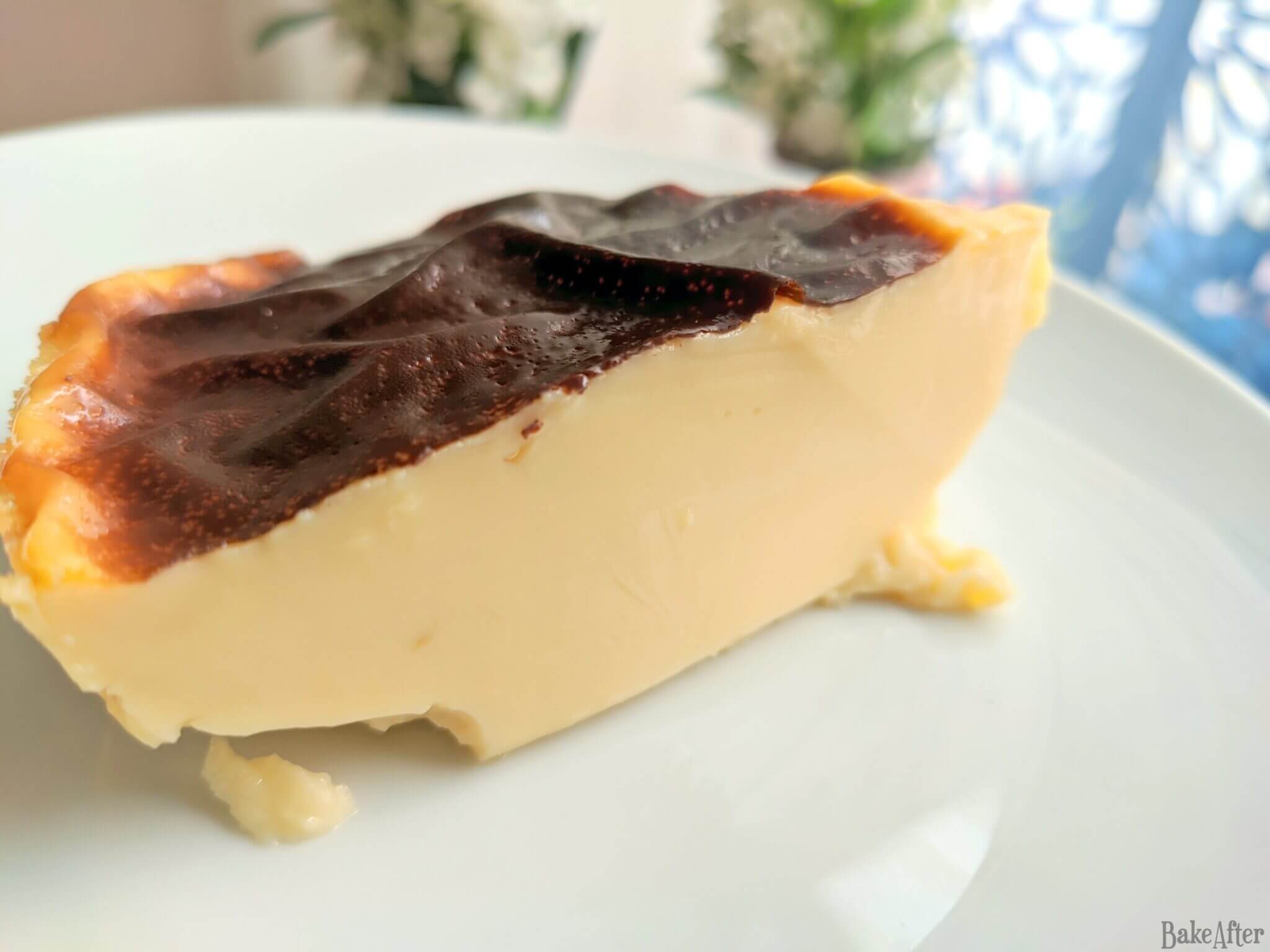
This dessert is best served chilled, straight from the refrigerator. The contrast between the cool, creamy center and the burnt caramelized top is perfection.
Flavor Variations: While traditional tigelada uses lemon zest, you can experiment with orange zest, vanilla extract, or even a splash of port wine for a different twist.
This recipe for Traditional Portuguese Baked Milk Custard • Tigelada de Leite was originally created on BakeAfter.com. Esta receita de Tradicional Tigelada de Leite foi publicada em português no Iguaria.com.
Nutrition
Per Serving: 264 calories; 10.2 g fat; 32.3 g carbohydrates; 10.7 g protein.Did you try this recipe?
Let me know how it turned out for you! What are your favorite portuguese sweets? You can leave a comment below ;D
Discover more from BakeAfter
Subscribe to get the latest posts sent to your email.